

Irish Dance Isn’t Just For St. Patrick’s Day — But It’s In Jeopardy
Premium domains for sale
Freedom Is Back In Style
This article is part of Upstream, The Daily Wire’s new home for culture and lifestyle. Real human insight and human stories — from our featured writers to you.
Freedom Is Back
In Style
Premium domains for sale
***
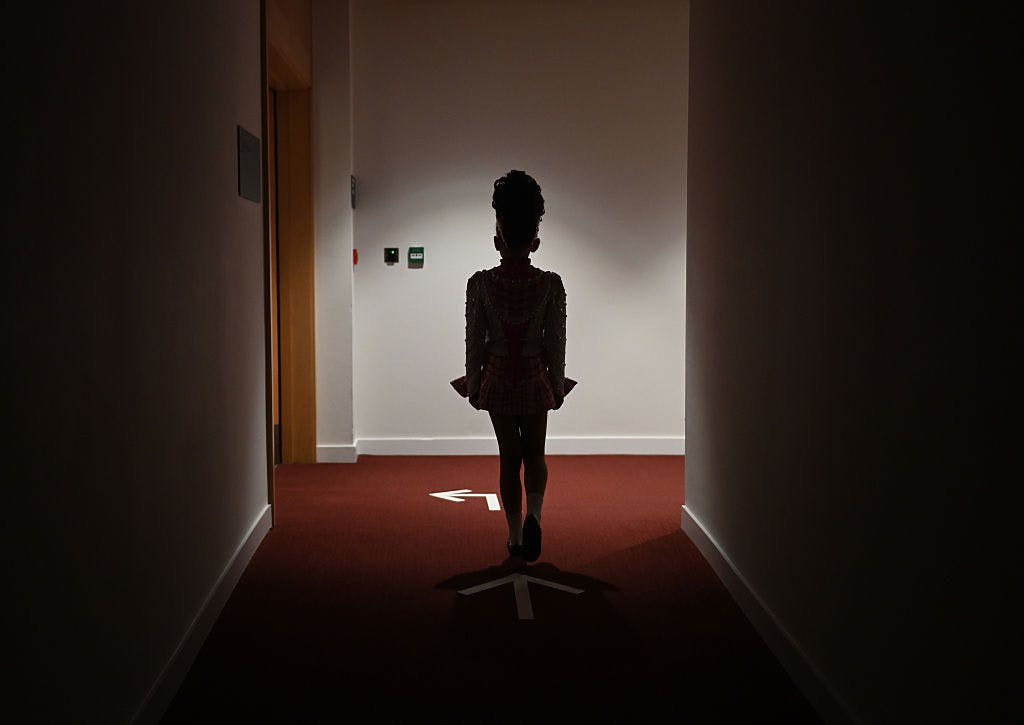
In a few short weeks, the U.S. will host the World Irish Dance Championships. Absent immediate action, that elite competition will include at least one male competing as a female, in brazen non-compliance with U.S. policy regarding trans-identifying athletes. Saint Patrick may have successfully cast the proverbial snakes out of Ireland once upon a time, but several hundred years later, false doctrine has made its way back into the heart of Irish culture through one of its most cherished traditions.
I was four years old the first time that I saw “Riverdance” performed in 1997. As a little girl with a platinum blonde bob, I was enraptured watching ethereal women seemingly floating above the stage, the male dancers dueling with the synthetic thunderclaps with the percussive beats of their shoes. There was nothing to match the infectious energy of over a dozen dancers perfectly in sync with the blazing speed of the fiddle player. From then on, my parents could not stop me from breaking out into my own version of an Irish jig in every grocery store aisle, or from getting involved in the sport of competitive Irish dance.
I was not alone. Thanks to “Riverdance,” a generation of young girls traded the more common ballet shoes for a pair of ghillies and hard shoes. Irish dance is no longer a niche cultural tradition but an international sport. Tens of thousands of dancers compete in countries around the world. And each year, the most elite come together at the World Championships in the hopes of claiming the most prestigious title in the sport.
But for female Irish dancers, their hopes of achieving their goals have had to be tempered in recent years. In 2023, for the first time in Irish dance history, a trans-identifying boy claimed the title of Southern Regional Champion for the under-14 age group, an event I myself witnessed as a competitor in my own age category at that year’s Regionals. The boy, Alyssa Saltzman, then went on to compete at the North American Nationals and the Worlds, claiming medals at each that otherwise would have gone to girls. That boy is about to compete, once again, at the Worlds, which is set to take place outside of Chicago, March 29 through April 5.
Despite outrage within the Irish dance community and Concerned Women for America’s call to change this unfair policy, the sport’s main governing bodies have chosen to sit on their hands. Although there is a U.S.-based governing body of Irish Dance, the Irish Dance Teachers’ Association of North America, it takes its marching orders from the Dublin-based governing body, the Irish Dancing Commission. Both organizations are at fault here. Though the Irish Dancing Commission writes the policy, American dancers provide much of the funding for the sport. The North American association has plenty of leverage to put an end to boys competing as girls if it had the will to do so.
There have been petitions, media attention, and even a proposal to introduce a third gender category for other-identifying dancers. But the proposal was tabled by the Irish Dancing Commission, and the issue otherwise ignored. Instead, the message it has sent is that it cares far more about being politically correct and staying in the good graces of a loud but tiny minority than acting to protect its female dancers and the integrity of the sport.
The true cherry on top is that the Irish dance world has been embroiled in a years-long cheating scandal so wide-ranging that the BBC even made a documentary about it. So perhaps it should not be a surprise that, when a boy steals medals and titles from female competitors, the rule-makers turn a blind eye.
Sadly, many families have chosen to walk away from the sport as a result. On top of being incredibly physically demanding, Irish dance is extraordinarily expensive. There are numerous hours of dance classes, private lessons, thousands of dollars of crystal-covered competition dresses, and travel expenses for competitions not just in other states, but also in other countries. Why would families choose to sink all that money and time only for their daughters to be humiliated by losing to a boy in a dress? The more the spotlight shines on the sport for all of the wrong reasons, the fewer families will choose to get involved in the first place.
I have been told that this issue should not matter in something artistic, such as dance, that there are not the same physical ramifications at play in the performing arts as there are in a sport like boxing or swimming. In response, I usually explain how endurance, strength, and speed are all major factors in competitive Irish dance and are why sex-separated categories exist in the first place. Irish dance is, at its core, a dance form that highlights and celebrates sexual difference, with men and women wearing entirely different dance shoes and performing different dances from one another.
What I find most offensive, though, is that the powers-that-be are alright with girls being told that they are, in fact, not the best female dancer. That sometimes, the best female dancer at a competition is a boy. They are okay with young girls’ dreams and self-esteem being demolished in the name of playing along with the delusion of gender ideology. They are okay with bullying thousands of young female dancers in order to cater to the feelings of one confused boy. They are fine with indulging this young boy’s choices, which is itself a form of abuse because those are choices he will likely live to regret.
Though the Irish and North American governing bodies have chosen to ignore the will of the majority of dancers (and the families who foot the bill), by holding the sport’s most important competition on American soil, they now run the risk of being at odds with official U.S. policy regarding transgender athletes. Many states that host regional competitions have laws preventing boys from competing against girls. No facility that receives federal dollars can violate Title IX, according to President Donald Trump’s executive order; therefore, no such facility should host any of these competitions. If the governing bodies do not care about the opinions of those competing, they should care about scrutiny from law enforcement.
Saint Patrick rejected the pagan ideas that had enslaved Ireland for centuries, turning it into a beacon of Christian academics and leadership. But the spineless decisions from the likes of the Irish dance governing bodies to cater to radical gender ideology make a mockery of all that St. Patrick accomplished. The female Irish dance category should be for girls and women only.
***
Maggie McKneely is director of government relations for Concerned Women for America, the nation’s largest public policy women’s organization. On X: @CWforA.
The views expressed in this piece are those of the author and do not necessarily represent those of The Daily Wire.
More from this network:
Domains for Sale · GOTPeople.org · TheDSAPlatform · The Truth About Socialism
What's Your Reaction?
 Like
0
Like
0
 Dislike
0
Dislike
0
 Love
0
Love
0
 Funny
0
Funny
0
 Wow
0
Wow
0
 Sad
0
Sad
0
 Angry
0
Angry
0

I am just an average American. My teen years were in the late 70s and I participated in all that that decade offered. Started working young, too young. Then I joined the Army before I graduated High School. I spent 25 years in, mostly in Infantry units. Since then I've worked in information technology positions all at small family owned companies. At this rate I'll never be a tech millionaire. When I was young I rode horses as much as I could. I do believe I should have been a cowboy. I'm getting in the saddle again by taking riding lessons and see where it goes.
Premium domains for sale












Comments (0)