

What We as Americans Can Learn From Historic Sites
Where will you go to celebrate America’s birthday? This summer marks 250 years since the signing of the Declaration of Independence, 250 years of demonstrating that human beings are capable of self-government and that a nation conceived in liberty can indeed endure.
Live Your Best Retirement
Fun • Funds • Fitness • Freedom
It seems almost providential, given the state of civic education, political divisions, and confusion surrounding what it means to be an American, that this birthday comes in our time: that it can inspire renewed unity and commitment to the principles of the Declaration.
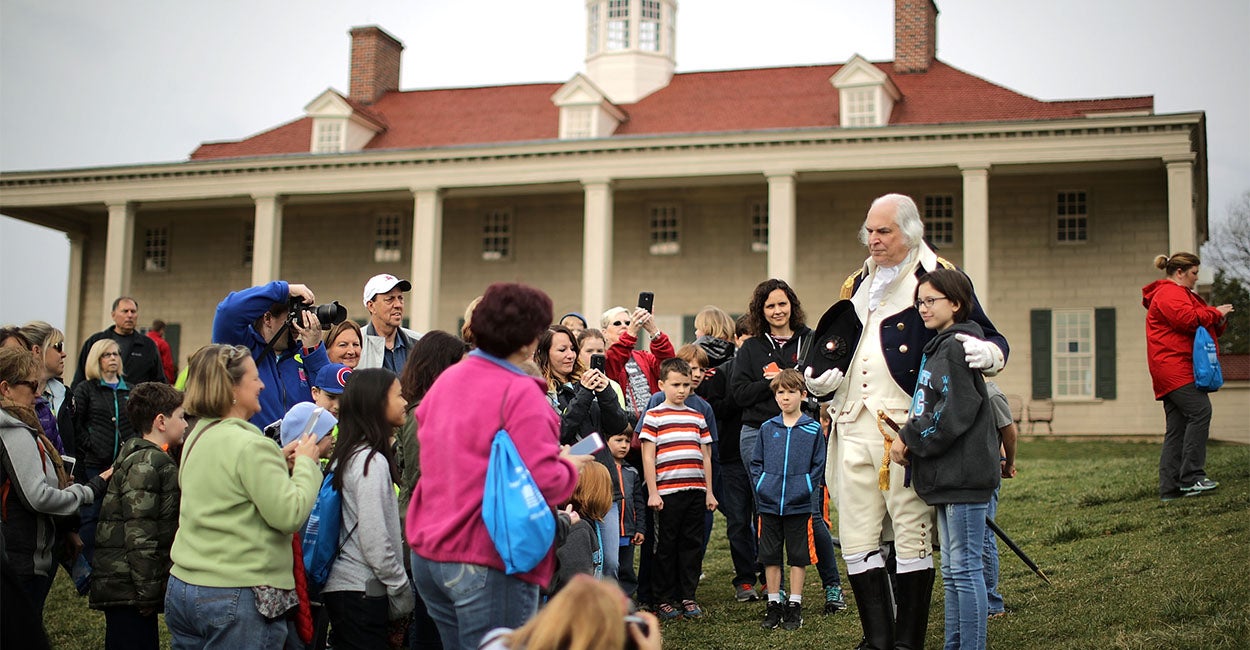
There are many ways to celebrate, but The Heritage Foundation would like to suggest one: Go to historic sites like battlefields, presidential museums, and the homes of exceptional Americans, to rediscover the American story. That story was written by the American people in real places across this country, and, as the best stories are, is replete with principles (the Bible, after all, is filled with stories).
Going to Gettysburg reminds us of the painful drops of blood drawn by both the sword and the lash; Independence Hall makes palpable the unlikely miracle that a people could establish themselves, defeat the strongest military in the world, and determine their own laws; Mark Twain’s house reminds us of boys named Tom and Huck whose character we recognize and whose adventures awakened our imagination. Visits to these sites reacquaint us with the principles, people, and place that is America.
The newly released Heritage Guide to Historic Sites is intended to aid trips to destinations such as these, by giving parents and teachers a sense of what to expect, recommending supplemental educational resources, and offering cautions when necessary. The main page is an online interactive map that pinpoints notable historic sites in each state, and the individual site pages both summarize and evaluate the tours and exhibits on offer.
Each site receives a grade of A, B, or C based on standards of accuracy and comprehension, proportionality, and ideological bias. A section on “considerations for families” includes advice for parents with young children, such as which tours and exhibits are age-appropriate in terms of content or attention span. The reviews are dated, and a form at the bottom of each page allows anyone to indicate a site has changed since it was last evaluated, voice disagreement, or recommend another site to put on the map.
Reviewers are individuals whose backgrounds match the sites themselves (for example, a poet reviewed Edgar Allen Poe’s House). This furnishes the Guide with a delightful perspective, as evaluators want to tell readers about a subject or an individual they love, about poetry, art, architecture, and history.
Specialized evaluators are also particularly equipped to identify when sites are presenting inaccurate or incomplete information or betraying an ideological bias. No one can be an expert in all aspects of the American heritage, and citizens go to historic sites to remember and learn. Some historical distortions are apparent, others are not.
Bringing third-party accountability to the museum space is becoming increasingly necessary. As historian Wilfred McClay notes of the Harriet Beecher Stowe Center for Literary Activism, visitors “hoping to learn more about the life and work of an important American author, and about her life as a woman in full, will be bitterly disappointed by this site.”
Readers of the Guide will likewise be given the warning that there are no exhibits focused on James Madison at his Montpelier home today.
These locations are worth defending, as education doesn’t just happen in the classroom; historic sites form the landscape of public education. Such education can be undertaken with peers, but is often shared with family members across generations, with grandparents, parents, and siblings, which makes historic sites unique. More so, excursions to historic sites frequently bring children outdoors, at least for a time, and away from screens.
As our world grows more customizable (gone are the days when there were a few television channels and everyone watched the same program and talked about it at school or work the next day), shared cultural experiences are increasingly precious. Many of us look back on those summer vacations and day trips to Independence Hall, Mount Vernon, or Fort McHenry with fondness. Some make a tradition of bringing the next generation to our favorite places, perhaps even annually.
Beyond strengthening familial and community ties, trips to historic sites help establish and fortify our unity as Americans. Vital to this task is knowing American history, particularly our exceptional origin story, and the meaning of the principles of the Declaration of Independence that define us as a people and set the standards and limits of human conduct. If we became a people, or America a place, no longer dedicated to and protective of human equality, consent of the governed, and inalienable rights, we will relinquish what means the most.
Historic sites make our duties as citizens palpable. Preserving consecrated ground, relics and shrines, and the homes that have become symbols of not only individual, but of American, accomplishment is an act of gratitude that connects the past and posterity.
Stewardship reminds us that we are not the singular authors of the places we inhabit and the culture we benefit from, though we may do our part for a time. Indeed, that reminder calls on us to do our part. And what wonderful fortune that our part is a leading one–that our responsibility is to celebrate the first 250 years of America so that many more may follow.
The post What We as Americans Can Learn From Historic Sites appeared first on The Daily Signal.
What's Your Reaction?
 Like
0
Like
0
 Dislike
0
Dislike
0
 Love
0
Love
0
 Funny
0
Funny
0
 Wow
0
Wow
0
 Sad
0
Sad
0
 Angry
0
Angry
0

I am just an average American. My teen years were in the late 70s and I participated in all that that decade offered. Started working young, too young. Then I joined the Army before I graduated High School. I spent 25 years in, mostly in Infantry units. Since then I've worked in information technology positions all at small family owned companies. At this rate I'll never be a tech millionaire. When I was young I rode horses as much as I could. I do believe I should have been a cowboy. I'm getting in the saddle again by taking riding lessons and see where it goes.



















Comments (0)