

What’s Greenland to us?
The late, great Angelo Codevilla had a way of cutting through the fog of foreign policy.
Live Your Best Retirement
Fun • Funds • Fitness • Freedom
In the Claremont Review of Books in 2019, he asked, “What’s Russia to us?” He didn’t ask because he had any special admiration for Russia. He asked because Washington had turned Russia into a utility: a convenient villain that justified budgets, scolded dissent, and kept the governing class in charge. Codevilla’s point was simple but brutal. Strategy begins with interests. Interests require discrimination. Most of what passes for “grand strategy” amounts to habit and vanity.
Greenland touches national defense. Greenland touches Arctic geography. Greenland touches the supply chain for advanced systems. Those facts don’t bend around Davos etiquette.
That question — his question — fits the Greenland uproar better than any of the Davos hand-wringing last week.
European leaders want this story to be about Trump’s manners and apparent recklessness. They want it to be about “norms,” about “tone,” about the precious feelings of the alliance. They want Americans to believe the true scandal lies in a U.S. president speaking too plainly or belligerently.
Trump did speak plainly. In Davos on Wednesday, he pushed for “immediate negotiations” to acquire Greenland and ruled out the use of military force. He also floated a “framework” tied to Arctic security after meeting NATO’s secretary general, while walking back tariff threats that had rattled allies and markets.
Fine. Trump being Trump shouldn’t surprise anyone.
But Europe’s reaction should surprise people, because it revealed how unserious the continent has become — even about something as serious as Greenland.
Instead of handling business like adults — hard bargaining among allies over a piece of real estate that actually matters — European capitals staged indignation, offered lectures, and then produced the usual substitute for seriousness: a symbolic “show of force” meant for domestic consumption.
The numbers tell the laughable story. Sweden sent three officers. Norway sent two. Finland sent two liaison officers. The Netherlands sent one naval officer. The U.K. sent one officer. France sent around 15 mountain specialists. Germany sent a reconnaissance team of 13. Denmark led with about 100 troops. Reuters called it “modest.” That word was kind.
But that’s the European governing class in a nutshell for you: Perform alarm, then perform resolve, then declare victory over a crisis they helped manufacture.
All of this theater tried to sell one idea: Greenland needs protection from the United States.
Preposterous.
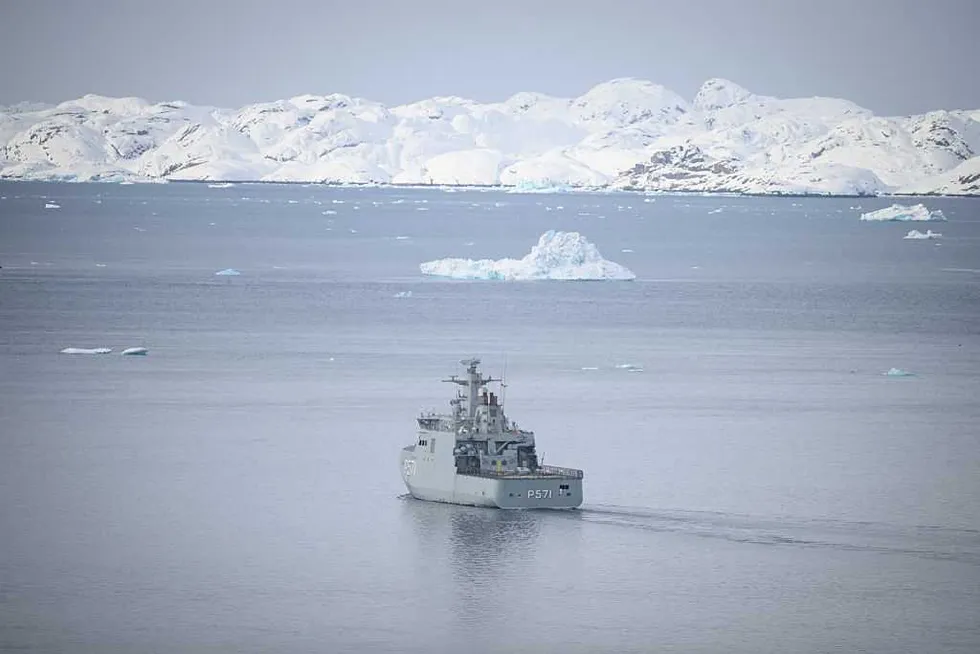
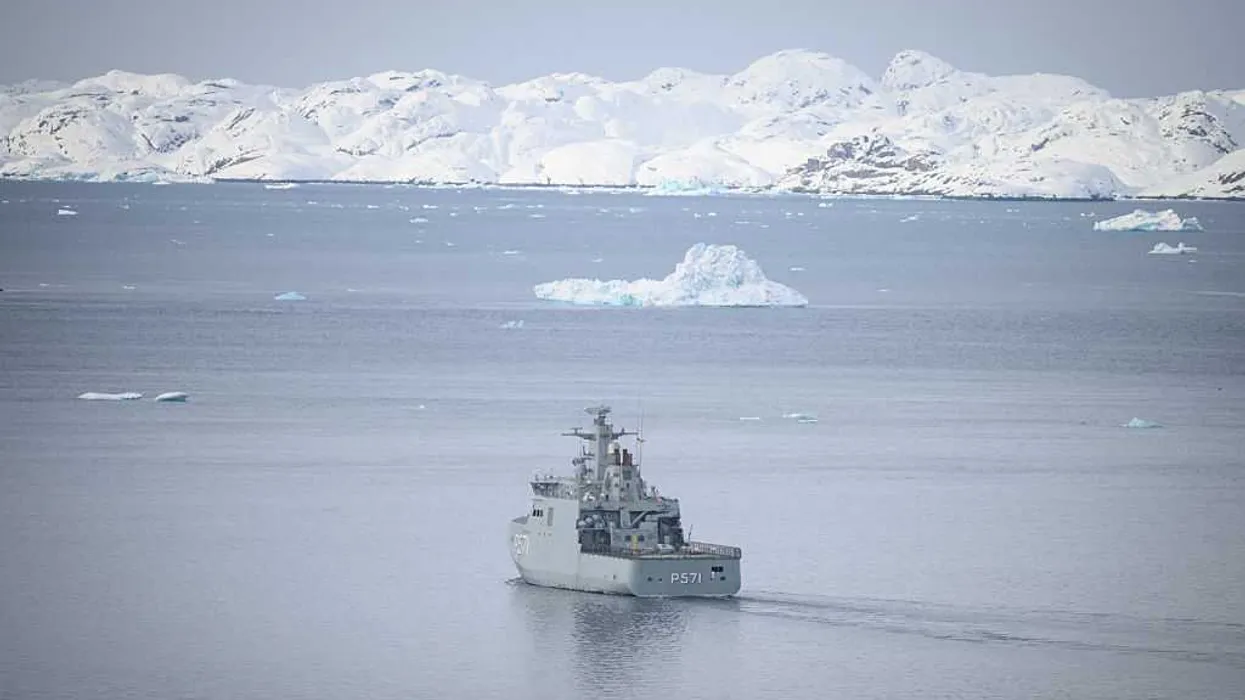
Greenland matters because it helps defend the United States. Pituffik Space Base — some Americans may still know it as Thule — sits where U.S. forces can track threats coming over the pole. The Arctic doesn’t care about European speeches. Missiles don’t fly around Greenland out of respect for allied etiquette. Geography dictates capability, and Greenland sits where the map says it sits.
RELATED: Pressed on Greenland, Trump tells Davos the US has weapons he ‘can’t even talk about’
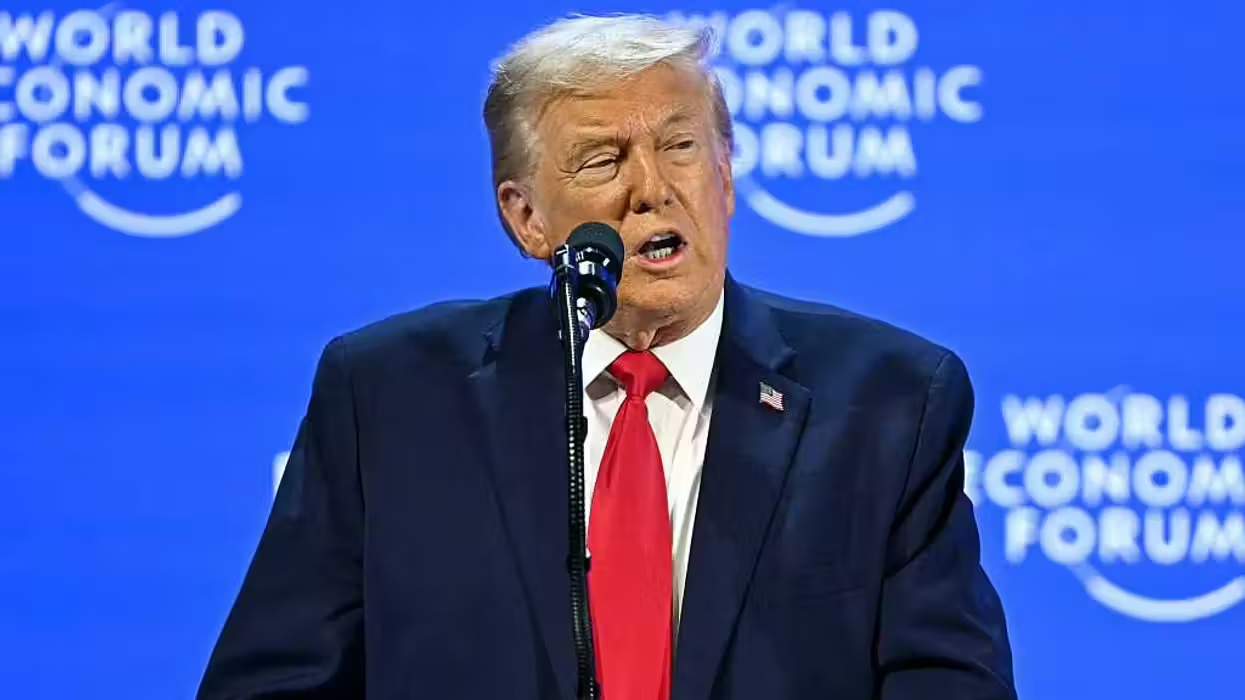 Photo by Fabrice COFFRINI/AFP via Getty Images
Europe’s commissioners understand that. They just hate saying it out loud because it reminds them of the arrangement they prefer to obscure: America provides the real security; Europe provides the indignant boo-hoo commentary.
The Greenland tantrum exposed another reality that should make America’s sensible policy planners sweat, assuming they still exist: The industrial foundations of power have become strategic again, and the West has behaved like an empire that forgot how to build.
Rare-earths sound like an investor pitch until you remember where they go. Modern weapons systems and advanced electronics depend on them. We need minerals you have likely never heard of — neodymium, dysprosium, samarium, and yttrium — to keep our F-35s flying and our missiles precision-guided.
But the supply chain runs through the part nobody wants to talk about: processing and refining. China dominates that bottleneck — especially the heavy rare-earth elements that sit in the highest-end systems. One major estimate put China’s share of global heavy rare-earth processing at more than 90%. That’s a massive national security hole.
Greenland matters because it offers a way out — not a magic wand, but an exit. Greenland holds serious mineral potential. That potential shifts the long-term strategic balance only if development happens.
Greenland’s own politics have made development tricky. In 2021, Greenland reinstated a uranium ban that effectively froze the Kvanefjeld project, one of the world’s most significant rare-earth deposits, because uranium appears alongside rare-earth ore and triggers the political and regulatory trip wires that make major mining projects difficult to sustain.
Greenland’s voters have every right to weigh environmental costs. Strategy still counts consequences. But the practical result of the ban didn’t restrain Beijing. It protected Beijing’s advantage.
The Europeans, of course, love a green virtue-signal that imposes no serious cost on Europe. Through it all, however, the continent remains dependent on America’s military might, dependent on Chinese processing, and increasingly dependent on slogans to conceal both.
So yes — Trump’s aggressive posture creates complications. Acquisition talk puts Denmark in a public box and turns what should be an alliance negotiation into a freak show. It hands European leaders a stage they don’t deserve and an excuse to treat American interests as a moral problem.
RELATED: Trump announces ‘framework’ of ‘great’ deal with NATO on Greenland
 Photo illustration by Cheng Xin/Getty Images
But Europe’s leaders made fools of themselves by trying to address a strategic reality through choreography. A reconnaissance team, a few liaison officers, and a weekend of headlines don’t secure Greenland against anyone. Their “show of force” invited contempt, not respect.
Codevilla’s 2019 essay mocked the way our establishment inflates foreign threats to discipline the home front. The Greenland episode shows a mirror image: European elites inflating a U.S. negotiating push into a crisis because they can’t handle an America that talks like a serious country.
Greenland touches our national defense. Greenland touches Arctic geography. Greenland touches the supply chain for advanced systems. Those facts don’t bend around Davos etiquette.
So use Codevilla’s test. Strip away the moral fog. Rank interests and act like the answers matter.
What’s Greenland to us?
A hell of a lot.
What's Your Reaction?
 Like
0
Like
0
 Dislike
0
Dislike
0
 Love
0
Love
0
 Funny
0
Funny
0
 Wow
0
Wow
0
 Sad
0
Sad
0
 Angry
0
Angry
0

I am just an average American. My teen years were in the late 70s and I participated in all that that decade offered. Started working young, too young. Then I joined the Army before I graduated High School. I spent 25 years in, mostly in Infantry units. Since then I've worked in information technology positions all at small family owned companies. At this rate I'll never be a tech millionaire. When I was young I rode horses as much as I could. I do believe I should have been a cowboy. I'm getting in the saddle again by taking riding lessons and see where it goes.















Comments (0)