

When a Generation Abandons Liberty
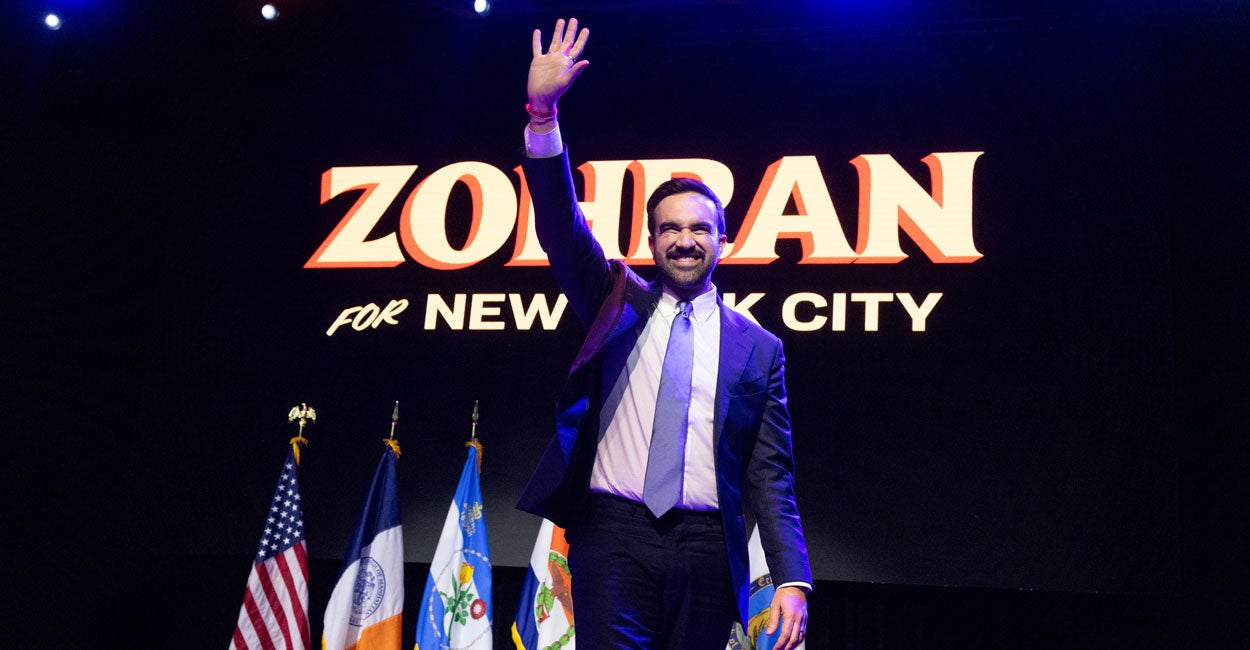
When New York City elected Democratic Socialist Zohran Mamdani as its next mayor, the left-leaning headlines framed it as a “historic milestone.”
Live Your Best Retirement
Fun • Funds • Fitness • Freedom
But the only milestone I saw was this: more than one million voters choosing a path that has collapsed societies across continents—the empty promise of socialism disguised as progress—and, even more puzzling, a path embraced by an electorate that was 84% women under 30.
As socialism becomes more popular among young Americans, we risk sacrificing the freedoms that shape our country—such as the freedom to work, speak, and take responsibility for our own lives—in exchange for a promise of government-controlled equality. History shows that when good intentions give rise to government control, people often lose both freedom and opportunity.
Post-COVID New York City provides a chilling example of how democracies can slide into dependency.
Once the beating heart of American capitalism, the city suffered from inconsistent governance and a global pandemic that shuttered businesses, drove residents away, and made basic living increasingly unaffordable. With taxes and fees imposed at every turn, daily life still feels relentlessly regulated.
Recently, several Manhattan restaurants offered $9 discounts to offset the city’s new congestion-pricing toll. These small gestures serve as acts of resistance against policies that continue to burden the working class.
In a climate of fatigue and frustration, politicians like Mamdani, whose platform promised to “tax the 1%,” freeze rent, create government-run grocery stores, and provide “free” public transit, eagerly captivated social warriors proudly denouncing capitalism even as they remained fully immersed in one of the largest capitalist hubs in the world.
By treating success as something unfair and inequality as a moral wrongdoing, these movements suggest that prosperity should be guaranteed rather than earned. Their arguments often rely on vague promises—redistributing wealth without addressing the consequences, expanding control without accountability, and claiming the moral high ground without offering practical plans for governance.
In the end, they focus more on symbolic wins and emotional satisfaction than on real, workable solutions to complex problems.
However, beneath these slogans lies a far more dangerous ideology—one that aims to defund the police and replace them with social workers, even going as far as to frame violence itself as an “artificial construction.” This narrative of downplaying responsibility reflects a broader worldview, one that prioritizes grievances over government.
The most revealing data point in Mamdani’s rise is not his platform, but the fact that young women strongly influence his voter base.
Their motivations are reflected across platforms and campuses: a Fordham University student’s op-ed praising Mamdani as the embodiment of “economic care”; the viral “Hot Girl Socialism” trend that packages left-wing economic dependence as empowerment; and Instagram reels celebrating his win by joking that “Sharia Law starts now.” The tone may be playful, but it exposes a deeper unseriousness about the stakes of governance.
Recently, Actress Amanda Seyfried described socialism as a “gorgeous idea,” stating that it is rooted in collective care and responsibility. In her ignorance of how socialism actually functions, Seyfried described it this way: “For me, it’s taking care of each other. If I have more money, I can spend more money on other people. Isn’t that right?”
When Hollywood is also endorsing these ideologies, especially women, it blurs the line between what socialism actually is and how it has failed repeatedly.
Taken together, these signals suggest a generation of women seeking stability, community, and belonging in misplaced sources. Rather than turning to families, local institutions, or opportunity, many put their faith in the comforting illusion that bigger government can relieve the emotional, financial, and relational burdens modern culture has placed upon them, as Erika Kirk recently noted.
The women who propelled Mamdani into office were not irrational; they were responding to a cultural narrative that tells them independence is impossible without government intervention. Our task is to offer a better narrative—one rooted in personal responsibilities, economic freedom, and the belief that women are capable of building the lives they want without surrendering liberty in the process.
And yet, for a place that may seem out of touch, out of reach, and wholly detached from the rest of the United States, New York’s collapse would not be contained. What happens in the nation’s cultural and financial epicenter radiates outward—politically, economically, and socially. Their choices become our consequences.
The question is: How do we encourage a return to common-sense leadership before more cities follow New York’s lead?
Figures like Mamdani and the broader democratic socialist movement appeal to young voters by tapping into frustration about the economy and a sense that the system is unfair.
They present socialism as a more caring and humane alternative to capitalism.
But behind the language of “equity” and “justice” is a push for more government control and less room for disagreement. By promising fairness and community, these movements turn shared frustration into political support.
New York City shows the contradiction clearly. Many voters support socialist-style policies yet continue to enjoy the benefits of a market-driven lifestyle.
On one hand, there is hope that the government can fix deep problems.
On the other hand, there is reliance on the freedoms and opportunities that capitalism provides. The question is whether these two ideas can exist together, or whether growing government control will eventually weaken the very freedoms that make opportunity and prosperity possible.
If a generation abandons liberty in the pursuit of equality, it risks losing both—and ending up with neither.
The post When a Generation Abandons Liberty appeared first on The Daily Signal.
What's Your Reaction?
 Like
0
Like
0
 Dislike
0
Dislike
0
 Love
0
Love
0
 Funny
0
Funny
0
 Wow
0
Wow
0
 Sad
0
Sad
0
 Angry
0
Angry
0

I am just an average American. My teen years were in the late 70s and I participated in all that that decade offered. Started working young, too young. Then I joined the Army before I graduated High School. I spent 25 years in, mostly in Infantry units. Since then I've worked in information technology positions all at small family owned companies. At this rate I'll never be a tech millionaire. When I was young I rode horses as much as I could. I do believe I should have been a cowboy. I'm getting in the saddle again by taking riding lessons and see where it goes.






















Comments (0)