

Why Did Vanity Fair Let The New York Times Scoop Its Susie Wiles Interview?
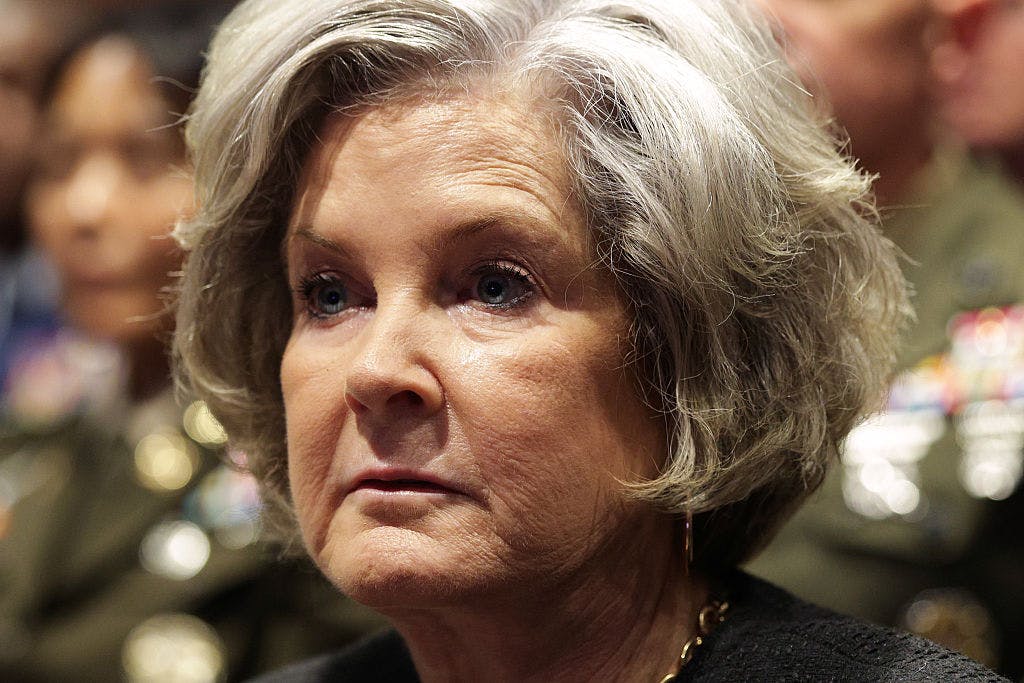
WASHINGTON—This town has been abuzz since it awoke this morning to find a bombshell New York Times story featuring excerpts from a forthcoming interview with White House Chief of Staff Susie Wiles.
Live Your Best Retirement
Fun • Funds • Fitness • Freedom
In the piece, excerpts from a series of interviews with the reporter Chris Whipple, Wiles sounds off on everything from her boss (“an alcoholic’s personality”) to the vice president (“been a conspiracy theorist for a decade”) and even her friend Pam Bondi (the attorney general “completely whiffed” the Epstein files).
The White House set to work disavowing the report, which Wiles dismissed as a “disingenuously framed hit piece.” But while the Beltway wondered if this spelled the end of Wiles’s West Wing tenure — and if that was what she wanted — media junkies may have picked up on another oddity of the piece.
Chris Whipple, who has written several books about White House chiefs of staff, did not conduct his interviews for the Times. He conducted them for Vanity Fair, part of a longer profile on the Trump Cabinet.
But the Times didn’t simply scoop Vanity Fair. It published its story in conjunction with the magazine, which dropped its two-part interview with Wiles just as the Gray Lady published her story. The Times clearly had inside information from Whipple and Vanity Fair — including the number of interviews he had conducted and the nature of the piece he was planning — and included a reference to having heard corroborating audio of the Wiles interviews from Whipple.
Reporters are so competitive that they hardly even want to collaborate with their colleagues. Why would Vanity Fair tip its hat to the Times in this way?
The answer may lie in Vanity Fair’s old magazine history.
In his recent memoir “When The Going Was Good,” former Vanity Fair Editor-in-Chief Graydon Carter recalls the magazine’s work on “The Holy grail of journalism scoops”: the identity of Deep Throat, the anonymous source who helped Bob Woodward and Carl Bernstein blow the doors off the Watergate scandal.
Reporting out the story, which named former FBI Deputy Director Mark Felt as Deep Throat, took two years, and involved a healthy amount of cloak and dagger, Carter recalls.
“We set up a special room at the magazine, an office within the office. We papered the glass doors and kept it locked when not in use. We also put the story on a separate server, one that wouldn’t be accessible to anyone at Conde Nast, the parent company of Vanity Fair.”
The Vanity Fair team waited until just before publication day to reach out to Woodward and Bernstein for comment. When they did, the duo was not immediately responsive — though, as one of Carter’s deputies informed him, “word was trickling out and the phone lines at Vanity Fair were already jammed.”
Carter’s thinking in this moment sheds some light on today’s New York Times bombshell:
The big trouble here was the lead time. This was before magazines had digital editions, so we had to edit the story, photograph the story, lay out the story, check the story, print the issue, ship the issue, and then wait for newsstand people all around the world to open their boxes of the magazine and start selling copies. With a monthly magazine, you have ten days to two weeks between the time it leaves the printer and when it appears on newsstands. During this period, the issue is completely out of our control, and we had problems before with printers tipping off someone else to a hot story.
“We couldn’t afford to wait until the magazine hit the newsstands,” Carter concludes, “so we decided to release the story even before we shipped it to the printers.”
“In those days, you didn’t just announce news with a tweet,” he notes. “You released it in successive waves to selected press outlets. Or you released it all at once and wide to the right services, newspapers, and television news divisions. Which is what we did with our Deep Throat story. Just before we released it to the wire servers, Beth Kseniak, our head of communications, gave the scoop to ABC News, which broke into regular programming with the story. By the following day, it was front-page news all around the world.”
Christmas Sale – Get 40% off New DailyWire+ Annual Memberships
Of course, today’s media landscape is not the same as it was in 2005 when the Deep Throat story broke. Vanity Fair has a digital edition, and you certainly can break a story with a tweet — and people often do.
But Vanity Fair still has its flagship print magazine, and it stands to reason that drumming up some online interest ahead of publication could drive magazine sales. Releasing the juiciest excerpts to the Times, moreover, could ensure that politicos and news junkies who don’t frequently thumb through the nation’s premier society magazine may pick up the next issue of Vanity Fair, or at least toggle over to the website for the full story.
It’s fitting, too, that this story in particular would be the one that inspired the magazine to dip into its old playbook. As tempestuous as the Trump White House seems to be, this go around, the president and his team — no doubt thanks in a large part to Wiles — have managed to keep major stories of infighting to a minimum.
A chatty chief of staff and some dishy palace intrigue is, for everyone but the White House communications team, a bit of a throwback to old school Washington. What better time for Vanity Fair to return to its ink-stained roots.
What's Your Reaction?
 Like
0
Like
0
 Dislike
0
Dislike
0
 Love
0
Love
0
 Funny
0
Funny
0
 Wow
0
Wow
0
 Sad
0
Sad
0
 Angry
0
Angry
0

I am just an average American. My teen years were in the late 70s and I participated in all that that decade offered. Started working young, too young. Then I joined the Army before I graduated High School. I spent 25 years in, mostly in Infantry units. Since then I've worked in information technology positions all at small family owned companies. At this rate I'll never be a tech millionaire. When I was young I rode horses as much as I could. I do believe I should have been a cowboy. I'm getting in the saddle again by taking riding lessons and see where it goes.










Comments (0)