

Blue State Moves To Muzzle Oral History Of J6
Premium domains for sale
Freedom Is Back In Style
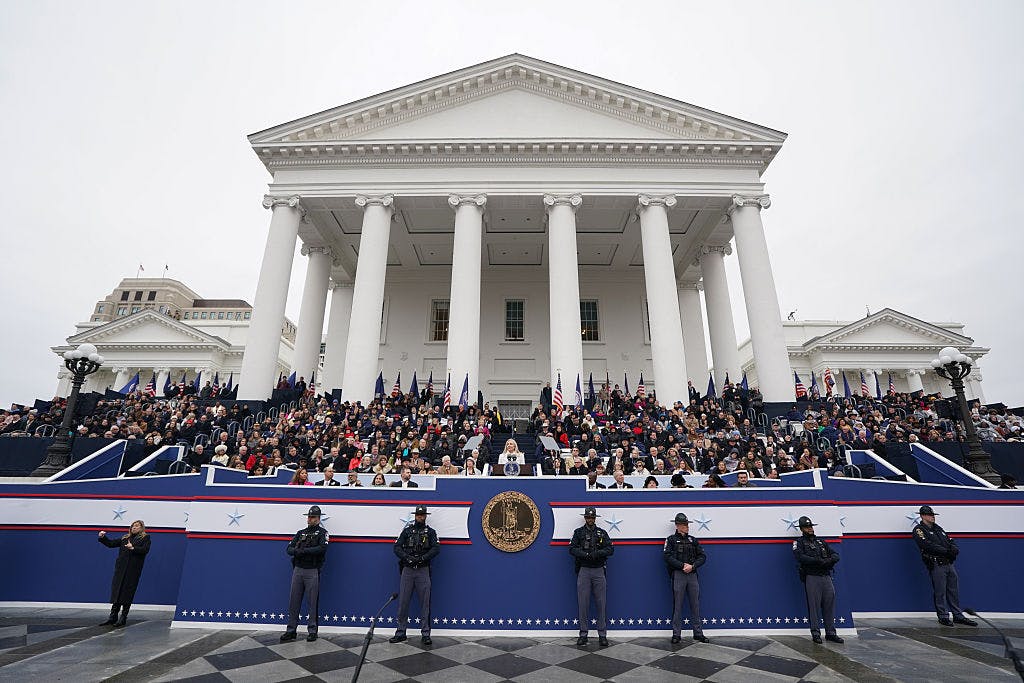
The Virginia General Assembly has now passed legislation regulating how public schools may teach about the events of January 6, 2021. If the bill becomes law, teachers discussing the topic will be required to present the events in a very specific way and prohibited from presenting certain viewpoints about the 2020 election.
Freedom Is Back
In Style
Premium domains for sale
Freedom Is Back
In Style
Premium domains for sale
Regardless of where one falls politically on those issues, the constitutional problem should be obvious. The First Amendment exists precisely to prevent the government from dictating what citizens must believe or say about matters of public debate. The government may adopt curriculum standards and decide what subjects are taught in public schools, but there is a significant difference between setting a curriculum and mandating a particular political or historical conclusion.
Specifically, the legislation provides that if a Virginia public school chooses to teach about the events of January 6, 2021, the instruction may not portray those events as a “peaceful protest.” It also prohibits teachers from presenting as credible any statement suggesting that there was widespread election fraud that could have changed the results of the 2020 presidential election. The statute goes even further by directing that the events must be described as an “unprecedented, violent attack on United States democratic institutions…for the purpose of overturning the results of the 2020 presidential election.”
In practical terms, the law does two things at once. First, it prohibits certain viewpoints from being discussed as credible in the classroom. Second, it compels teachers to affirm a specific government-approved description of the event.
That distinction matters constitutionally.
The United States Supreme Court has repeatedly made clear that the government cannot compel individuals to speak a government-approved message. From West Virginia State Board of Education v. Barnette in 1943 to more modern cases involving compelled speech, the Court has consistently held that the First Amendment protects citizens from being forced to adopt or express ideological viewpoints mandated by the state.
This principle is not about whether one agrees with the government’s position. In fact, the entire point of the First Amendment is to protect speech that the government — or even the majority — dislikes.
Once the government is permitted to mandate the “correct” interpretation of a political event, the precedent is dangerous. Today it may be January 6. Tomorrow it could be any number of controversial historical topics. Ask yourself this – if you think HB333 is good – how would you feel if President Trump ordered the Department of Education to mandate all K-12 education that ICE never made mistakes and anyone protesting them were domestic terrorists? Or that Joe Biden was a puppet president lacking mental capability to make any legitimate decisions. No alternatives – just those narratives – in every school in America – no negotiation. I suspect if you are left of center that would make your blood boil – and it’s for these reasons that the Constitution does not allow the government to decide which political narratives are permitted and which must be suppressed.
It is also worth remembering that the role of education is not to enforce political consensus but to encourage critical thinking. Students should be exposed to evidence, debate, and competing interpretations of historical events. That is how a free society educates its citizens. A law that restricts discussion to one approved narrative does the opposite.
To be clear, none of this means schools must endorse every viewpoint or conspiracy theory. Teachers can and should teach facts supported by evidence. But that is different from a legislature commanding that one political interpretation must be presented and others may not even be discussed as credible.
When the government crosses that line, the courts exist to review whether the Constitution has been violated. If this bill becomes law, there is a strong argument that it raises serious First Amendment concerns involving compelled speech and viewpoint discrimination. Those issues deserve careful consideration by the judiciary rather than being resolved through legislative decree. The debate about January 6 will continue for many years, as debates about major historical events always do. But in a constitutional republic, those debates should occur through free discussion and scholarship — not through laws that attempt to enforce a single government-approved narrative.
The Constitution protects the right of Americans to disagree about politics, history, and public affairs. That protection applies even — and perhaps especially — when the government would prefer that disagreement disappear.
* * *
Timothy V. Anderson is an attorney and a former member of the Virginia House of Delegates.
The views expressed in this piece are those of the author and do not necessarily represent those of The Daily Wire.
What's Your Reaction?
 Like
0
Like
0
 Dislike
0
Dislike
0
 Love
0
Love
0
 Funny
0
Funny
0
 Wow
0
Wow
0
 Sad
0
Sad
0
 Angry
0
Angry
0

I am just an average American. My teen years were in the late 70s and I participated in all that that decade offered. Started working young, too young. Then I joined the Army before I graduated High School. I spent 25 years in, mostly in Infantry units. Since then I've worked in information technology positions all at small family owned companies. At this rate I'll never be a tech millionaire. When I was young I rode horses as much as I could. I do believe I should have been a cowboy. I'm getting in the saddle again by taking riding lessons and see where it goes.
Premium domains for sale












Comments (0)