

Woke Colorado Dems target natural gas: 70% of homes face skyrocketing bills for unreliable electric heat

Colorado is the eighth-largest natural gas-producing state in the U.S., boasting 10 underground natural gas storage fields with approximately 141 billion cubic feet of combined storage capacity. Roughly seven out of 10 Colorado households use natural gas as their primary home heating source.
Live Your Best Retirement
Fun • Funds • Fitness • Freedom
Despite the Centennial State's bounty of natural gas and the super-majority of Colorado households' reliance on the affordable warmth it provides, officials are pushing for an electrification of heating in the state and putting utilities in a position where they'll soon have to begin removing customers en masse.
'You're increasing the load on electrification without there being any way to fill it.'
State Democrats successfully passed legislation in 2021 aimed at reducing so-called greenhouse gas emissions through regulatory changes affecting gas distribution utilities.
To satisfy this law, the commissioners on the Colorado Public Utilities Commission — all of whom were appointed by Democratic Gov. Jared Polis — have solicited and approved multiple "clean heat" plans.
Earlier this month, the PUC set GHG emission reduction targets impacting three investor-owned gas utilities — Atmos Energy, Black Hills Energy, and Xcel Energy — requiring them to cut the carbon emissions from their systems by 4% this year; by 22% over the next five years; and by 41% over the next 10 years.
While the commissioners declined to set targets beyond 2035, they noted in their formal decision that "because Colorado has a statewide goal of reducing greenhouse gas pollution by 100% by 2050, as compared to a 2005 baseline, we emphasize that clean heat plans submitted by gas utilities must account for that statutorily established future target."
RELATED: 5 truths the climate cult can’t bury any more
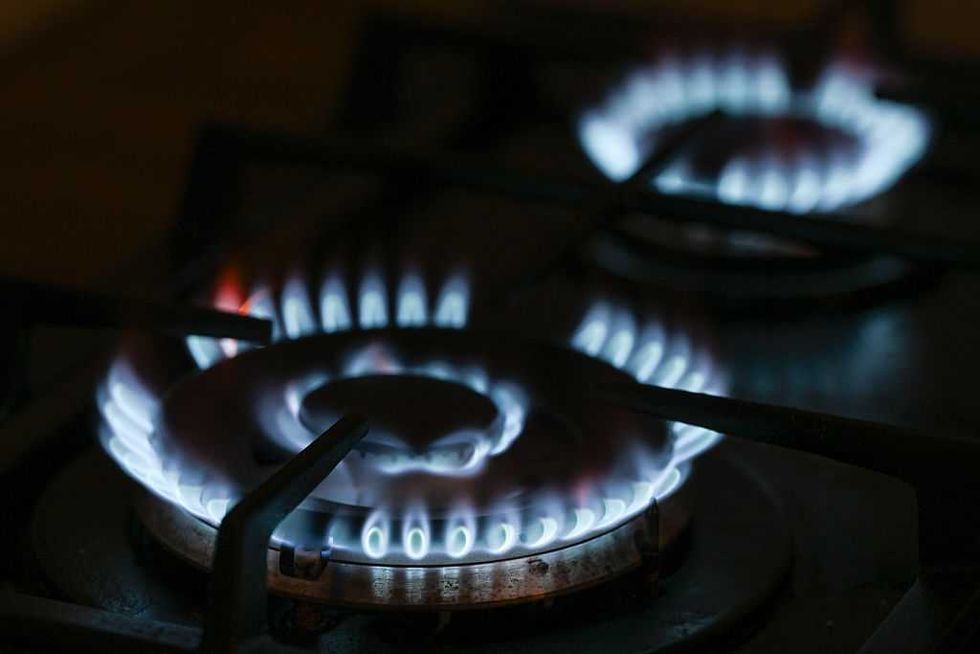 Photo by Artur Widak/NurPhoto via Getty Image
Colorado Energy Office director Will Toor is among those who have expressed skepticism about the aggressive nature of the switchover from natural gas to the state's already strained electric grid, a system that Xcel Energy indicated will likely face skyrocketing demand in the form of 400,000 electric vehicles and 300,000 new heat pumps by 2029.
"The 41% target, from our perspective, is a pretty challenging target for utilities," Toor told the Colorado Sun. "We certainly hope that utilities get there. I think we thought that 30% was probably more realistic."
The Colorado Energy Office and the state health department's Air Pollution Control Division reportedly asked for a 30% target by 2035.
In order to meet the new targets, the PUC noted that "utilities can propose to meet the clean heat targets using combinations of energy efficiency, electrification, recovered methane, green hydrogen, thermal energy, and pyrolysis of tires."
Alternatively "customers may voluntarily participate in these plans by taking advantage of rebates and incentives to adopt electric heat pumps or complete energy efficiency upgrades in their homes and businesses," said the PUC.
Before incentives, customers looking to satisfy climate alarmists by electrifying their gas appliances and homes are looking at costs in excess of $20,000 per home, Xcel noted in testimony about the state's so-called clean heat plans.
Jake Fogleman, director of policy at the Independence Institute, a Colorado-based think tank, noted that the targets "will necessarily require removing customers from the system."
"Utilities like Xcel, Black Hills, and Atmos may be able to nibble around the edges of the target by relying on recovered methane, improved pipeline leak detection and repair, and other non-demand-destroying strategies, but such approaches will not be enough to comply with state law," wrote Fogleman. "This all but guarantees that gas customers around the state will soon face higher utility bills to subsidize households into switching from gas to electric heating and appliances."
Those who can afford to make the switch will likely still be looking at jacked prices. Fogleman noted that last year, "Electricity was more than four times more expensive on average per unit of energy delivered to Colorado households" than natural gas.
Jon Caldara, president of the Independence Institute, told the Denver Post, "They're trying to regulate us away from any fossil fuels and taking away our appliances and our heaters. You're increasing the load on electrification without there being any way to fill it."
Republican state Rep. Ty Winter told the Post that when constituents raise concerns about the climate alarmist requirements, he tells them that "the only way to fix this is at the ballot box."
"We’re going to fight this tooth and nail, and we’re going to use every avenue we have," said Winter.
Like Blaze News? Bypass the censors, sign up for our newsletters, and get stories like this direct to your inbox. Sign up here!
What's Your Reaction?
 Like
0
Like
0
 Dislike
0
Dislike
0
 Love
0
Love
0
 Funny
0
Funny
0
 Wow
0
Wow
0
 Sad
0
Sad
0
 Angry
0
Angry
0

I am just an average American. My teen years were in the late 70s and I participated in all that that decade offered. Started working young, too young. Then I joined the Army before I graduated High School. I spent 25 years in, mostly in Infantry units. Since then I've worked in information technology positions all at small family owned companies. At this rate I'll never be a tech millionaire. When I was young I rode horses as much as I could. I do believe I should have been a cowboy. I'm getting in the saddle again by taking riding lessons and see where it goes.


















Comments (0)