

World Leaders Who Were Winners and Losers in 2025
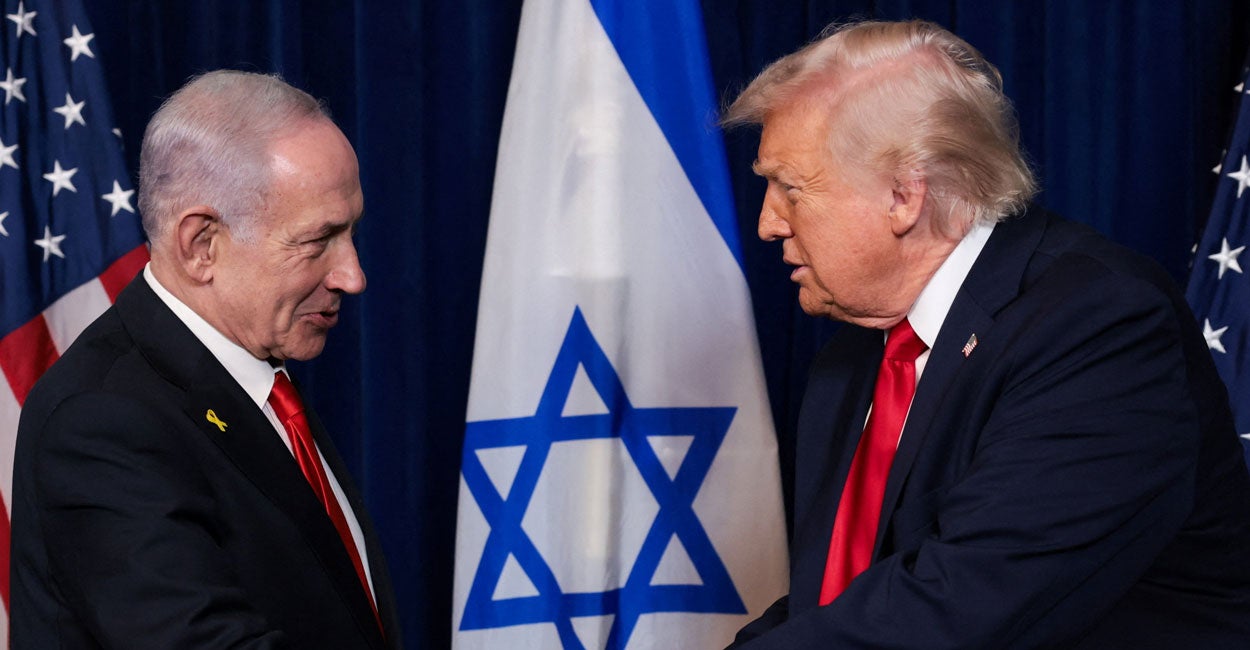
It would be an understatement to say President Donald Trump was active on the world stage in 2025.
Live Your Best Retirement
Fun • Funds • Fitness • Freedom
Trump’s national security strategy is reshaping geopolitics in real time. Meanwhile, his trade policies are remaking the global economy.
While the Trump administration boasts the fact that it has brokered nearly 10 peace agreements and ceasefires in conflicts around the globe, some major objectives remain elusive—namely, an end to the wars in Eastern Europe and the Middle East.
While the administration has helped cooler heads prevail in several conflicts, tensions between the United States and Venezuela are reaching a breaking point and 2026 will prove critical for the future of Trump’s trade policy.
While the experts love to say geopolitics is not a zero-sum game, there were definitely winners and losers in 2025.
Winners
Claudia Sheinbaum
Large swaths of the American right mocked Mexican President Claudia Sheinbaum’s oath of office speech in October 2024 for its “Mexican Humanism”—and that her left-wing rhetoric caused a more than 10% drop in the value of the Mexican Peso in the immediate aftermath of the speech.
Some on the American right, however, saw Sheinbaum more clearly: a female politician tough enough to overcome the machismo and violent undercurrent of Mexican politics, a rhetorician talented enough to deliver a speech that surreptitiously reframed Mexican history as a story of left-wing progress, and a figure popular enough to take up the mantle of her predecessor’s populism without his corny theatrics.
Throughout 2025, Sheinbaum managed to maintain her popularity born out of Andres Manuel Lopez Obrador’s (AMLO) populist coalition while steering the ship of state on her own course. Many polls have her approval rating over 70%.
Sheinbaum had refrained from using AMLO’s infamous “hugs, not bullets” slogan to deal with cartel violence, but now she has essentially abandoned that touchy-feely framework used by her predecessor to justify a slew of government programs—in no small part thanks to pressure from Trump.
She stationed Mexican National Guardsmen at hotspots along the U.S.-Mexico border, increased border enforcement, and handed dozens of high-ranking cartel members to the United States.
The Mexican president had bigger things in mind, however. Over the summer, Sheinbaum’s plan to remake Mexico’s national security apparatus sailed through the legislature. The legislation authorized Sheinbaum to reorganize the Mexican National Guard, reinvent the National System of Public Security, which increases federal control over several law enforcement functions, and increase intelligence gathering and effectiveness through the creation of the National System of Investigation and Intelligence.
Of course, Sheinbaum has faced setbacks in the form of scandals and political assassinations—and homicides remain a persistent problem—but such is Mexico.
Mexico City’s cooperation, however, has kept Trump’s tariff ire at bay, as opposed to Ottawa’s more aggressive response. Security cooperation and aggressive action against Chinese dumping from Sheinbaum’s government has helped secure some concessions from Trump on tariffs. This has allowed Mexican exports to the U.S. to grow nearly 10% in 2025 and a general detente before the USMCA trade deal is renegotiated in 2026.
Benjamin Netanyahu
The U.S.-Israel relationship has been a flashpoint in American politics this year—particularly on the right—as the Trump administration has sought an end to the war in the Middle East. But few disagree, whether they are proponents or skeptics of America’s relationship with Israel, that it has been a successful year for Israeli Prime Minister Benjamin Netanyahu.
Netanyahu has met with Trump six times in less than a year, more than any other world leader. These meetings have often yielded results for the Israeli prime minister. Case and point, Netanyahu’s most recent meeting with Trump on Monday at Mar-a-Lago.
At a joint press conference following a private lunch, Trump had high praise for Netanyahu. “The relationship’s been extraordinary,” Trump said of U.S.-Israeli relations. “You needed a very special man to really carry through and really help Israel through this horrible jam,” Trump said of Netanyahu.
Netanyahu was happy to return the favor: “We’ve never had a friend like President Trump in the White House. It’s not even close.”
Amidst allegations that Israel has failed to live up to its commitments to the Gaza peace plan, Trump said, “I’m not concerned about anything that Israel’s doing. I’m concerned about what other people are doing, or maybe aren’t doing.”
The remarks were a strong endorsement of Israel’s military and diplomatic actions as the second phase of the Gaza peace plan remains on hold. But Trump did offer some criticism for players in the region disguised in the form of clemency: “Sometimes they [Israel] don’t understand when somebody violates something that you want to give them a second chance—we hope we’ll give them a couple of second chances—but no, Israel has lived up to the plan 100%.”
Netanyahu did seem to secure a major commitment from Trump during the Monday meeting regarding Iran.
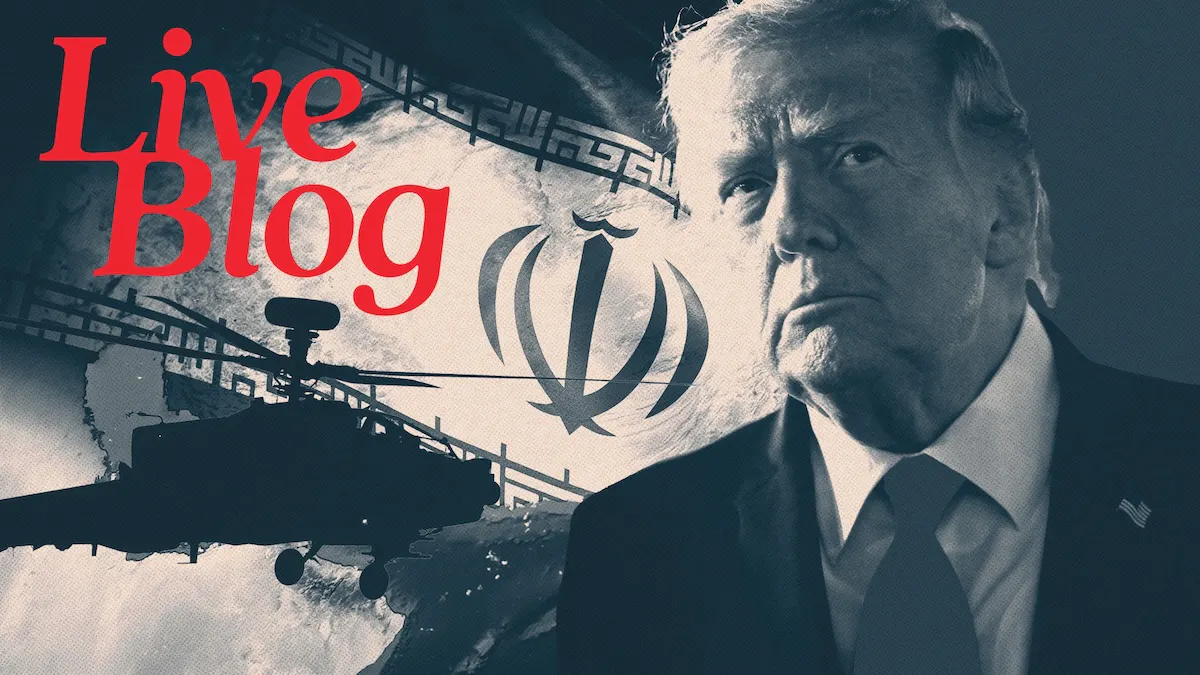
“I hear that Iran is trying to build up again, and if they are, we’re going to have to knock them down,” the president said, committing the United States to back Israeli strikes on Iranian nuclear or ballistic missile programs. “We’ll knock the hell out of them.”
Trump’s commitment to back future strikes follows June’s Operation Midnight Hammer, the American strikes on Iranian nuclear facilities—perhaps the most aggressive foreign policy action of his second term thus far.
The strikes mostly brought twelve days of open warfare between Israel and Iran to an end, as Netanyahu effectively persuaded the administration to strike the Iranian nuclear program because, despite the Israeli military’s successes in the brief Iran campaign, Israel lacked the capabilities necessary to reach the underground targets.
Mohammed bin Salman
Crown Prince Mohammed bin Salman, the de facto leader of Saudi Arabia that serves as Prime Minister and is heir apparent to the throne, made some major moves in 2025.
On the domestic front, Saudi Arabia’s economic growth was stronger than expected under the technocratic Vision 2030 framework, with GDP growth estimated between 4% to 5%. This is not just because of easing OPEC cuts in the oil sector—industry and service sector growth has reduced the Saudi economy’s dependence on oil. Non-oil economic activities now make up more than half of the Saudi economy.
And the crown prince is eager to spread the wealth, particularly with the United States. Since the start of Trump’s second term, Saudi Arabia has pledged more than $1 trillion of investment in the United States. It’s producing some foreign policy wins for Saudi Arabia as well. The icy relations of the late twenty-teens have thawed.
Trump and MBS have each hosted the other in their home countries this year with plenty of pomp and circumstance.
After Trump’s meeting with MBS in Washington this November, Saudi Arabia was granted major non-NATO ally status, bolstering its position as a power broker in the region as hostilities between Israel and Iran continue.
Losers
Nicolas Maduro
The walls appear to be closing in on Venezuelan President Nicolas Maduro.
The opposition leader, María Corina Machado, won the Nobel Peace Prize in October—despite a questionable, even violent, past—and dedicated the award to Trump.
Two months and change later, who won the Nobel Peace Prize this year is the least of Maduro’s concerns.
In the last few months, Trump has repeatedly said that Maduro’s “days are numbered.”
The United States has ratcheted up the pressure on the Venezuelan regime in the last four months by connecting Venezuela to strikes on alleged narco terrorists attempting to bring drugs into the United States.
Throughout the U.S. operations in the Caribbean and Eastern Pacific, which has brought a surge of American assets to the region, Trump has mused about strikes on Venezuelan territory. And Trump seems to have made good on that promise last week: The president recently confirmed reports of a CIA-led drone attack on a Venezuelan port where narco-terrorists allegedly operate.
In a radio interview, Trump said the U.S. struck a “big facility where ships come from.”
“We knocked that out,” the president claimed. “We hit them very hard.”
The attack, first reported by CNN, did not result in any casualties.
Meanwhile, the Trump administration has taken aim at Maduro personally. In August, Attorney General Pam Bondi increased the reward for information leading to Maduro’s arrest by $50 million. And on Nov. 24, the State Department designated the Cartel de los Soles, or the Cartel of the Sun, a foreign terrorist organization led by Maduro—even though the Cartel of the Sun is not an official cartel but a slang term for corrupt government officials involved in the drug trade.
Earlier this month, the Trump administration placed a blockade on sanctioned oil tankers as well.
Maduro has reportedly offered many concessions, even abdication on the condition that he and his family receive amnesty, all of which have been denied by the Trump administration.
Cyril Ramaphosa
One of the most memorable scenes of the second Trump White House came at the expense of South African President Cyril Ramaphosa.
When Ramaphosa denied that Afrikaners and white farmers were the targets of a racial genocide, Trump dimmed the Oval Office lights and played an approximately five minute video showing the atrocities.
Not only has the State Department opened up refugee status to white South Africans fleeing the violence, but a series of fact-finding missions in South Africa have revealed a shocking level of violence committed against white South Africans.
At the time, one senior State Department official told The Daily Signal that “Torture was a common thread throughout these crimes.”
“I won’t go into particular details, because it’s really quite foul, but everything from sexual violations to people watching their family members get brutalized to tying people up and lighting them on fire and cutting them with crude objects,” the official added. “Truly deranged things.”
Because of the South African government’s policies and unwillingness to combat the problem of racial violence, the U.S. halted foreign aid. More recently, it boycotted the November G20 meeting in Johannesburg.
Meanwhile, the South African economy is a mess. The unemployment rate is approximately 33%, among the highest in the world. Economic growth underperformed expectations as well, with GDP growth between 0.5% to 1%.
Following poor performance in the 2024 elections, the pressure on Ramaphosa and the African National Congress heading into 2026 is immense.
Keir Starmer
In July 2024, Keir Starmer’s election as Britain’s prime minister ended 14 years of Tory control. About eighteen months on, Starmer’s approval ratings are in the dumps: Nearly three-quarters of Britons disapprove of his job performance. The Labor Party’s approval ratings are tracking with the prime minister’s—Labor’s approval rating sits at 19%.
Immigration and the economy are the main drivers of Britons’ discontent.
Starmer was elected on pocketbook issues, promising renewed economic growth and lower prices. But GDP growth sat below 1.5%, underperforming expectations for the year and just a few tenths higher than 2024.
Higher prices have proven sticky. While inflation came down over the course of 2024, inflation picked back up to over 3% in 2025.
Immigration has also tested the Starmer government, too. Persistent high levels of illegal and legal immigration and a series of immigration-related scandals has put Starmer in a vulnerable position politically. While the left pushes for open immigration policies, the right, under Nigel Farage’s Reform UK, is surging in popularity because of its restrictionist immigration policy platform.
The post World Leaders Who Were Winners and Losers in 2025 appeared first on The Daily Signal.
What's Your Reaction?
 Like
0
Like
0
 Dislike
0
Dislike
0
 Love
0
Love
0
 Funny
0
Funny
0
 Wow
0
Wow
0
 Sad
0
Sad
0
 Angry
0
Angry
0

I am just an average American. My teen years were in the late 70s and I participated in all that that decade offered. Started working young, too young. Then I joined the Army before I graduated High School. I spent 25 years in, mostly in Infantry units. Since then I've worked in information technology positions all at small family owned companies. At this rate I'll never be a tech millionaire. When I was young I rode horses as much as I could. I do believe I should have been a cowboy. I'm getting in the saddle again by taking riding lessons and see where it goes.











Comments (0)