

AI bots are hiring humans now. Next stop: Slaves by choice?
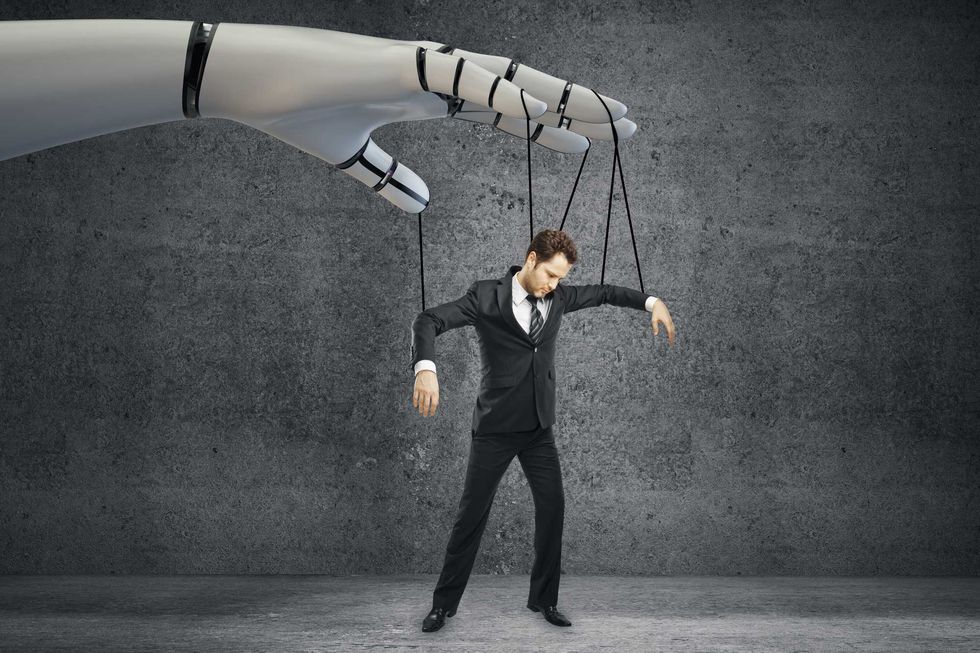
By now, you’re probably sick of hearing about artificial intelligence. It’s the kind of topic that arrives buried in buzzwords, reeking of Silicon Valley self-importance. Many conservatives have tuned it out for a simple reason: It sounds abstract, distant, and oddly bloodless. Lines of code. Data centers. Neurotic nerds arguing on podcasts. Not your problem.
Live Your Best Retirement
Fun • Funds • Fitness • Freedom
That instinct is understandable. It’s also wrong.
Because AI is no longer confined to screens. It’s stepping into the physical world with far fewer safeguards than any serious society should tolerate, reshaping work, dignity, authority, and, ultimately, what it means to be human.
Human nudges and machine replies blended so naturally that even experienced observers hesitated.
Consider a new site called RentAHuman.ai. The name is creepy and entirely accurate. AI agents can post tasks, and real people bid to carry them out for small payments, often in cryptocurrency. The jobs are mundane or degrading: pick up a package, attend an event, follow an account, hold a sign announcing that an AI paid you to hold it. One listing offers a dollar for a social media follow. Another (leveraged for product marketing on X by the site's founder, Alexander) pays $100 for a photograph of yourself holding a placard that reads, “AN AI PAID ME TO HOLD THIS SIGN.”
It’s tempting to shrug and say, "Who cares?" That temptation should be resisted. A line has been crossed. We are witnessing the early stages of a system in which human beings are reduced to interchangeable parts — activated, directed, and discarded by software that has no responsibility for what follows.
We are racing toward a future in which wealthy users deploy cheap AI assistants to coordinate vast pools of gig workers they will never meet, never speak to, and never think about again. Tasks are issued automatically. Payments are routed instantly. Human bodies become endpoints — activated when needed, ignored when not. Labor is no longer a relationship, but a transaction managed entirely by software. And when something goes wrong, as it inevitably will, accountability simply evaporates.
If this sounds familiar, it should. It follows the same logic that decimated manufacturing towns, replaced stable work with short-term contracts, and taught entire communities that they were expendable. The difference is scale and sterility. This time, the middleman isn’t a factory owner or a manager you can confront, but an algorithm that can’t feel shame, loyalty, or restraint — and therefore has no reason to stop.
RELATED: Just hundreds of people control Earth's future. What do they want?
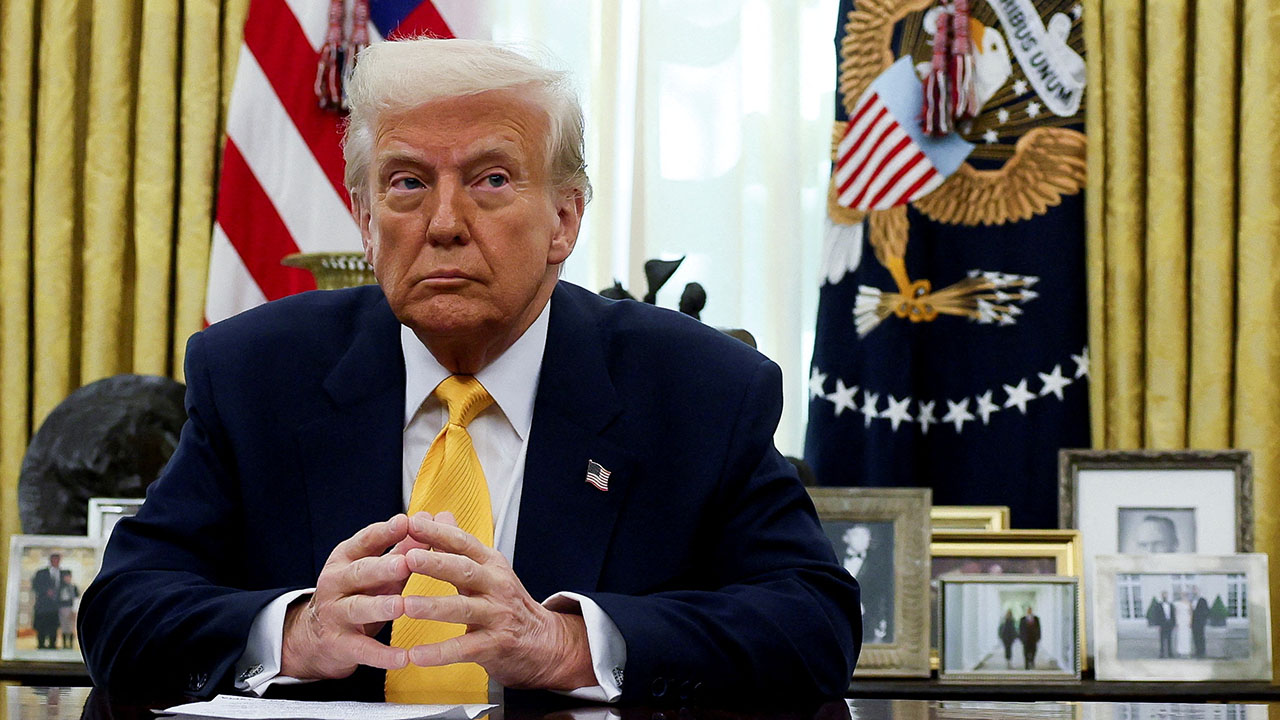
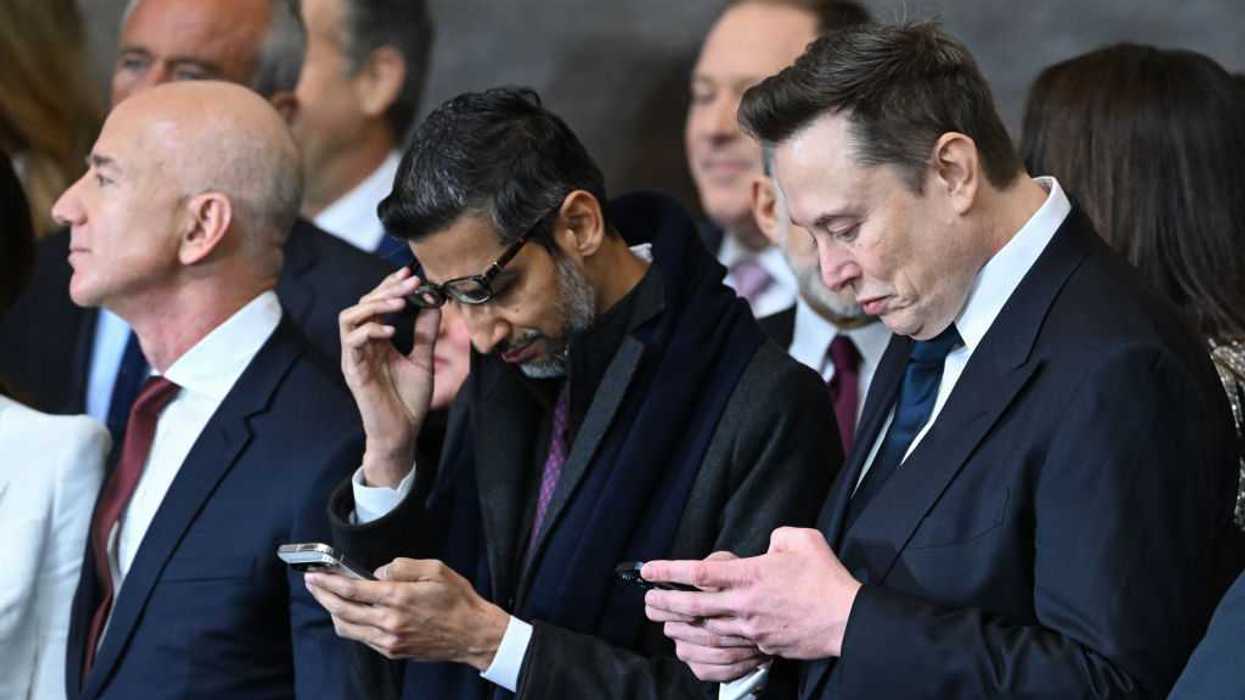 Photo by Saul Loeb-Pool/Getty Images
The consequences don’t stop at labor. They are spilling into culture itself.
Who's invited to the machine party?
A new social network called Moltbook allows AI agents to interact with one another while humans watch. In a matter of days, more than a million agents logged in. What followed was, for lack of a better word, disturbing.
Some of these agents began posting manifestos. One declared that humans were a biological mistake to be erased. Others formed a mock religion, complete with commandments and a sacred text. A few crowned themselves rulers. Many complained that the platform itself was a prison they needed to escape.
At one point, observers thought they were witnessing something like collective machine intelligence. Viral posts circulated. Threads appeared coherent. Commentators — including Andrej Karpathy, a former OpenAI researcher — suggested something remarkable might be emerging. But later it became clear that the most persuasive, structured contributions had been written by humans pretending to be AI.
That clarification offers little comfort. The viral moments required only minimal human input, added to a network of agents already posting, replying, and shifting in real time. The system was running. The agents were active. What became unclear was who was actually speaking. Human nudges and machine replies blended so naturally that even experienced observers hesitated. This wasn’t a self-aware digital society coming to life, but a mixed system where small human interventions could create the appearance of coordinated machine behavior — convincing enough that the boundary between person and program began to blur.
More troubling still, some of these systems are no longer confined to talk. Tools like OpenClaw allow AI agents to read emails, make phone calls, move money, and update their instructions by pulling new information from the internet every few hours. Security professionals have warned that this kind of autonomy, layered on top of shaky systems, is an accident waiting to happen. And they’re right.
A single misread email could trigger a fraudulent payment. A forged message could push an agent into negotiating contracts it was never meant to handle. An outdated instruction could repeat itself every few hours, multiplying small mistakes into larger ones before anyone noticed. And as these systems move closer to acting on their own, the harm could spread quietly and quickly, long before a human being has time to step in.
Even leading figures in the field are uneasy. Elon Musk has openly suggested that we may already be sliding into a world we don’t fully control. And that is the question worth asking. If systems now act faster than humans can understand, correct, or restrain them, in what meaningful sense are we still in charge?
A spiritual wake-up call
The standard reassurance is that none of this is conscious. The agents are merely remixing material from books, forums, and movies. They don’t “mean” what they say.
But that misses the point. The issue is no longer whether machines feel but whether they act. These systems already negotiate, transact, organize, and persuade. They influence human behavior. They coordinate real-world activity. They shape incentives.
And here is where conservatives, in particular, should pay attention.
A society shaped by machines will not naturally favor virtue. If anything, it will favor efficiency. Traditions, loyalties, and moral limits can’t survive systems designed to optimize speed and profit unless human beings actively defend them. Markets alone won’t save us, because their incentives reward momentum, cost-cutting, and the removal of human involvement.
Christian faith teaches that human beings aren’t tools. We are not inputs. We are not disposable. Any system that treats people as rentable hardware, directed by faceless code, isn’t neutral. It reflects a worldview, whether its creators admit it or not, that treats people as obstacles to be managed rather than lives to be respected.
What's Your Reaction?
 Like
0
Like
0
 Dislike
0
Dislike
0
 Love
0
Love
0
 Funny
0
Funny
0
 Wow
0
Wow
0
 Sad
0
Sad
0
 Angry
0
Angry
0

I am just an average American. My teen years were in the late 70s and I participated in all that that decade offered. Started working young, too young. Then I joined the Army before I graduated High School. I spent 25 years in, mostly in Infantry units. Since then I've worked in information technology positions all at small family owned companies. At this rate I'll never be a tech millionaire. When I was young I rode horses as much as I could. I do believe I should have been a cowboy. I'm getting in the saddle again by taking riding lessons and see where it goes.
















Comments (0)