

Google’s new motto: Don’t be Christian
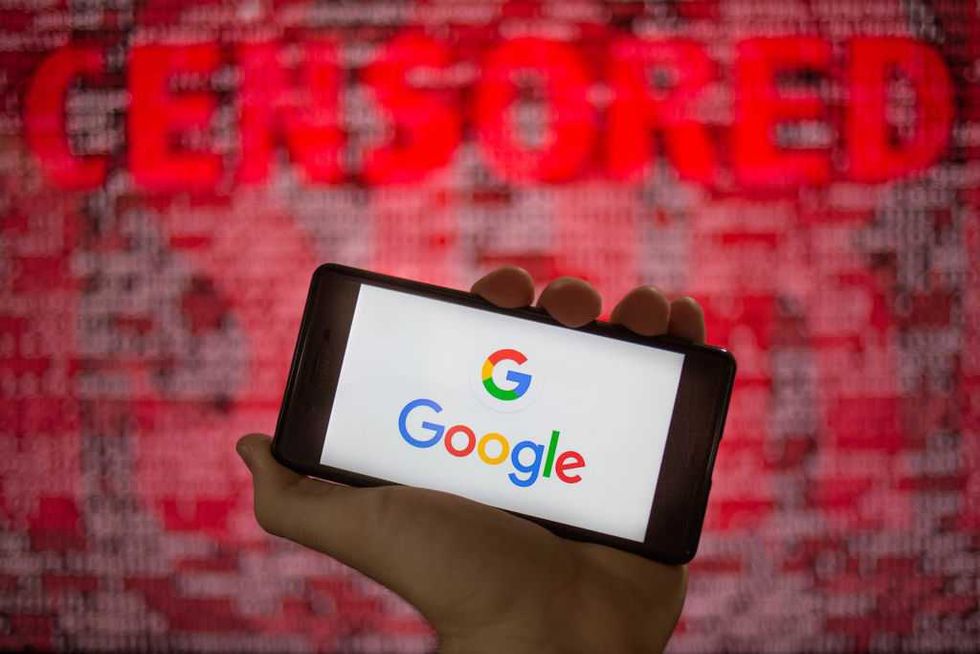

Google once had an informal motto: “Don’t be evil.” How about be ideologically driven? Opaque? Arbitrary?
Live Your Best Retirement
Fun • Funds • Fitness • Freedom
Google sells itself as online Switzerland — a neutral search engine that doesn’t tilt one way or the other. That neutrality vanishes fast when you search for something its algorithm doesn’t like. Suddenly the thing you want becomes strangely hard to find unless you already know exactly where it lives. If you don’t, good luck.
You can’t fix what you’re not allowed to understand.
And good luck advertising it, too — if Google disapproves.
Most people still think of Google as a search engine. That’s outdated. Google is the 900-pound gorilla of online advertising through Google Ads. It has vacuumed up so much of the market that anyone who wants to advertise online usually has to go through Google’s pipeline, under Google’s terms, with Google acting as judge and jury.
This isn’t the print era, when advertisers bought space from newspapers and magazines directly, publication by publication. Today, a huge share of the ad economy runs through a single gatekeeper.
Some might call that a monopoly. Monopolies become even more dangerous when they turn ideological.
Google — and it is far from alone — leans hard left. It dislikes conservative and Christian content, and it has learned how to suppress it without leaving fingerprints. It buries the content in search rankings so that almost no one sees it unless they already know where to look. It throttles monetization. It blocks ads with vague warnings and “policy” language designed to end the conversation.
Google and TikTok now appear to be doing the same thing to faith-based content.
Have you heard of TruPlay? Probably not. That’s the point.
TruPlay is an entertainment app that offers faith-based games and videos for kids. It’s explicitly family-friendly — no sexual themes, no violence, no garbage disguised as “content.” Parents want that. Millions of them. There’s a market for wholesome screen time, and there’s money to be made providing it.
But according to the American Center for Law and Justice, Google has refused to do business with TruPlay for ideological reasons. The ACLJ says Google rejected TruPlay’s efforts to launch advertising campaigns, citing “religious belief in personalized advertising.”
Read that again. Google flagged religious belief as the problem.
The ACLJ says TruPlay tried to comply, filing appeals and revising its ad content repeatedly, only to receive the same rejection notices no matter what changes it made. The ads weren’t inflammatory. They were straightforward: “Turn Game Time into God Time,” “Christian Games for Kids,” “Safe Bible Games for Kids.”
Google’s policy supposedly prohibits “selecting an audience based on sensitive information, such as health information or religious beliefs.” But TruPlay wasn’t targeting a religious audience or harvesting private data. It was advertising Christian kids’ content to the general public.
Google’s response wasn’t “you’re targeting.” It was “your content is too sensitive to advertise.”
That’s the move. “Sensitive” once meant porn, violence, or content not suitable for children. Now it means “Christian games for kids.”
TikTok, the ACLJ says, applied the same logic with even less transparency. The platform allegedly suspended TruPlay’s advertising account over unspecified “repeated violations,” without explaining what those violations were. The ACLJ says one rejected ad contained the word “church.” Another issue allegedly involved an App Store preview image showing Jesus on the cross — not in the ad itself, but in the app’s images. The ACLJ claims TikTok barred advertising anyway.
RELATED: Google’s new plan: To learn everything about you from your online shopping
 Photo by Idrees MOHAMMED/AFP via Getty Images
You can’t fix what you’re not allowed to understand. That’s the point of opacity. You don’t get a rule you can follow. You get a verdict.
What makes this even more revealing is the economic angle. This isn’t Google or TikTok avoiding ads that risk scaring off customers. TruPlay offers the kind of content parents actively want. Platforms should want that money. Instead, they appear willing to lose revenue just to suppress anything overtly Christian and family-friendly.
The ACLJ has sent a letter to Rep. Jim Jordan (R-Ohio), chairman of the House Judiciary Committee, urging an investigation into what it calls “systemic discrimination” against Christian content creators and advertisers — part of a broader pattern of viewpoint-based censorship.
Google and TikTok will respond with the standard defense: We’re private companies. We can do what we want.
Fine. But stop pretending you’re Switzerland. If you present yourself as a neutral platform open to all, while quietly functioning as a political gatekeeper, you don’t get to hide behind the language of neutrality when people notice the double standard.
You can’t have it both ways. Either you’re Switzerland — or you’re not.
Google and TikTok are not. It’s time to treat them accordingly.
What's Your Reaction?
 Like
0
Like
0
 Dislike
0
Dislike
0
 Love
0
Love
0
 Funny
0
Funny
0
 Wow
0
Wow
0
 Sad
0
Sad
0
 Angry
0
Angry
0

I am just an average American. My teen years were in the late 70s and I participated in all that that decade offered. Started working young, too young. Then I joined the Army before I graduated High School. I spent 25 years in, mostly in Infantry units. Since then I've worked in information technology positions all at small family owned companies. At this rate I'll never be a tech millionaire. When I was young I rode horses as much as I could. I do believe I should have been a cowboy. I'm getting in the saddle again by taking riding lessons and see where it goes.
















Comments (0)