

Ketanji Brown Jackson Demonstrates That She Still Doesn’t Know What a Woman Is
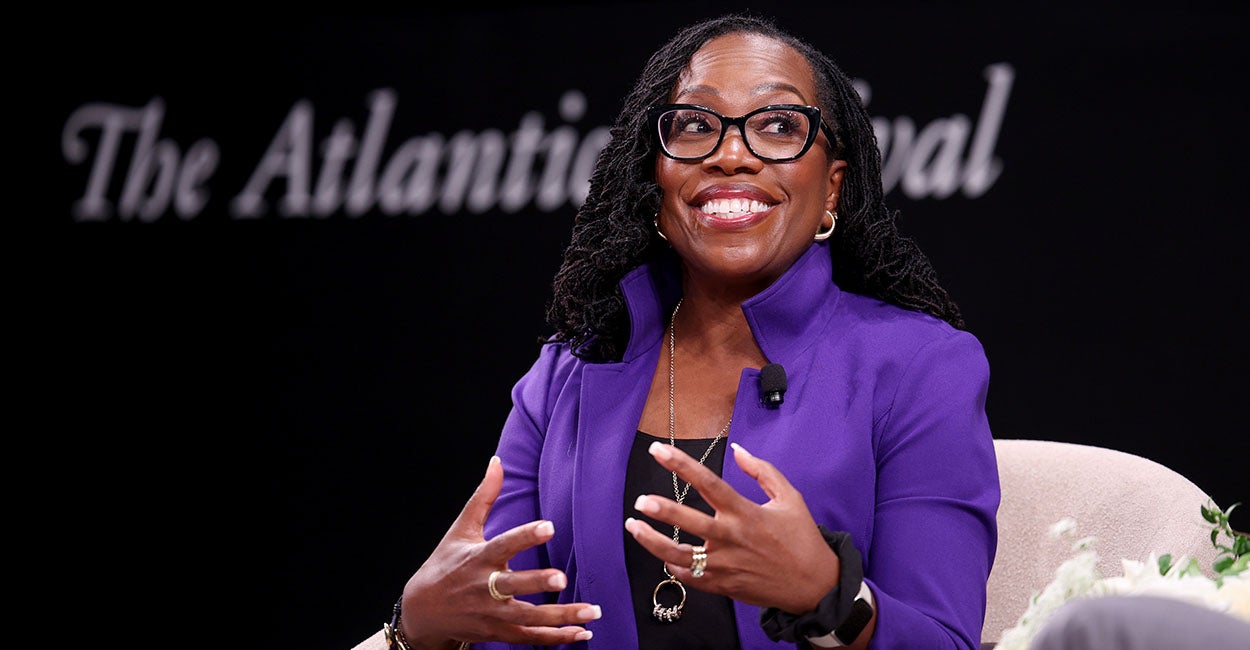
Supreme Court Justice Ketanji Brown Jackson, the woman who refused to define the word “woman” in her confirmation hearing, still seems unable to grasp the concept that a man does not become a woman just by saying so.
Live Your Best Retirement
Fun • Funds • Fitness • Freedom
The Supreme Court heard oral arguments Tuesday in two women’s sports cases—West Virginia v. P.B.J. and Little v. Hecox—where the American Civil Liberties Union, representing male athletes who claim to identify as women, is challenging the constitutionality of laws in Idaho and West Virginia protecting women’s sports.
The ACLU claims that forbidding men from competing in women’s sports violates the Constitution by engaging in discrimination on the basis of sex. However, the organization also suggests that discriminating on the basis of “gender identity” constitutes the same thing as sex discrimination.
That’s where Ketanji Brown Jackson’s confusion comes in.
Sen. Marsha Blackburn, R-Tenn., famously asked Jackson to define the word “woman” in her confirmation hearing in 2022, but Jackson refused, stating, “I’m not a biologist.”
The justice has had nearly four years to come up with a definition, but her questions in oral arguments this week suggest she’s still out to lunch on the basic distinction between men and women.
Jackson’s ‘Transgender Girls’
Jackson first suggested to Michael Williams, West Virginia’s solicitor general, that it was unfair for “cisgender girls”—girls who don’t claim to identify as boys—to compete in girls’ sports while also barring “transgender girls”—boys who claim to identify as girls—from competing with them.
“For cisgender girls, they can play consistent with their gender identity, for transgender girls, they can’t,” she said.
Williams explained that this very fact shows the law doesn’t discriminate on the basis of gender identity.
“That’s useful evidence as to the lack of a transgender-based discrimination, because if the legislature were just sort of unsettled by the notion of transgender athletes, I think the answer would have been to bar them” from sports.
Jackson Still Doesn’t Get It
The justice later asked Alan Hurst, the solicitor general of Idaho, why the law doesn’t discriminate on the basis of gender identity. “The law expressly aims to ensure that transgender women can’t play on women’s sports teams, so why is that not a classification on the basis of transgender status?” she asked.
Hurst painstakingly explained, “The question is whether the application of the law turns on transgender status, and it doesn’t. It turns on sex. The legislature did not want to exclude transgender people from sports, it wanted to keep women’s sports women-only and exclude males from women’s sports.”
“But with respect to two individuals, a cis woman and a trans woman, who both want to play on a team that reflects their gender identity, this law operates differently based on their sex, right?” Jackson asked.
Hurst, somehow retaining his composure, explained, “The law does operate differently based on their sex, as your honor just said. It does not operate differently based on their transgender identity.”
“But it treats transgender women differently than cisgender women, doesn’t it?” Jackson persisted.
Hurst explained that the law poses a different impact to men who identify as women than it does for women who do not question reality. However, he added, this is a downstream effect from the law’s distinction between men and women according to biology, not identity.
The Language Game
Throughout these exchanges, Ketanji Brown Jackson used the language of “cisgender girls” and “transgender girls” to obscure the fact that she was talking about girls and boys. She also used the language “girl assigned at birth” to suggest that the recognition of biological sex is somehow suspect, as opposed to a person’s claimed gender identity which is solid.
Any notion of unfairness immediately evaporates when we speak the honest truth: boys should not be allowed to compete in girls’ sports. Boys are not girls, no matter how they claim to identify. Boys who take experimental drugs to make their bodies look like girl bodies are also still boys, no matter how tragic their gender confusion is.
Laws reserving women’s sports for women do not violate the Constitution because the standard here is consistent: all men, regardless of their “gender identity,” are excluded from women’s sports, which are held separate in order to give women opportunities to compete fairly.
No amount of verbal gymnastics can erase the fact that a man is a man and a woman is a woman, and a man cannot become a woman. Yet Ketanji Brown Jackson cannot admit this, because if she does, the entire edifice of gender ideology falls apart.
I may not be a biologist, but I know what a woman is. I may not be a Supreme Court justice, but I can recognize an Orwellian attempt to twist language into a weapon for a false ideology.
One thing’s for sure: Ketanji Brown Jackson’s dissent in this case is going to make for entertaining reading.
The post Ketanji Brown Jackson Demonstrates That She Still Doesn’t Know What a Woman Is appeared first on The Daily Signal.
What's Your Reaction?
 Like
0
Like
0
 Dislike
0
Dislike
0
 Love
0
Love
0
 Funny
0
Funny
0
 Wow
0
Wow
0
 Sad
0
Sad
0
 Angry
0
Angry
0

I am just an average American. My teen years were in the late 70s and I participated in all that that decade offered. Started working young, too young. Then I joined the Army before I graduated High School. I spent 25 years in, mostly in Infantry units. Since then I've worked in information technology positions all at small family owned companies. At this rate I'll never be a tech millionaire. When I was young I rode horses as much as I could. I do believe I should have been a cowboy. I'm getting in the saddle again by taking riding lessons and see where it goes.





















Comments (0)