

Prehistoric Pioneers: Study Suggests Ancient Americas Rivaled ‘Cradles Of Civilization’
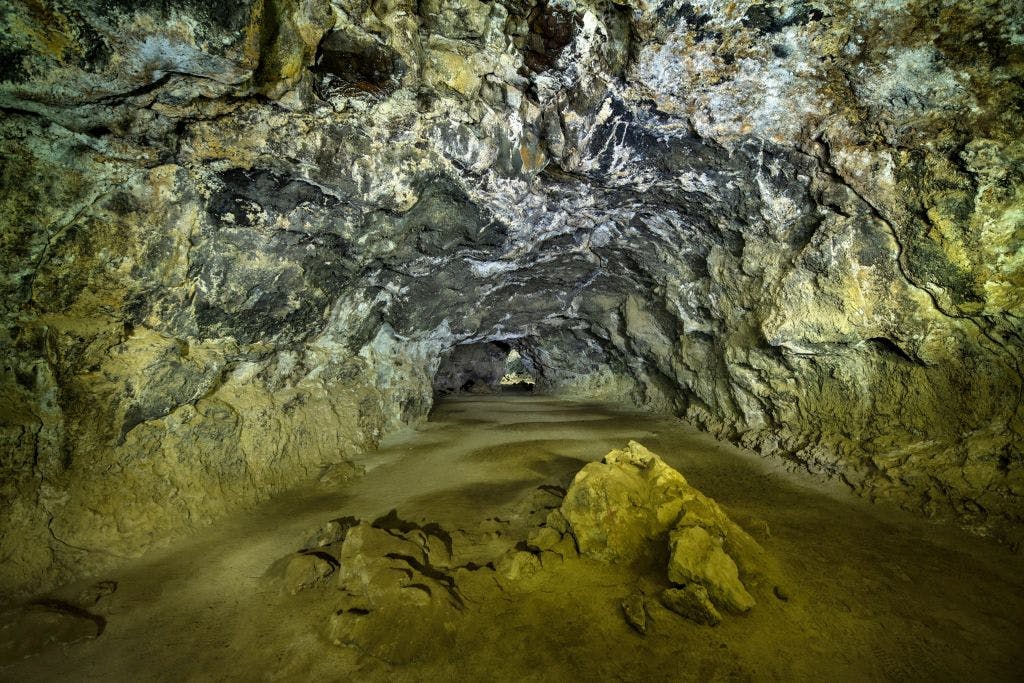
The recent discovery of 12,000-year-old sewn clothing and sophisticated artifacts in Oregon caves represents a significant shift in our understanding of human history, showing that North Americans were far ahead of civilizations in the Eastern Hemisphere in prehistoric times.
Live Your Best Retirement
Fun • Funds • Fitness • Freedom
Published in Science Advances by archaeologist Richard Rosencrance, the study re-evaluates collections from the Cougar Mountain and Paisley Caves, revealing that North America’s earliest inhabitants were not merely “simple” hunter-gatherers, but highly advanced engineers of “Structurally and Functionally Complex Technologies” (SFCTs).
For decades, the narrative of human progress has centered on the Eastern Hemisphere, specifically the rise of the Great Pyramids of Egypt. However, these Oregon artifacts — including the oldest known pieces of sewn animal hide — date back to the end of the last Ice Age, thousands of years before the first stone was laid at Giza.
The discovery places North Americans at the vanguard of prehistoric innovation. Researchers unearthed a piece of elk hide that had been meticulously cleaned, de-haired, and stitched with composite cord made of plant fibers and animal hair. This indicates a mastery of tailoring and needlework that predates the “cradle of civilization” by millennia.
The study argues that these technologies were not luxury goods but essential thermoregulatory tools. Humans are the only hominins to live permanently above 45°N latitude, a feat impossible without complex clothing. Unlike “simple” clothing (draped skins), the “complex” clothing found in Oregon was fitted and sewn, providing critical protection against wind chill and frostbite; multilayered, utilizing diverse materials like bison hide, sagebrush bark, and dogbane, and technologically integrated, as it was supported by the discovery of some of the finest eyed bone needles ever recorded from the Pleistocene Era.
This level of craftsmanship suggests that these early North Americans didn’t merely stumble through the landscape; they used sophisticated wooden hunting traps, braided ropes, and twined baskets to adapt to the severe climatic shifts of the Younger Dryas period.
The preservation of these items — made of materials that usually rot — was made possible by the unique, arid environment of Oregon’s Great Basin. By using modern radiocarbon dating and mass spectrometry, the team proved that while the rest of the world was still millennia away from urban development, North Americans were already manufacturing composite textiles from 15 different plant and animal species, engineering complex mobility aids, similar to the 10,000-year-old canoes recently found in Wisconsin, and executing fine-motor tasks with specialized bone tools that rival any found globally from the same era.
This discovery effectively dismantles the theory of history that focuses solely on stone projectile points and big-game hunting, instead offering a more balanced, nuanced portrait of a society.
What's Your Reaction?
 Like
0
Like
0
 Dislike
0
Dislike
0
 Love
0
Love
0
 Funny
0
Funny
0
 Wow
0
Wow
0
 Sad
0
Sad
0
 Angry
0
Angry
0

I am just an average American. My teen years were in the late 70s and I participated in all that that decade offered. Started working young, too young. Then I joined the Army before I graduated High School. I spent 25 years in, mostly in Infantry units. Since then I've worked in information technology positions all at small family owned companies. At this rate I'll never be a tech millionaire. When I was young I rode horses as much as I could. I do believe I should have been a cowboy. I'm getting in the saddle again by taking riding lessons and see where it goes.

























Comments (0)