

A Physician’s Case For RFK’s Microbiome Medicine
Premium domains for sale
Freedom Is Back In Style
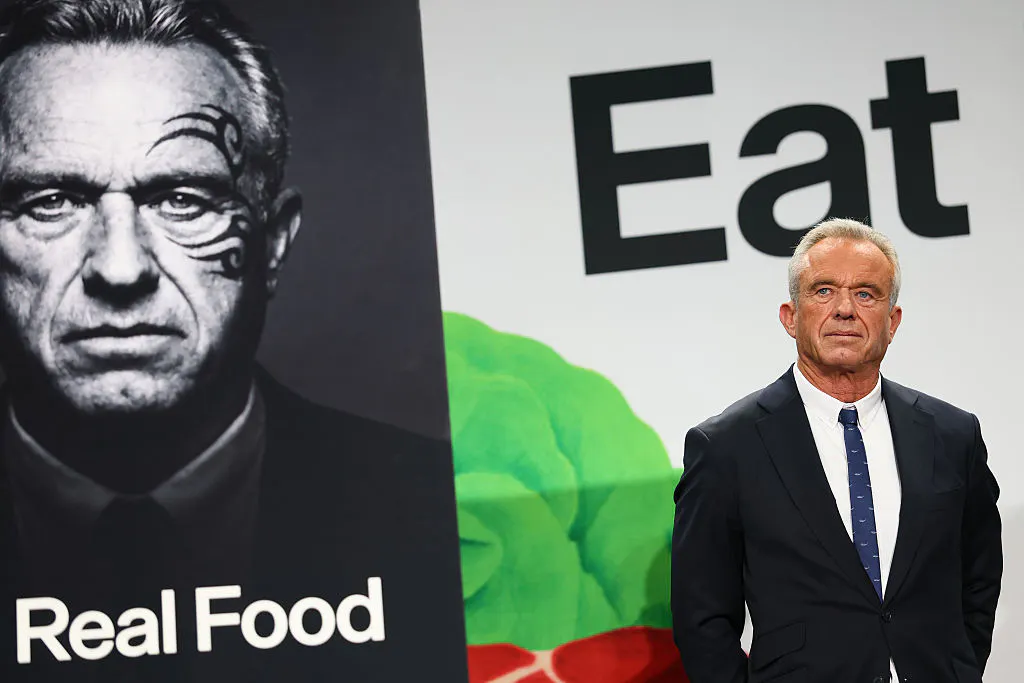
Why are all the president’s men obsessed with sauerkraut? Last month, Vice President JD Vance acknowledged from the White House podium that he gets dieting advice from Health and Human Services Secretary Robert F. Kennedy, Jr., stating: “My advice to you is if you want to lose weight, call Bobby Kennedy, and if you want to enjoy what you eat, don’t call Bobby Kennedy.” Mr. Kennedy, meanwhile, is apparently so devoted to his diet that, according to his wife, he brings his own sauerkraut to restaurants.
Freedom Is Back
In Style
Premium domains for sale
Some additional context is warranted. RFK Jr. does look extraordinarily fit for his age. He is also a man who has voluntarily submerged himself in Washington, D.C.’s notoriously bacteria-polluted Rock Creek and once transported a dead bear in his car before abandoning it in Central Park. Conventional thinking has never been his strong suit.
These dietary declarations piqued my interest because an autoimmune issue recently forced me to re-examine my own diet. I had since been running my own clinical trial in nutrition (N=1), and the results had become difficult to ignore. They were as befuddling as they were successful.
I need to set the stage, though: like many Americans, I have always liked sugar. I found an early morning donut after an overnight shift to be perhaps God’s greatest gift to man; but like clockwork, 90 minutes later I’d be almost asleep or highly irritable. A sandwich on brioche would have me ready for a nap within an hour; the same went for a bag of potato chips or a bowl of pasta. I never connected any dots; I thought needing a nap after a meal was just how my body worked.
Despite my “evidence-based” instincts as a doctor, I dramatically changed my diet by cutting carbohydrates and gluten and eating primarily meat, vegetables, and fermented foods like sauerkraut. Unexpectedly, the afternoon crashes disappeared. So did the lack of focus, irritability, and disrupted nighttime sleep. I even noticed a dose-response relationship: the less carbs I ate, the better I felt. Best of all, my family said I was becoming a nicer person, and I couldn’t deny something was different. I had a reservoir of motivation I hadn’t had before, and to my utter amazement, I actually felt happier.
I had spent years practicing medicine without fully appreciating how dramatically diet impacts energy, mood, and behavior. I worked in a world where powerful medications, quick thinking, and procedures saved lives; diet wasn’t a lever I worried about.
So why did I feel so much better on a diet of mostly meat and sauerkraut? And why are the biggest names in the MAGA movement saying the same? It all comes down to the gut. Our intestinal lining is the living border between our bloodstream and the outside world. Think of it as the single most effective border control in the known world — an unbelievably complex wall. Every day, the worst offenders, bacteria and other substances, try to cross the wall, and the intestinal lining has to stop them while also granting entry visas to the good nutrients that keep you healthy and alive. It’s an incredibly complicated assignment.
Now imagine a moat surrounding that wall, teeming with 38 trillion microorganisms that carry out their own chemistry to strengthen that wall. This is the gut microbiome: an ecosystem of organisms that helps us digest food, produce biologically active compounds, and communicate with our immune system.
Our immune system mans the entire length of the wall, which is about 350 square feet in the average human. Like a radar system, our immune system identifies every molecule coming in and decides what to keep and what to reject. If it detects a serious invader like Salmonella, it activates a complex cascade of defense mechanisms. If our food choices don’t support the wall through overreliance on sugar, processed chemicals, or simply damage the microbiome, the wall breaks down along with the precision of the immune system. Without the gut barrier, inflammation and autoimmune disease can soon follow.
Breakdown here also leads to significant brain function issues. Why? Because our gut is in constant contact with our brain through nerves and hormones. In fact, most of our serotonin is made in the gut. Gut microbes produce compounds involved in metabolic and neurotransmitter signaling, potentially influencing mood and cognition. There’s a reason scientists sometimes call the gut our “second brain.”
Every food choice we make either builds our wall or destroys it, helps or hurts our microbiome, supports or sabotages our mind. In many ways, we literally are what we eat.
Sauerkraut and foods like it build our intestinal wall integrity in three ways. First, the soluble fiber in cabbage is ideal fuel for the good bacteria your gut relies on to maintain the barrier and keep the bad guys out. Second, the fermentation process that produces sauerkraut breaks down the carbohydrates in the cabbage and produces a host of good bacteria, all of which also work to strengthen the wall. Thirdly, these good bacteria produce short-chain fatty acids like butyrate, which nourish cells lining the colon and help maintain the intestinal barrier.
A Stanford study found that a diet rich in fermented foods increased microbiome diversity and reduced several markers of inflammation. That doesn’t mean sauerkraut cures disease, but it suggests something important about the relationship between food, gut bacteria, and immune function.
Now consider the other half of the equation: grass-fed meat and dramatically fewer carbohydrates. Carbohydrate-based foods raise insulin, which drives glucose out of the blood and into cells quickly for use. But insulin also tells your body to store fat and keep it there for later. Reducing carbohydrates substantially changes how the body uses energy. When carbohydrate intake falls low enough, the liver produces ketones from fat, providing an alternative fuel source. Ketogenic diets have an established medical role in treating certain forms of epilepsy (alongside medication) and can improve blood glucose and weight control in some people with type 2 diabetes. Researchers are also investigating their potential effects on neurological and psychiatric conditions, although that evidence remains preliminary.
For me, reducing carbohydrates coincided with the disappearance of the fatigue and irritability I had come to accept as normal. The improvement likely came from a combination of lower insulin levels, more ketogenic compounds in the bloodstream, intermittent fasting, and better sleep. But regardless of the cause, I felt significantly better, and my labs showed it, too. And that’s why Washington’s sudden fascination with Mr. Kennedy’s dietary choices interests me. Underneath the jokes about sauerkraut is a serious scientific conversation about the microbiome, metabolic health, inflammation, and the relationship between food and the brain.
America is haunted by obesity, diabetes, cardiovascular disease, and other chronic conditions strongly influenced by diet. These have driven our mortality rate above other developed nations. The medical establishment’s ignorance of nutrition has become embarrassing. If we’re serious about preventing disease, medical education, especially residencies, must prioritize a much more sophisticated understanding of how food affects human health. Medical students should learn it the same way they learn about drugs and medicine, because, in a very real way, food is medicine.
None of this means everyone should eat steak and sauerkraut. Ketogenic diets aren’t appropriate for everyone, and some people experience substantial increases in LDL cholesterol. Fermented foods aren’t miracle cures. Individual health conditions matter, and significant dietary changes should be discussed with a clinician when appropriate.
But we have become extraordinarily sophisticated at treating the consequences of poor metabolic health while remaining remarkably casual about one of its most important determinants. Food isn’t simply a matter of calories and willpower. It influences the chemistry of nearly every system in the body, and improving what we eat can be one of the most powerful interventions available to us.
I had to be dragged kicking and screaming into eating better because, frankly, I thought dietary changes had little to no effect on my problems. I was wrong. “Where is the evidence?” I often said. But something had to change about my health; I’m glad I did it, and I’m still doing it because it has worked.
The health implications for Americans are more important than the politics. But if a jar of fermented cabbage gets Americans thinking more seriously about the relationship between what they eat and how they feel, perhaps Mr. Kennedy is onto something worth discussing.
So yes, food is medicine. Build your wall, or your body will pay for it. And make sauerkraut great again.
***
Dr. Benjamin Chacko is an Emergency Medicine Physician and the father of two sons.
More from this network:
Domains for Sale · GOTPeople.org · TheDSAPlatform · The Truth About Socialism
What's Your Reaction?
 Like
0
Like
0
 Dislike
0
Dislike
0
 Love
0
Love
0
 Funny
0
Funny
0
 Wow
0
Wow
0
 Sad
0
Sad
0
 Angry
0
Angry
0

I am just an average American. My teen years were in the late 70s and I participated in all that that decade offered. Started working young, too young. Then I joined the Army before I graduated High School. I spent 25 years in, mostly in Infantry units. Since then I've worked in information technology positions all at small family owned companies. At this rate I'll never be a tech millionaire. When I was young I rode horses as much as I could. I do believe I should have been a cowboy. I'm getting in the saddle again by taking riding lessons and see where it goes.
Premium domains for sale




















Comments (0)