

Against auto tariffs for China? So was Europe ... and it's not going well

Premium domains for sale
Freedom Is Back In Style
On a recent episode of "The Drive," my co-host Karl Brauer and I discussed one of the most contentious issues in the automotive industry today: tariffs.
Freedom Is Back
In Style
Premium domains for sale
It's one of those topics everybody seems to have an opinion about.
President Trump's tariff strategy is ultimately aimed at creating incentives for companies to build products in the United States rather than elsewhere.
For many people in the anti-tariff camp, the argument against them is straightforward. Tariffs raise prices, distort markets, and protect industries that should simply learn to compete. In the automotive world, the response is often some version of: "American automakers need to compete with China."
To which Karl offered a simple response: Europe tried that.
Closing time
The results haven't been encouraging, to say the least.
Over the past several years, Chinese automakers have rapidly expanded across Europe, capturing market share with aggressively priced vehicles while many traditional European manufacturers struggle to keep up. Volkswagen recently announced plans to close a plant in Germany for the first time in the company's 88-year history.
Other major automakers have announced layoffs, restructuring efforts, and production cuts as competition intensifies.
Every time someone argues that tariffs are unnecessary because domestic manufacturers should simply compete with Chinese imports on an open playing field, it's worth looking across the Atlantic and asking a simple question:
How is that working out for Europe?
The answer is complicated, but it's difficult to ignore the warning signs.
Manufacturing matters
Supporters of tariffs aren't simply arguing for higher prices or protectionism for its own sake. They're arguing that manufacturing matters. Jobs matter. Industrial capacity matters. And once those things disappear, they're not easily rebuilt.
That's especially true in the automotive industry, where factories support entire ecosystems of suppliers, contractors, transportation networks, and skilled workers.
We're already seeing evidence of what domestic investment can accomplish here in the United States.
Hyundai's growing manufacturing presence in Georgia has become one of the most significant automotive investments in the country. Combined with suppliers and battery production facilities, the project is expected to support thousands of jobs. For many workers in the region, those positions represent opportunities that simply didn't exist before.
The same pattern is playing out across the South. Automakers including Kia, Mercedes-Benz, Volkswagen, Nissan, Ford, General Motors, and others continue expanding their U.S. production footprints.
These projects don't just create assembly jobs. They support entire communities, generating opportunities for local businesses, contractors, suppliers, and workers throughout the region.
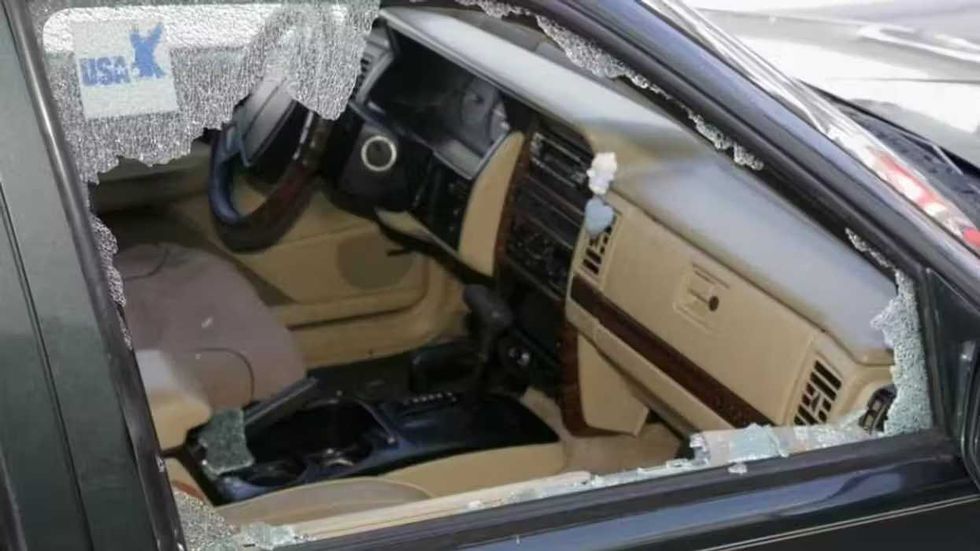
RELATED: Gone in 60 seconds: How high-tech thieves can steal your car
 Jeff Greenberg/Getty Images
Price check
Critics often warn that tariffs will dramatically increase vehicle prices. The reality is more nuanced.
Modern vehicles are assembled from components sourced around the world. The impact of tariffs depends on where those components are produced, where final assembly takes place, and how manufacturers choose to absorb or pass along those costs.
For many mainstream vehicles, the effect may be relatively modest. Luxury brands such as Ferrari, Lamborghini, Aston Martin, Rolls-Royce, and Porsche face a different situation because they are unlikely to move production to the United States.
But let's be honest: Buyers spending hundreds of thousands of dollars on an exotic sports car aren't facing the same concerns as a family shopping for a Honda Accord, Toyota Camry, or Ford Explorer.
The larger question is whether America wants to maintain a strong manufacturing base.
President Trump's tariff strategy is ultimately aimed at creating incentives for companies to build products in the United States rather than elsewhere. Whether you support that approach or not, the objective is clear: encourage investment, create jobs, and strengthen domestic production.
Data breach
There's another factor that rarely receives enough attention in these discussions: data security.
Modern vehicles collect enormous amounts of information, including location data, driving habits, communications, and vehicle performance metrics. As Chinese automakers continue expanding globally, policymakers have increasingly raised concerns about who controls that data and where it ultimately ends up.
Whether those concerns prove justified or not, they are becoming part of the broader conversation surrounding automotive trade policy.
Tariffs aren't a magic solution. They won't instantly rebuild America's industrial base or solve every challenge facing the auto industry.
But the debate shouldn't be reduced to whether tariffs might add a few hundred dollars to the price of a vehicle.
The bigger question is what happens when domestic manufacturers lose market share, close factories, eliminate jobs, and become increasingly dependent on foreign competitors.
Before America dismisses tariffs as outdated or unnecessary, it may be worth paying close attention to the experience of those countries who've already made that bet.
More from this network:
Domains for Sale · GOTPeople.org · TheDSAPlatform · The Truth About Socialism
What's Your Reaction?
 Like
0
Like
0
 Dislike
0
Dislike
0
 Love
0
Love
0
 Funny
0
Funny
0
 Wow
0
Wow
0
 Sad
0
Sad
0
 Angry
0
Angry
0

I am just an average American. My teen years were in the late 70s and I participated in all that that decade offered. Started working young, too young. Then I joined the Army before I graduated High School. I spent 25 years in, mostly in Infantry units. Since then I've worked in information technology positions all at small family owned companies. At this rate I'll never be a tech millionaire. When I was young I rode horses as much as I could. I do believe I should have been a cowboy. I'm getting in the saddle again by taking riding lessons and see where it goes.
Premium domains for sale























Comments (0)