

Beyond ‘Never Forget’: The Ideological Enemy We Refuse To Name
Premium domains for sale
Freedom Is Back In Style
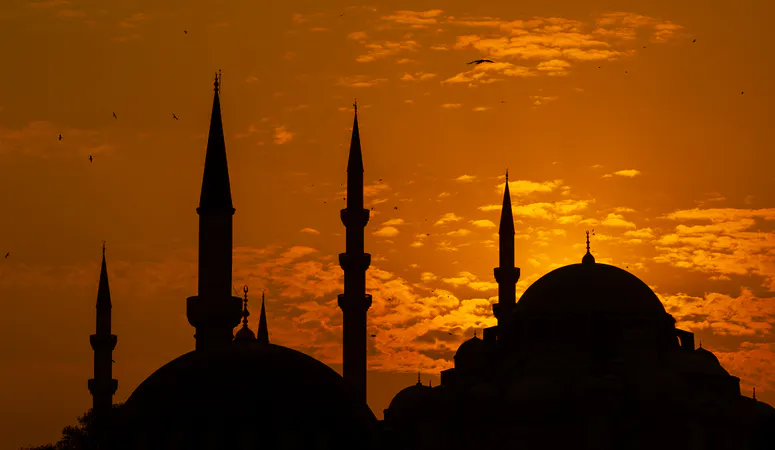
Twenty-five years after September 11, Americans will again remember the smoke over Lower Manhattan, the collapsing towers, and the passengers who fought back aboard Flight 93. We will honor the dead and repeat the vow: Never forget.
Freedom Is Back
In Style
Premium domains for sale
But remembrance is not the same as understanding. We have remembered 9/11 as a terrorist atrocity, but we have failed to confront the ideological challenge it represented — one we remain reluctant to name, understand, and resist.
The men who carried out the attacks were not an invading army. They were the violent edge of a movement that sees liberal democracy not as an order to join on equal terms, but as one to be displaced. Their instrument was terror, but their purpose was much larger.
That distinction matters. Jihadist violence is its loudest expression: spectacular, coercive and impossible to ignore. But political Islam also works through da’wa, or religious “invitation”: the quieter effort to persuade, organize, and advance an Islamist program within open societies.
This is not a claim about Muslims as a people, nor does it deny the diversity of belief and practice among Muslims. It concerns the political theology of Islamism: the effort to make a particular interpretation of Islamic law sovereign over civil authority, equal citizenship and democratic self-government. Its most violent adherents use terror; others seek influence through law, education, social pressure, and institutional accommodation. The methods differ, but the common political claim is that religious doctrine should outrank equal citizenship and democratic self-government.
A liberal democracy can accommodate religious faith. But it cannot survive if any faith, secular creed or political movement claims exemption from the principles that protect everyone else: equal rights under law, freedom of conscience, free speech, reciprocal tolerance, and the right to dissent.
For a quarter-century, Western leaders and institutions have often treated any discussion of Islamist doctrine as an accusation against Muslims. The result is paralyzing confusion. Criticize a political theology that rejects equality between believer and unbeliever, man and woman, or dissenter and authority, and the critic is readily charged with bigotry. Yet refusing to distinguish a people from an ideology is a moral and intellectual failure. It leaves Muslims, reformers, women, religious minorities, secularists, and ex-Muslims without allies.
Among the doctrine’s bravest opponents are Muslims who have risked their lives to challenge its claims of religious and political supremacy. Their existence should end the claim that opposition to Islamist political doctrine is inherently anti-Muslim. They understand, from experience, what many Western elites prefer not to see: Ideas can be dangerous when they demand immunity from criticism and enforce themselves through intimidation.
Muslims deserve the full protection of religious liberty in the West. But religious liberty is not a license for political supremacy, unequal citizenship, or a violence-backed veto over dissent. No religious movement may claim a veto over speech, scholarship, art, apostasy, conversion or political debate. Salman Rushdie’s attack and the murder of Charlie Hebdo’s staff show why a violence-backed claim of religious offense becomes a veto only when a free society accepts it as one.
That principle has weakened where it most needs defenders. A critic can be branded beyond the pale. A university can hesitate before inviting a speaker. A publisher can choose silence. A threat of violence can become an informal censorship regime. None looks like surrender in isolation. Together, they teach free societies to pre-censor themselves.
The underlying problem is not merely fear. It is also a loss of confidence in the civilization that produced the freedoms at stake. Roger Scruton called this oikophobia: a reflexive contempt for one’s own inheritance. A culture that sees itself chiefly as history’s oppressor may hear warnings about illiberal ideas only as prejudice. It can mistake moral clarity for intolerance and unilateral concession for sophistication. In universities, newsrooms and advocacy organizations, an instinct to scrutinize Western failures too often becomes an inability to scrutinize the claims of those who would dismantle Western liberties.
A supremacist ideology that cannot tolerate criticism or scrutiny is not strong; it is insecure enough to enforce its claims through intimidation and, at times, murder. That is the danger worth naming on this anniversary: not simply another September 11, but a free society that loses the confidence to defend the liberties on which its freedom depends.
The alternative to both collective suspicion and silence is principled clarity: distinguishing Muslims from an illiberal political doctrine, while affirming the rights that doctrine seeks to subordinate. Muslims are often among Islamism’s first victims, and some of its bravest opponents are those within the faith who have risked their lives to challenge it. Equal citizenship, freedom of conscience, free speech, and the right to dissent must remain the standard for all.
Defending that standard requires courage — the courage to name an ideology of submission without maligning a people, to protect the liberties that make honest disagreement possible, and to stand with all who refuse coercion. A free society survives not by looking away from hard truths, but by learning their lessons — so that “never forget” becomes “never again.”
***
Richard Landes is a historian, founder of Infidel Awareness Month (InfidelAwareness.com), and author of “Can ‘The Whole World’ Be Wrong? Lethal Journalism, Antisemitism, and Global Jihad.”
More from this network:
Domains for Sale · GOTPeople.org · TheDSAPlatform · The Truth About Socialism
What's Your Reaction?
 Like
0
Like
0
 Dislike
0
Dislike
0
 Love
0
Love
0
 Funny
0
Funny
0
 Wow
0
Wow
0
 Sad
0
Sad
0
 Angry
0
Angry
0

I am just an average American. My teen years were in the late 70s and I participated in all that that decade offered. Started working young, too young. Then I joined the Army before I graduated High School. I spent 25 years in, mostly in Infantry units. Since then I've worked in information technology positions all at small family owned companies. At this rate I'll never be a tech millionaire. When I was young I rode horses as much as I could. I do believe I should have been a cowboy. I'm getting in the saddle again by taking riding lessons and see where it goes.
Premium domains for sale












Comments (0)