

China Has Not Changed Its Mind on Using Military Force to Take Taiwan, the Danger is Still Trending Higher
Premium domains for sale
Freedom Is Back In Style
Summary
Freedom Is Back
In Style
Premium domains for sale
- In March 2021, Adm. Philip Davidson warned Congress that China could attempt to take control of Taiwan within six years.
- More than 100 Chinese naval and coast guard vessels operated in the western Pacific in early November 2026.
- The authors argue that U.S. and allied defense investments could narrow China’s military advantage and affect Beijing’s decisions about Taiwan.
While testifying before Congress in March 2021, then-commander of U.S. Indo-Pacific Command, Adm. Philip Davidson, warned that China’s Secretary General Xi Jinping had instructed his forces to possess the capability to seize Taiwan by 2027.
Thus, the term “The Davidson Window” was coined. Current world events, however, warrant an update to said window, with some U.S. officials recently signaling that Xi may not meet his 2027 goal.
While this may be good news, it doesn’t mean the danger of a Chinese invasion of Taiwan thus precipitating a large-scale U.S.-China conflict is gone. Indeed, the danger may persist or only be deferred.
Much relies on the thinking of one man, Xi Jinping, who has led China since 2013. In the 13 years since, the country has grown substantially in economic strength, military capability, and global influence.
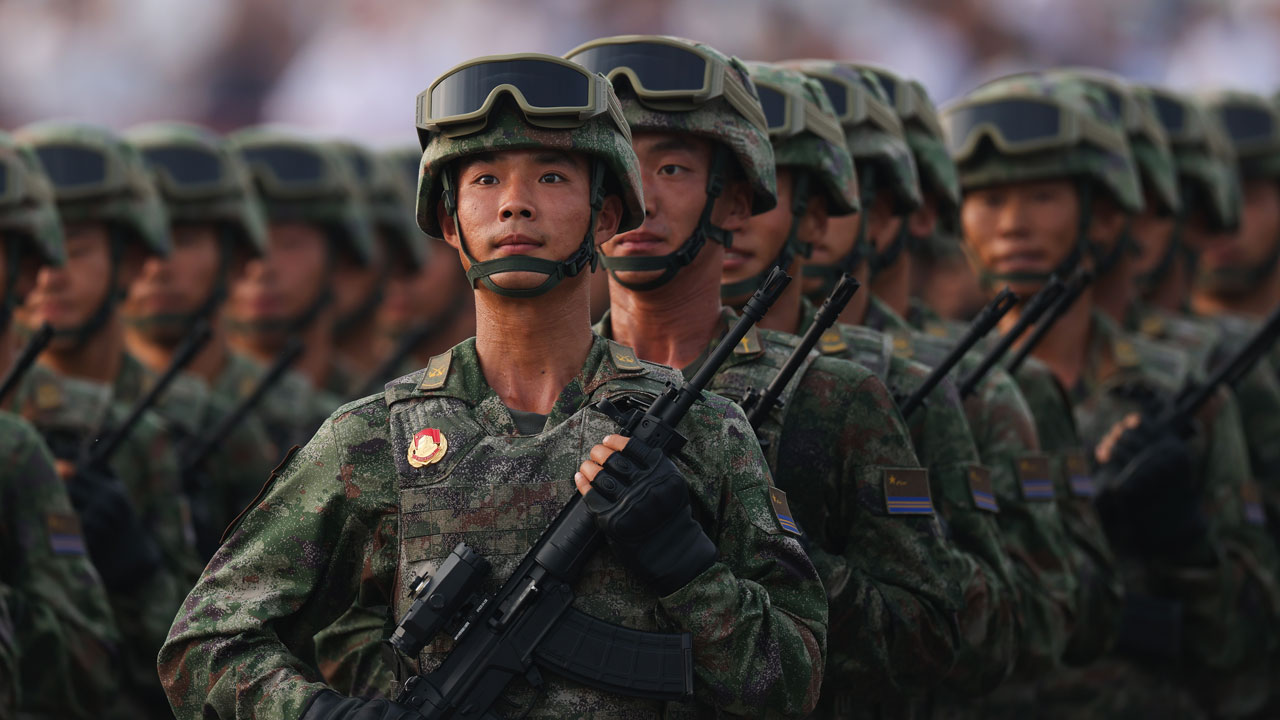
Xi has been less restrained in displaying China’s national power than his predecessors, who were more likely to operate under the adage “hide your strength and bide your time.” During Xi’s term, China has been unabashed in its maritime challenges to neighbors like the Philippines, Japan, and Vietnam. It has also been engaged in prolonged and heightened military activities around Taiwan. The most recent example is an unprecedented 100 naval vessels conducting an unannounced exercise that appears to be a dress rehearsal of a blockade of Taiwan.
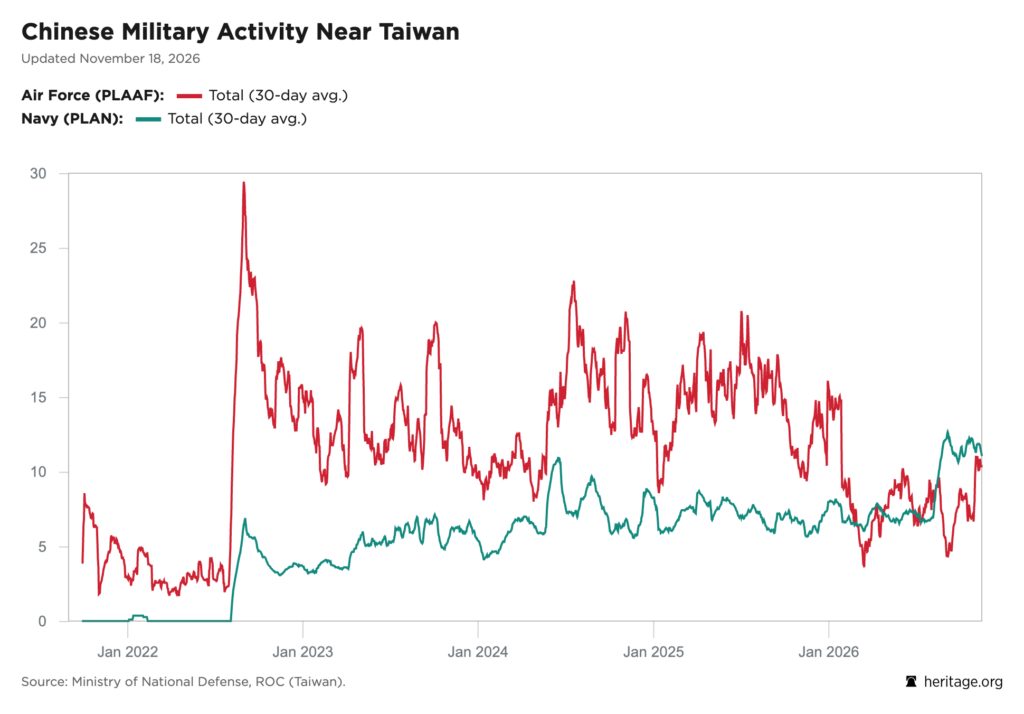
One of Xi’s stated ambitions, which continues to animate the Chinese Communist Party (CCP) as a core national interest, is the absorption of Taiwan into China. A Taiwan operating independently from the CCP reminds Beijing that the Chinese civil war never ended and the CCP considers “unification” a legitimacy issue.
Some analysts believe China will reach its maximum potential this decade and thereafter face relative decline. Should U.S. and regional efforts to bolster military and economic security persist, China’s leaders may believe Beijing confronts a narrowing window in which to act.
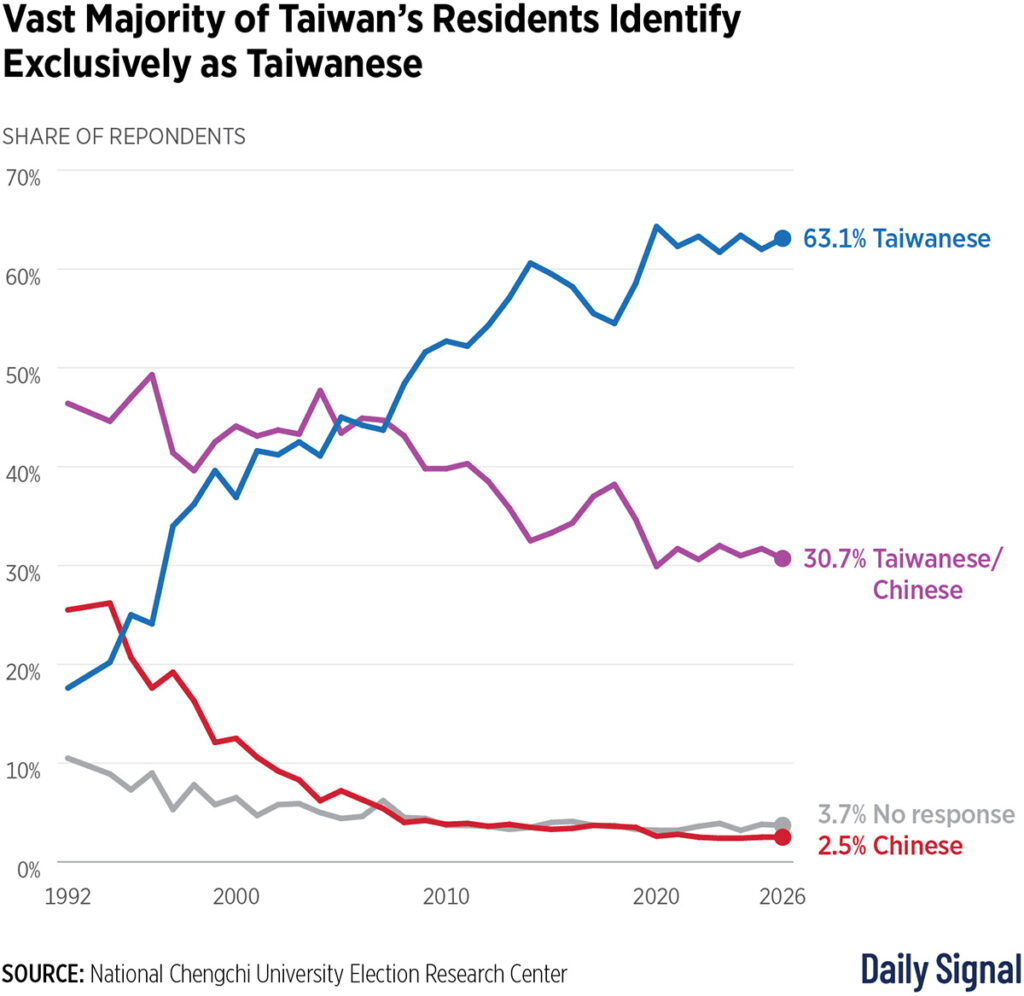
Starting about a decade ago, polls in Taiwan consistently point to a gradual move away from a shared cross-Strait Chinese identity among Taiwan’s population, thus making the peaceful unification Beijing seeks an even more remote prospect. This sentiment partly animated Xi’s controversial 2019 New Year’s speech, where he asserted that the issue of Taiwan will not be passed down generation to generation.
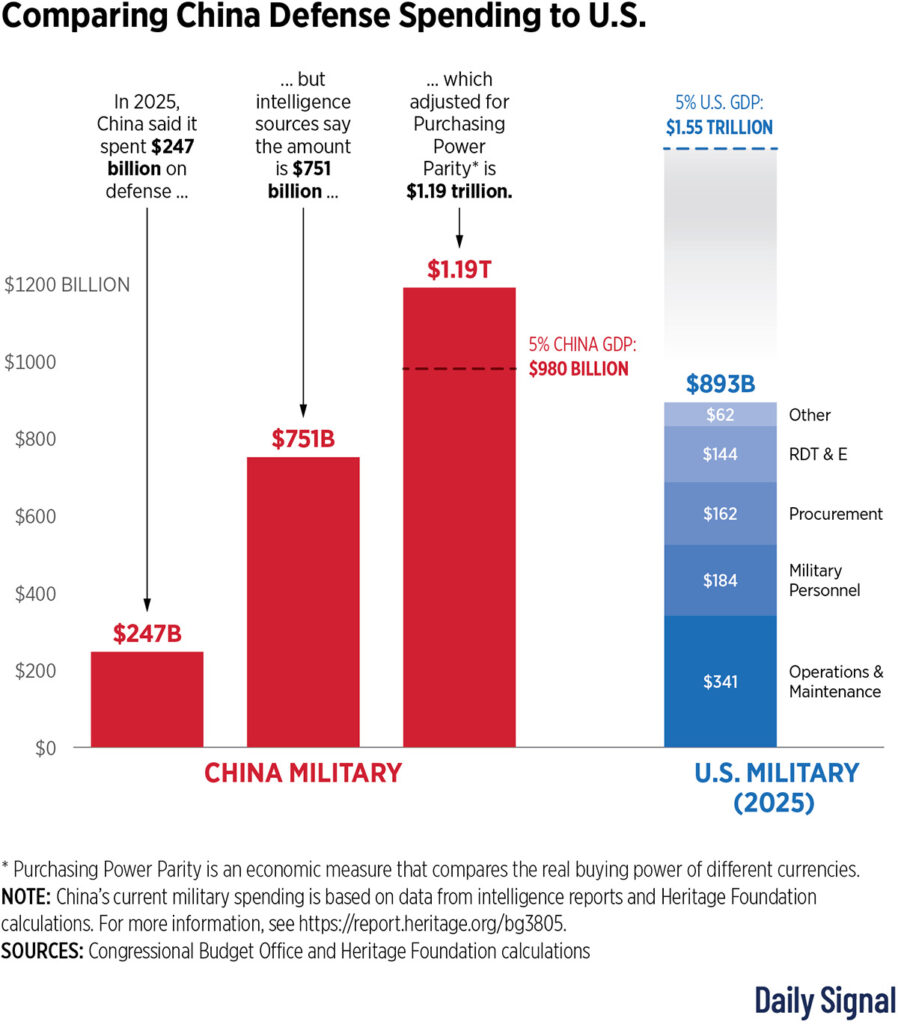
Weighing on the decision to go to war are several factors–military balance, wartime economic resilience and retaining effective control of wartime events. After decades of massive military spending, given its geographic proximity, Beijing boasts significant advantages in munitions, platforms, and readiness for war over Taiwan. But this advantage should start to narrow as the United States and its Asian allies devote more to their common defense and collectively view Beijing as a military threat. According to polling, a plurality of East Asian adults view China as a threat by wide margins, while across the Indo-Pacific views of China vary widely but territorial concerns remain high.
Previous analysis has predicted that China would have peak strategic advantage to act in 2027 with tensions gradually subsiding from the mid-2030s. Since the 1995-96 Third Taiwan Crisis, China has been building a military focused on defeating the U.S. in the event of a conflict over Taiwan. At the same time, China has operated its military at a high operational tempo, often in close proximity to its neighbors’ and American military forces–sometimes creating unprofessional and dangerous encounters. It is in effect as in Chinese–learning through contact with the enemy: “nadi lianbing” (拿敌练兵). Despite this decades long commitment of substantial resources to its military, compounding challenges are beginning to blunt Beijing’s military edge.
Compounding China’s problems is an aging population and industrial flight. China’s population is shrinking at a quickening pace. The country’s median age has surpassed 40 years old, up six years compared to 15 years ago. China’s demographic decline also impacts military strength. From 2010 to 2026, the number of males aged 20-24 fell from 65.9 million to 40.1 million, leaving a smaller pool of young men for recruitment. This is the legacy of the one-child policy that has left many parents reluctant to send their only child into the military. As a result, recruitment for the People’s Liberation Army (PLA) has slowed. This has led to recruitment drives on university campuses in their search for educated young men to join the military.
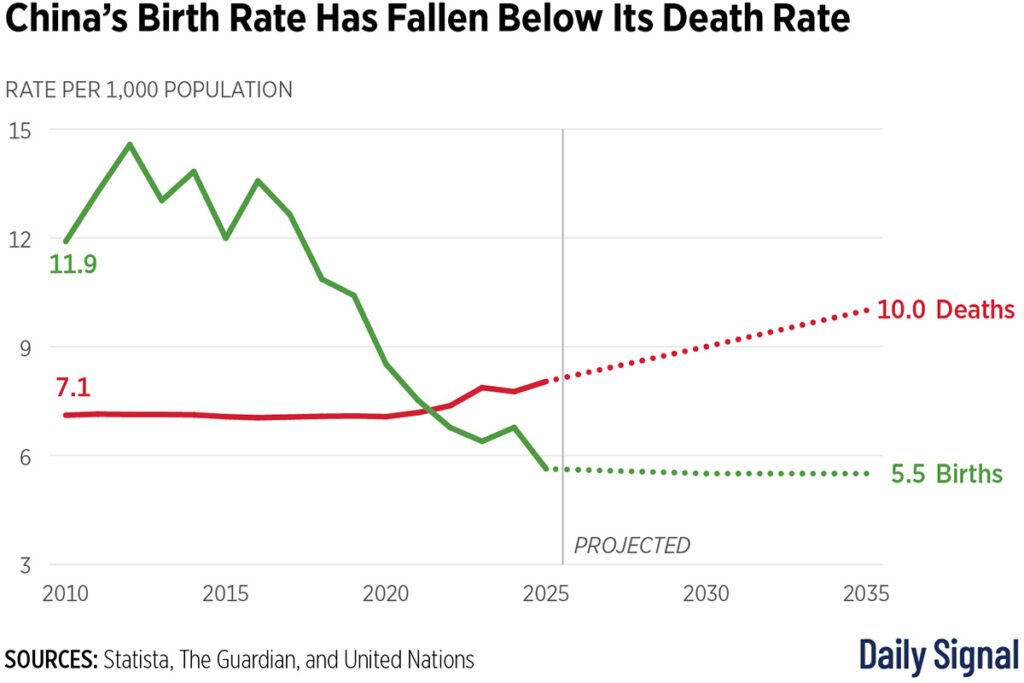
This demographic challenge is compounding China’s slowing economy. Annual GDP growth has fallen to around 5%, less than half the pace recorded 15 years ago. While many factors contribute to this slowdown, demographic decline won’t help grow or invigorate the economy.
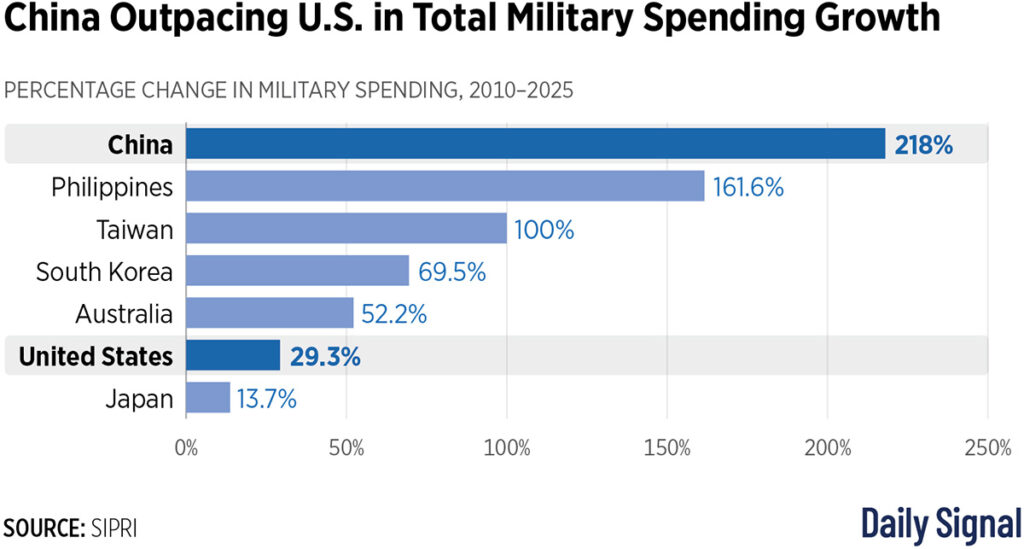
While shipbuilding remains an area that China continues to dominate, defense spending by both the United States and with other regional nations, has increased across the board over the previous years. The outcome of this trend is a potential narrowing of any Chinese military advantage over the long term; however, the near term is more uncertain.
Recent actions by the Trump administration in the Middle East and South America have demonstrated the U.S. military has the reach and capacity to exert sustained national power quickly around the world. Given recent military operations, the United States now has a firmer military footprint around the oil hubs Beijing relies on in the Caribbean and Persian Gulf.
In Europe, rather than splinter NATO, Putin’s invasion of Ukraine in 2022 has expanded and awakened the alliance to begin a long-deferred military rearmament that is just getting started. Views of how these developments affect the near-term military balance in Asia will likely play a large role in any decision to execute a military contest over Taiwan’s fate or violently challenge a U.S. treaty ally like the Philippines.
While they are long overdue, continued defense investments by America and its allies may build pressure on China to act while it believes its military retains the greatest odds of victory over the United States. Moreover, hope that Beijing may still seek a long-term peaceful resolution has also faded with its “One Country, Two Systems” offer to Taiwan, which has become irrelevant since the 2019 crackdowns in Hong Kong over an extradition law and arrest of pro-democracy tycoon Jimmy Lai. In this environment, if China perceives Taiwan pursuing de facto independence, or if it believes its relative military and economic might is shrinking, the potential for conflict may rise.
Overall the military balance in Asia has become unstable, and not as favorable to the U.S. as it was just under a decade ago. Recovering stability will require recommitting with Asian allies in a years-long military rebuilding effort and pursuit of economic policies that reduce reliance on Chinese industry. Urgent action today is needed to deter Chinese actions to forcibly unify with Taiwan. The United States must be clear-eyed about the potential of Beijing seeing its window to prevail over Taiwan closing, and therefore seeking to initiate the conflict in the near term, as opposed to waiting even longer for a stronger military that can invade Taiwan successfully and decisively.
More from this network:
Domains for Sale · GOTPeople.org · TheDSAPlatform · The Truth About Socialism
What's Your Reaction?
 Like
0
 Dislike
0
 Love
0
 Funny
0
 Wow
0
 Sad
0
 Angry
0

I am just an average American. My teen years were in the late 70s and I participated in all that that decade offered. Started working young, too young. Then I joined the Army before I graduated High School. I spent 25 years in, mostly in Infantry units. Since then I've worked in information technology positions all at small family owned companies. At this rate I'll never be a tech millionaire. When I was young I rode horses as much as I could. I do believe I should have been a cowboy. I'm getting in the saddle again by taking riding lessons and see where it goes.
Premium domains for sale




















Comments (0)