

CHINA SYNDROME: How Chinese crime networks are poisoning America's heartland
Premium domains for sale
Freedom Is Back In Style
Chinese criminal syndicates are turning parts of rural America into enormous illegal marijuana operations. And one California congressman has had enough.
Freedom Is Back
In Style
Premium domains for sale
On October 19, California Republican Rep. James Gallagher called on FBI Director Kash Patel to investigate the criminal networks operating in Siskiyou and Shasta counties. His concerns extend well beyond marijuana. Foreign financing, organized crime, illegal pesticides, and overwhelmed local law enforcement are all part of the problem.
American suburban real estate had become the foundation of an international drug operation.
In 2025 alone, Siskiyou County authorities reported eradicating 332,871 marijuana plants, seizing more than 54,000 pounds of processed cannabis, and making 118 arrests.
And those are just the operations authorities managed to uncover.
Water torture
According to the Drug Enforcement Administration's 2025 National Drug Threat Assessment, Chinese transnational criminal organizations have become dominant players in illegal marijuana cultivation and distribution across the United States.
These criminal enterprises are buying American property, establishing cultivation operations, and exploiting underground financial networks that make tracing the money a nightmare for local investigators.
Meanwhile, the communities caught in the middle are left to deal with the consequences.
In rural Northern California, residents have found themselves fighting over something more fundamental than marijuana: water.
In Siskiyou County, illegal cultivation has placed enormous demands on groundwater supplies. County officials have previously estimated that cannabis operations consumed millions of gallons daily, although those historical estimates do not establish how much water is being extracted today.
Residents have reported falling water levels and deteriorating well conditions amid heavy cultivation activity. Drought and other agricultural demands complicate the picture, but the conflict itself is real.
Imagine spending decades building a livelihood in rural California, only to find yourself competing for groundwater with illegal marijuana plantations. Apparently, even the water beneath your property is now part of the black-market economy.
Chem trails
Another danger is the chemicals these operations add to the ecosystem. In July 2025, Siskiyou County declared a local emergency over dangerous pesticides discovered at illegal cultivation sites. Investigators identified more than 27 pesticides, including highly toxic compounds such as carbofuran and methamidophos.
These are not harmless gardening supplies. Carbofuran can interfere with the nervous system and, at sufficiently high exposures, cause fatal respiratory paralysis. Methamidophos is another dangerous pesticide whose U.S. registrations were canceled years ago.
County officials have reported investigators suffering symptoms following exposure at illegal grow sites.
The danger does not necessarily end at the property line. Federal research has detected pesticide contamination downstream of illegal marijuana grows in California's national forests.
The Environmental Protection Agency announced an investigation into Siskiyou County's illegal pesticide problem in July 2025. Gallagher now wants federal investigators to examine the supply chains bringing these chemicals into the country.
Local sheriffs are dealing with toxic chemicals, enormous plantations, and criminal organizations whose financial operations extend far beyond their jurisdictions. Hardly the sort of problem a rural county department can solve with a few more patrol cars.
The legalization racket
There is another uncomfortable element to this story: America's experiment with marijuana legalization.
Voters were promised that legal cannabis would weaken the black market by replacing criminal dealers with regulated, taxpaying businesses.
How is that working out?
According to a California Department of Cannabis Control market analysis, licensed supply accounted for an estimated 38% of marijuana consumed in the state in 2024.
An enormous share of consumption remains outside the licensed market.
California's legal operators face a 15% state cannabis excise tax, applicable sales and local taxes, and substantial licensing and compliance expenses. A medium indoor cultivation license alone carries an annual fee of $77,905.
Illegal operators have no particular interest in paying licensing fees, collecting cannabis taxes, or following environmental regulations. Legitimate businesses shoulder the costs of operating legally while competing against criminals who ignore the rules.
California has somehow managed to create a regulated industry in which following the law can be a serious competitive disadvantage. But the real money lies farther up the criminal food chain.
Finding the masterminds behind these operations is considerably harder than arresting the workers tending the plants. Property purchases, financial intermediaries, and concealed ownership arrangements can make identifying the people controlling an operation a lengthy investigation.
Some workers are themselves victims. Federal prosecutors have charged members of a Chinese-linked network operating in Massachusetts and Maine with offenses arising from an alleged scheme involving labor exploitation, retained passports, marijuana trafficking, and money laundering.
The people trimming the plants are not necessarily the people collecting the profits.
Follow the money
Back in April 2018, federal investigators targeted an international marijuana cultivation operation in the Sacramento area. Agents searched approximately 74 houses and two business offices, while prosecutors initiated forfeiture proceedings involving more than 100 residential properties.
Authorities described a scheme in which money wired from China helped finance the purchase of suburban homes that were converted into indoor marijuana factories. The operation involved straw buyers, real estate intermediaries, and marijuana distributed beyond California.
One participant, Heidi Phong, subsequently pleaded guilty to one count of conspiracy to commit money-laundering.
American suburban real estate had become the foundation of an international drug operation. Whether the same financiers are involved in today's Siskiyou plantations remains an open question, one Gallagher wants federal investigators to examine.
The financial machinery behind Chinese organized crime deserves a closer look. China maintains strict controls on foreign-currency transactions, including a general annual individual purchase quota of $50,000. Those restrictions create demand for underground financial services capable of moving value between China and the United States.
Criminal money-laundering networks are more than happy to oblige.
Under one common arrangement, a broker receives dollars in America while arranging for an equivalent payment in Chinese currency overseas. The transactions can be settled through multiple accounts or commercial dealings without physically transporting the same cash across international borders.
These networks also provide services to some of the most dangerous drug traffickers on the planet.
In June 2024, the Justice Department announced charges arising from an alleged alliance between Sinaloa cartel associates and Chinese underground banking networks involving more than $50 million in drug proceeds.
Chinese money-laundering organizations have become valuable partners for Mexican cartels seeking to convert their American drug profits into usable funds.
And marijuana is part of the business. A 2025 Treasury Department advisory identified Chinese money-laundering networks handling proceeds from illegal marijuana grow houses alongside proceeds from other drug-trafficking activities.
Countrywide crisis
That does not establish that Mexican cartel money is financing the particular plantations in Siskiyou County. But it gives investigators good reason to look beyond the marijuana plants and examine the financial networks behind them.
The scale of the criminal activity is becoming difficult to ignore.
In Oklahoma, two Chinese nationals, Jeff Weng and Tong Lin, were sentenced to 10 years each for their roles in an illegal marijuana distribution operation. Investigators uncovered nearly 20,000 plants at one cultivation site, while trial evidence described elaborate interstate distribution methods, including vans disguised as commercial delivery vehicles.
In April 2026, federal prosecutors announced a separate 51-defendant indictment involving an alleged Oklahoma-based marijuana trafficking network. At least 29 defendants were identified as being from China.
Maine has encountered similar problems. During a May 2026 congressional hearing, federal officials discussed dozens of search warrants and hundreds of potential illegal cultivation locations.
The operations may be scattered across the country, but the methods are familiar: acquire property, establish marijuana grows, distribute the product, and conceal the proceeds.
 U.S. Customs and Border Protection
Chinese checkers
And what does Beijing know about all this? China's government exercises extraordinary control over its domestic financial system, yet criminal networks continue moving money across borders. Whether corrupt Chinese officials are facilitating these operations remains an open question. Chinese authorities have cooperated with American investigators in some cases, and no evidence has established that Beijing directs the marijuana trade. But the possibility of official complicity deserves investigation.
So do the people financing these operations.
Local sheriffs face an overwhelming resource mismatch when tackling well-funded crime rings. A small-town department might clear a plantation and arrest several workers, but tracing international financial transactions and identifying distant organizers requires specialized federal capabilities.
Federal agencies have conducted substantial investigations, and the EPA has already become involved in Siskiyou County. Yet these operations persist.
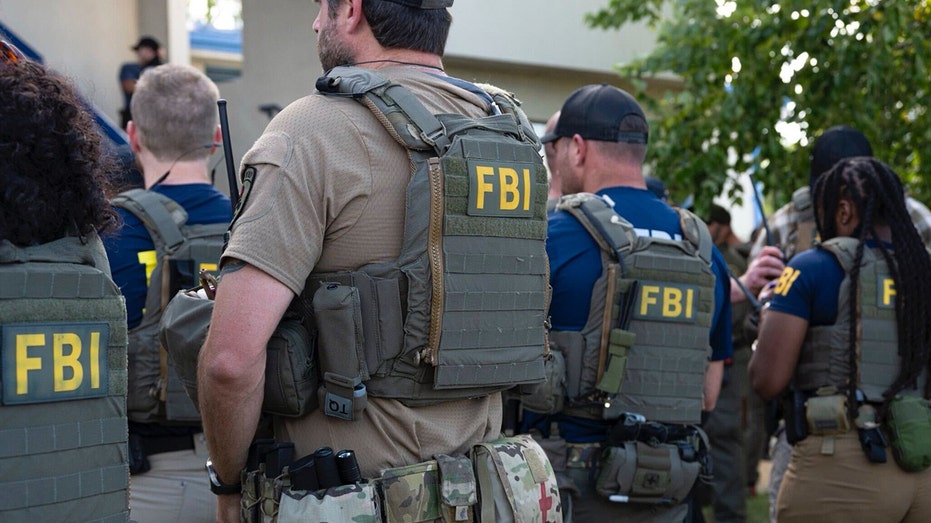
Gallagher is asking the FBI to work with county sheriffs, Homeland Security investigators, and environmental authorities to identify the people financing and organizing them.
His request deserves a serious response. Destroying marijuana plants may temporarily disrupt an illegal operation. But as long as the money, property networks, and organizers remain untouched, another crop can take its place.
American law enforcement has already demonstrated that these criminal enterprises can be investigated, prosecuted, and dismantled. Washington needs to bring that same determination to the operations still flourishing in rural America.
Rural Americans should not have to surrender their water, their land, or their peace of mind to international drug syndicates simply because the criminals have discovered that operating in America is profitable.
More from this network:
Domains for Sale · GOTPeople.org · TheDSAPlatform · The Truth About Socialism
What's Your Reaction?
 Like
0
 Dislike
0
 Love
0
 Funny
0
 Wow
0
 Sad
0
 Angry
0

I am just an average American. My teen years were in the late 70s and I participated in all that that decade offered. Started working young, too young. Then I joined the Army before I graduated High School. I spent 25 years in, mostly in Infantry units. Since then I've worked in information technology positions all at small family owned companies. At this rate I'll never be a tech millionaire. When I was young I rode horses as much as I could. I do believe I should have been a cowboy. I'm getting in the saddle again by taking riding lessons and see where it goes.
Premium domains for sale




















Comments (0)