

DEEP DIVE: How ‘Civil Asset Forfeiture’ Is Robbing Americans Blind
Premium domains for sale
Freedom Is Back In Style
We’ve covered our fair share of extraordinary injustices. But aside from the scenarios where people died horrible deaths, nothing comes close to the sheer, unbelievable insanity of the absolute mockery of justice we’re about to discuss.
Freedom Is Back
In Style
Premium domains for sale
This story has obvious ramifications for your right to own private property, which is among the most important rights you have. And because it’s about to go before the U.S. Supreme Court, you need to know about it.
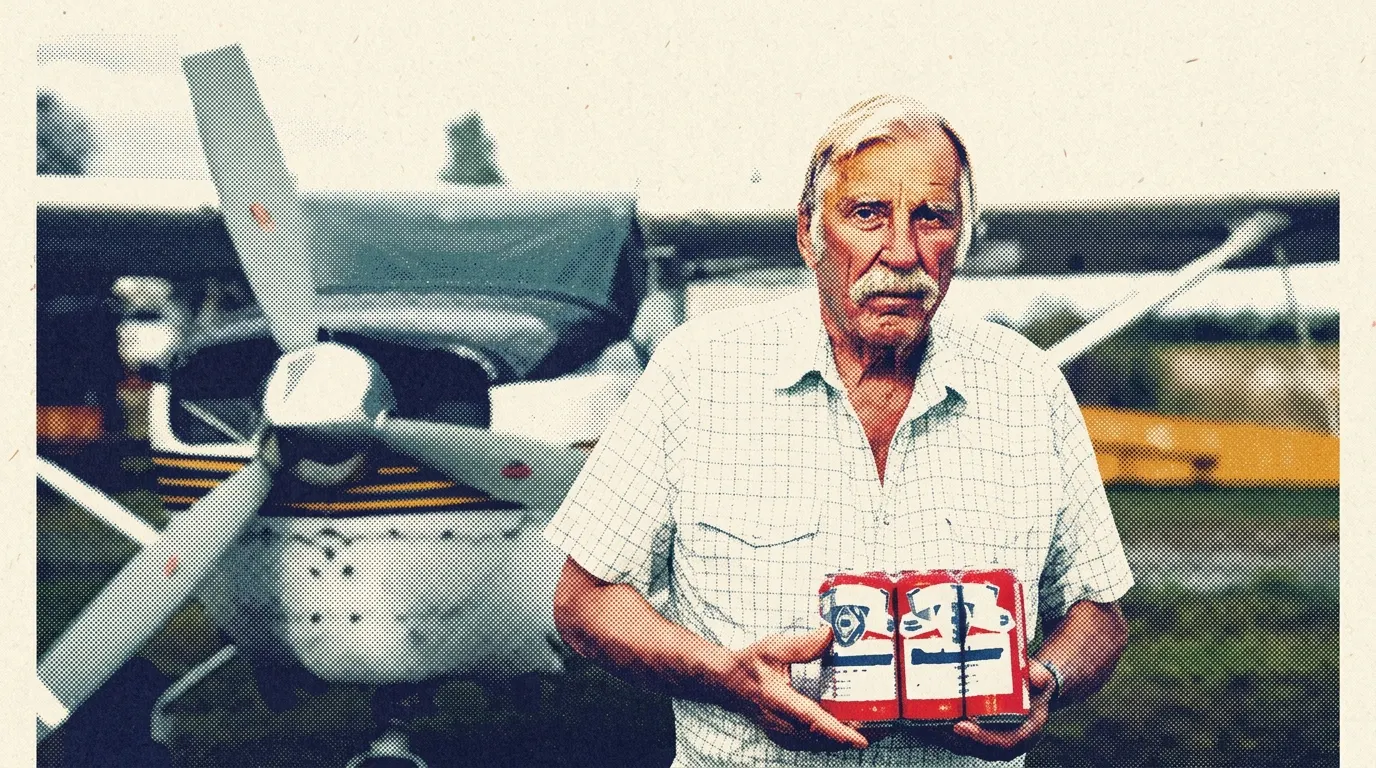
In April 2012, an Air Force veteran named Kenneth Jouppi (who was in his late 60s at the time) was running an air taxi company in Alaska called KenAir LLC. He made his living by transporting food and supplies to remote areas of the state and by ferrying tourists and visitors around.
On this particular occasion, a woman chartered his services to fly from Fairbanks to Beaver, where she planned to celebrate her husband’s birthday. It’s a journey of a little over 100 miles and typically takes around 45 minutes. There’s no road linking Fairbanks and Beaver. The only alternatives to flying are taking a boat via the Yukon River if it’s the summer, or dog sledding in the winter.
The woman hired Jouppi to fly her to Beaver in a 1969 Cessna 206 airplane that he owned. It was a routine job, but everything changed for Jouppi when the Alaska State Troopers decided to search his plane before takeoff. During the inspection, the authorities discovered, to their horror, three cases of beer (72 beers in total) in the plane’s cargo. That was a problem, because Beaver is a so-called “dry village,” meaning it’s illegal to purchase or even possess alcohol there. Under Alaska law, if you attempt to transport alcohol into a “dry village” like Beaver, you’re committing a crime, even if the alcohol never gets there.

There was some dispute about whether Jouppi was even aware of the fact that alcohol was in his plane. According to the government’s version of events, one six-pack of beer was packed in a grocery bag and would’ve been visible “in plain view” as Jouppi was loading the plane. But according to Jouppi, the beers were packed in closed boxes, and he never opened them at any point.
Unfortunately for him, a state trooper testified that he saw Jouppi “opening and closing the boxes” while loading the plane. Therefore, the jury convicted Jouppi of the heinous crime of attempting to “knowingly send, transport, or bring less than 12 gallons of malt beverage into the village of Beaver.” Even though the beer never actually made it to Beaver, he was charged with attempting to facilitate the transportation of alcohol into Beaver. That’s all it took.
As punishment, Jouppi was sentenced to 180 days in jail (with 177 days suspended), which included a $3,000 fine with $1,500 suspended. He was also put on probation for three years.
Meanwhile, his company was hit with a $10,000 fine (with $8,500 suspended). You’d think that would be enough, but the court didn’t stop there. And this is where the story takes a very sharp turn into the absurd.
Jouppi and his company were also ordered to forfeit the airplane supposedly used in the commission of the offense. Alaska law requires the forfeiture of any plane used in the commission of this particular crime (for some reason, boats receive more protections than planes under this law). So his airplane — which was valued at over $95,000 and he depended on for his livelihood — was seized by the state. The police department wanted a new aircraft, I guess.
Meanwhile, Jouppi would have to find another airplane. His company only had one other plane, so this was like stealing a man’s horse in the desert. It’s exactly the kind of cruel and unusual punishment the Constitution prohibits. Fortunately, in this case, the plane was returned to him while the proceedings were playing out, but that’s not always what happens.
Here’s Jouppi — now 83 years old — explaining what happened, in his own words. This is from the local outlet Alaska’s News Source:
Jouppi appealed all the way to the Supreme Court of Alaska because we still have something called the Constitution in this country. According to the Constitution, “Excessive bail shall not be required, nor excessive fines imposed, nor cruel and unusual punishments inflicted.” This prohibition is also applied to the states under the Fourteenth Amendment.
By any rational definition, the seizure of $95,000 worth of personal property, especially for a fake crime like this, is clearly an “excessive fine.” It’s a punitive measure to seize property because of a criminal act. As Jouppi says in the video, the maximum fine under Alaska law for transporting alcohol into a “dry town” like Beaver is only $10,000, but in this case, the government was getting nearly 10 times that amount.
Nevertheless, in the single worst court decision I’ve ever read — even worse than anything Ketanji Brown Jackson has produced — the Alaska Supreme Court upheld the seizure of the airplane. The court found it was not an “excessive fine” to steal this guy’s $95,000 airplane because he transported a few beers that didn’t even belong to him.
This is one of those rulings where, even if you don’t have a law degree — and even if you can’t read the English language — you know it’s absurd on its face. It’s truly a monument to human stupidity. And it marks an evolution in the government’s ability to steal your property, at least for the moment.
The Alaska Supreme Court began by discussing a 1998 Supreme Court case where a guy tried to fly out of LAX bound for Cyprus with $350,000 in cash. He didn’t declare any of it, even though he was supposed to fill out a form indicating that he had more than $10,000. As a result, the government seized all of his money — even though it had no proof that any of it was involved in criminal activity (in fact, they acknowledged that it wasn’t).
In a 5-4 ruling, with the majority opinion written by Clarence Thomas, the Supreme Court gave the guy his money back. They determined that, under the Constitution, it was a violation of the Eighth Amendment to effectively fine someone $350,000 for such a minor offense. It was a pretty straightforward ruling.
And that logic, naturally, should apply to the case involving this Alaska pilot and his beer.
But the Alaska Supreme Court disagreed. They said that Jouppi had done something far more serious than the guy who boarded that plane from LAX. This is a direct quote from the decision of the Alaska Supreme Court:
While Jouppi was convicted of only one instance of alcohol importation unconnected to other criminal activity, the nature and extent of the crime is more serious … He knowingly transported a six-pack of alcohol in plain view while acting in his professional capacity as the operator of an air taxi company and the pilot of the airplane. This factor suggests that the forfeiture of his airplane is not grossly disproportional.
So in the view of the Alaska Supreme Court, if you’re a bush pilot transporting some woman’s groceries, and those groceries include beer, you’re engaging in downright dastardly behavior. You’re basically a hardened criminal, and they have every right to throw the book at you. In their opinion, it’s much more serious to have beer in your plane’s cargo than it is to leave LAX with $350,000 in undeclared cash.
Of course, this is totally backwards. The guy who’s flying to Cyprus with $350,000 in cash, if we’re being honest, is much more likely to be some kind of drug dealer, terrorist, or something compared to the bush pilot with some beers onboard (That’s not to say the government has any right to take the $350,000, but just as a matter of common sense, someone transporting that kind of money could theoretically be engaging in some kind of hardcore criminal activity, at least hypothetically).
The beers, on the other hand, are about as mundane as it gets. There are people in Alaska who drink 18 beers a day, and they don’t think anything of it. To be clear, there’s no allegation that the pilot was drinking, or anything like that. He’s just carrying the cargo. But to the Alaska Supreme Court, that’s somehow a very big deal.
In their opinion, the judges on this court make it clear that they’re deferring to elected officials in Alaska, who have apparently determined that alcohol consumption is a plague on the state. Again, this is from the court’s ruling:
The nature and extent of harm caused by Jouppi’s illegal alcohol smuggling is far greater. Alcohol abuse in rural Alaska leads to increased crime; disorders, such as alcoholism; conditions, such as fetal alcohol spectrum disorder; and death, imposing substantial costs on public health and the administration of justice. Within this context, it is clear that the illegal importation of even a six-pack of beer causes grave societal harm. This factor strongly suggests that the forfeiture is not grossly disproportional. Taking into consideration all of the factors discussed above, we conclude that the forfeiture of Jouppi’s airplane is not grossly disproportional to the gravity of his offense.
Notice what’s happening here. They’re identifying all kinds of problems that are caused by alcohol consumption, in aggregate, across the entire state. They’re acting like this one guy is responsible for all of it. If that were the case, then maybe I could see an argument for taking his plane. If he were single-handedly responsible for all of the alcoholism and fetal alcohol syndrome and domestic abuse in the state of Alaska, then sure, take his plane.
In reality, he’s not actually responsible for any of that. This is no different from taking someone’s car when they go 5 miles per hour over the speed limit, on the grounds that 40,000 people die in car accidents every year. It’s completely insane. It’s like reverse collective punishment.
They’re going after one guy as if he somehow caused the actions of millions of other people. That’s not to downplay the idea that alcohol can cause problems. But in general, there’s a genuine hysteria about alcohol that’s taken hold in parts of this country, which we’ve talked about before.
In any event, whatever you think about the modern-day Prohibition that Beaver has enacted, there’s no reason to destroy this pilot’s livelihood over it. The logic on display here contradicts many different cases from around the country, including Timbs v. Indiana, which was decided just a few years ago.
In that case, the state of Indiana tried to seize someone’s $42,000 Land Rover SUV, saying it was used to transport heroin. The guy purchased the car legally, with funds that he acquired legitimately. Ultimately, the Indiana Supreme Court ruled that it would be grossly excessive to seize the car even though it was used to transport heroin — since the car cost $42,000, and the maximum fine under the law was just $10,000.
In Alaska, they’re doing things very differently. Now a group called the Institute for Justice is representing the pilot, and the Supreme Court has just agreed to hear the case. The Institute for Justice, by the way, also says that it’s in the process of “appealing a $437,000 fine the IRS imposed on a retired professor for failing to file a one-page form informing the agency of his legal foreign bank account.” So they’re doing the Lord’s work, as far as I’m concerned.
With this case, they have a real opportunity to change the law on these asset seizures. The government simply cannot be allowed to take your property without any justification whatsoever. As the pilot put it:
I’m thrilled that the U.S. Supreme Court has agreed to hear this case, because this case isn’t just about me or my airplane anymore. … I’m in my 80s now, and I’ve been fighting this for over a decade because I see it as my duty to ensure that the Bill of Rights actually means something in protecting against government overreach.
To be clear, the case in Alaska is about criminal asset forfeiture — which is to say, the government taking your property after you’ve been convicted of a crime. But the Supreme Court’s ruling in this case also has implications for “civil asset forfeiture,” which is a concept you may have heard about. In civil asset forfeiture, the government doesn’t even need to secure a criminal conviction. In fact, it doesn’t even matter if you’ve done anything wrong at all. Instead, the government can sue your property directly if there’s reason to believe that it was involved in criminal activity. Lawyers call this an “in rem action.”
The burden of proof in these civil cases is called “the preponderance of evidence” in federal courts (sometimes states have established their own standards). This means that the government must demonstrate a 50% (or greater) likelihood that your property is substantially connected with some criminal activity (meaning it was used to facilitate the activity).
The normal standard of “beyond a reasonable doubt,” which applies during criminal trials, is not relevant here. It’s a very relaxed standard — and the government takes advantage of it. There was a case out of Michigan where a woman lost her car because her husband hired a prostitute while he was driving it, even though the woman had no idea he was doing that. There was another case out of Massachusetts where the government tried to confiscate an entire hotel because some of the guests were selling drugs, although that particular attempt failed (because the hotel didn’t really “facilitate” the crimes).
Even when you eventually get your property back, it can take a very long time. Here’s another example, from a few years ago:
The reason the woman in that clip eventually got her car back, even though it was technically involved in the commission of a crime, is the “innocent owner” defense, which many states have. The idea is that she owned the car and had no idea that it was being used to commit a crime. It took nearly two years for her to get her car back. The Supreme Court eventually ruled that there was no problem with this delay. So you didn’t commit any crime, but the police can take your car for nearly two years anyway.
The court has ruled that you’re entitled to a “timely final forfeiture hearing” when the police take your stuff, but you’re not entitled to a separate preliminary “retention hearing” to determine whether the police can hold onto your car in the meantime while the process plays out.
This is the power of “civil asset forfeiture.” It’s prone to all kinds of abuse, and it has indeed been abused. That’s not to say civil asset forfeiture is the worst thing in the world — it’s used to seize assets from gangs and terrorists when a criminal case would be difficult or impossible to build. I mean, if the police discover an abandoned vehicle with drugs in it near the Mexican border, obviously they should be able to seize it. So there is some nuance here that gets lost. But the guardrails have been non-existent in recent years, which is why this pilot in Alaska lost his plane.
Again, yes — that was criminal asset forfeiture, not civil. But both criminal and civil asset forfeiture are subject to the Eighth Amendment when the forfeiture is punitive — which is to say, when its intended purpose is to punish someone.
Under our Constitution, the government can’t use any kind of forfeiture to exact an excessive fine. And with this case out of Alaska, the Supreme Court has the opportunity to establish some clear rules on where the boundaries are when it comes to determining what fines are considered “excessive.”
According to the decision by the Alaska Supreme Court, it’s not “excessive” to take someone’s plane away for transporting a few beers, because in aggregate, alcohol causes mass casualties and despair or whatever. If that’s the standard, then it applies to civil asset forfeiture as well.
The U.S. Supreme Court can — and should — shut down this standard, which is totally ridiculous. When you’re determining what kind of punishment to give someone, you should only look at what the person actually did — without holding them responsible for every other crime that’s tangentially related and was committed by millions of other people.
If the Supreme Court sets this standard, then it will apply to both civil and criminal asset forfeiture. And it will end some of the worst abuses of civil asset forfeiture, which have attracted a lot of attention over the past decade.
Already, we’ve seen a lot of progress in this regard. This is from Reuters, back in 2024.
The U.S. deputy attorney general has suspended a controversial civil asset-forfeiture program by the Drug Enforcement Administration that targeted unsuspecting airline passengers and subjected them to potentially unlawful seizures of cash from their bags. … In one such example, a DEA office tapped an airline employee as a confidential source who tipped off agents any time a passenger purchased a plane ticket within 48 hours of departure. Agents would use that last-minute purchase as a justification to then approach those passengers and try to get the passengers to agree to let them search their bags. In cases where the agents searched and seized cash, the confidential source received a cut of the proceeds from the seizure.
This program was later terminated completely. On one hand, you can argue that it’s reasonable for the government to subject passengers to extra screening if they buy a ticket within 48 hours of departure, or pay in cash. But this program was very different. What was happening here is that, after passengers went through security, the DEA dragged them off their flights — potentially making them miss the flight entirely — unless they agreed to waive their rights and have their property searched. They were not even looking for drugs or bombs, for the most part. They’re looking for cash to confiscate.
One of the problems with asset forfeiture, in practice, is that it leads to these kinds of abuses. When the government invokes this doctrine, some very absurd scenarios can result. People lose their airplane over some beer. In other cases, people get pulled off the airplane because they bought their ticket at the last minute, and the ticket agent wants a cut of any cash they might be carrying. The incentive structure is misguided on a fundamental level. It’s stacked in favor of the government’s right to take your property, when the balance of power (under our Constitution) should be on your side.
The fact that we’re seeing this abuse of power in Alaska to punish a guy for transporting a few beers is almost too insane to be real.
This is a problem that’s persisted for a very long time. And now, after many years of increasingly bizarre and unconstitutional scenarios, it could finally be ending.
In December, the U.S. Supreme Court will hear arguments in the Alaska case. A decision will likely be made by the middle of next year. We will finally learn, straight from the High Court, whether or not the government can steal $95,000 from you because you put a few cans of beer in your airplane.
Under our Constitution, we all know the government can’t do that. But as to the much narrower question of whether five justices on the Supreme Court still believe the Constitution applies to your property — as to the question of whether you can rely on the judicial system to protect the property you’ve spent your whole life working for — that’s something we’ll all find out in just a few months.
More from this network:
Domains for Sale · GOTPeople.org · TheDSAPlatform · The Truth About Socialism
What's Your Reaction?
 Like
0
Like
0
 Dislike
0
Dislike
0
 Love
0
Love
0
 Funny
0
Funny
0
 Wow
0
Wow
0
 Sad
0
Sad
0
 Angry
0
Angry
0

I am just an average American. My teen years were in the late 70s and I participated in all that that decade offered. Started working young, too young. Then I joined the Army before I graduated High School. I spent 25 years in, mostly in Infantry units. Since then I've worked in information technology positions all at small family owned companies. At this rate I'll never be a tech millionaire. When I was young I rode horses as much as I could. I do believe I should have been a cowboy. I'm getting in the saddle again by taking riding lessons and see where it goes.
Premium domains for sale



















Comments (0)