

Doctors Sound Alarm About H-1B Pipeline Threatening American Lives

Premium domains for sale
Freedom Is Back In Style
American doctors training to be surgeons are sounding the alarm over the dangerous pipeline of foreign-trained doctors entering American hospitals through foreign visa programs, warning that hospitals are using residency slots to secure cheaper labor at the expense of patient safety.
Freedom Is Back
In Style
Premium domains for sale
Several Tennessee physician residents, who requested anonymity to protect their jobs, told The Daily Wire they are working alongside international medical graduates who lack basic medical knowledge. One resident said he is “literally spending every shift” keeping a fellow resident “from killing Tennesseans accidentally,” adding that they have experienced “a bunch of near misses.” The doctors added that the foreign doctors come with questionable credentials as well, with some qualifying off dated licensing exams rife with fraud and abuse.
As highlighted by The Daily Wire last month, the use of H-1B and J-1 visa programs to bring foreign-trained doctors into American hospitals has drawn increased scrutiny. In one glaring example that caught the Trump administration’s attention, a New York hospital filled its internal medicine residency program with 98% international medical graduates, leaving just two positions for U.S.-trained doctors.
While the administration has questioned whether these programs displace American workers, the Tennessee residents say they’re more concerned about serious and fatal mistakes.
In an interview, one physician described instances in which residents did not know which medications they were attempting to order or how to find the correct ones, sometimes resulting in orders for the wrong drugs. He also described instances in which senior physicians had to intervene to prevent potentially dangerous errors.
Are H-1B, J-1 Doctors Dangerously Unqualified?
The resident doctors raised concerns about the legitimacy of some international medical graduates’ credentials, pointing to foreign cheating scandals involving U.S. medical licensing exams.
“That gets into the great cheating scandals that we’ve had over the past two to three years for international medical schools, for [licensing] exams,” one resident doctor said, citing Nepal, where he said approximately 40% of examinees had at least one United States Medical Licensing Exam result invalidated for suspected cheating or irregularities between 2021 and 2023. He cautioned that those figures reflected only detected cases, arguing that other instances may have gone undiscovered in other countries or at other times.
They also warned that some medical schools abroad still use paper exams that could be a decade old. Even an honest student taking those exams, one resident argued, could be “10 years behind on their medical knowledge” by the time they arrive in an American hospital.
International graduates, one resident said, are “coming in at a disadvantage” because some have trained in systems “practicing medicine like it’s 1995.” He pointed to the absence of electronic medical records in some training environments, warning that incoming residents may struggle to navigate the technology used in U.S. hospitals.
“They don’t even have an American high schooler’s computer competency just to operate the computer, much less to go through a complex electronic medical record,” he said.
Communication difficulties — an issue patients know all too well — present another potential patient-safety risk. The doctors argued that some international medical graduates struggle to use English effectively enough to explain treatment plans, communicate with nurses, or coordinate with laboratory and imaging personnel.
These difficulties can leave patients feeling that they are not receiving adequate care or cannot trust their doctors, they said. One resident emphasized that the problem extends beyond interactions between physicians and patients.
“And that’s not just a problem between the patient and the physician. That’s probably one of the biggest issues on a practical level: the ability, or rather lack thereof, to communicate with nursing staff, with the lab, with imaging techs, with fellow physicians, to say, ‘Hey, this is what I’m calling you about, this is how I need your help with this.’”
“We see the mistakes, and we see the loss of life, or the injuries or whatnot the patients don’t see, or they just assume was par for the course,” he said. “I think what is really hard from the patient’s perspective is the breakdown of communication that you used to have with your physician.”
The residents said they have also encountered serious gaps in medical knowledge among some incoming residents. There have been instances in which residents did not recognize medications they were attempting to prescribe, ordered the wrong drugs, or struggled with procedures in ways that could have harmed patients without intervention from a more experienced resident. Acknowledging that many international graduates are capable doctors, these were often instances that went beyond the ordinary mistakes made during medical training.
“It’s a lack of medical knowledge beyond that of what I would consider standard for a medical school graduate,” he said, adding, “This is more disturbing when one considers that many of these individuals claim to have been practicing independently for many years in their country of origin.”
The Financial Incentive
Financial incentives, rather than an unavoidable physician shortage, are helping drive hospitals’ recruitment of international medical graduates, the doctors believe. Hospital corporations lobby state lawmakers by claiming they need foreign-trained doctors to staff rural facilities.
“They come to the legislature saying, ‘Hey, we have a rural hospital staffing problem for physicians. We need to get more in. This is an easy way for us to do it so that we make sure that our rural communities are taken care of,’” one resident said.
But they questioned whether hospitals are prioritizing patient care over cost savings, warning that rural staffing initiatives could result in facilities employing “poor quality physicians who may or may not even be physicians.”
“We have this myth that doctors in other countries, we sort of just assume that they make the same amount that we do,” one resident said, noting that physicians in countries including Sudan, Haiti, and India may earn between $30,000 and $70,000 annually. By comparison, he estimated that even lower-earning American physicians make roughly $100,000 to $150,000 a year.
“You’re going from, you know, the gutter to Richie Rich by coming here to practice,” he said, arguing that the pay disparity makes foreign-trained doctors willing to accept lower-paying contracts in rural areas.
They also said some hospitals across the country are exploiting residency programs to cut labor costs. Hospitals can use foreign-trained residents to fill staffing needs rather than hire more expensive providers, like physician assistants and nurse practitioners. “A resident is able to do approximately two to three times the work a PA or NP can do at less than half the price, and has the benefit of being a physician when it comes to patient management,” one resident said.
“They’re abusing the residency program system to basically staff their hospitals with residents,” he added.
Tennessee Opens Pathways for Foreign-Trained Doctors
In Tennessee, where the residents practice, lawmakers have passed legislation designed to make it easier for internationally trained physicians to enter the state’s healthcare workforce.
“It’s been by the conservatives, for the most part,” one resident said, pointing to laws that allow eligible foreign-trained physicians to practice under limited or provisional licenses before obtaining full licensure.
One law allows eligible physicians to seek full, unrestricted licensure after two years of practicing in Tennessee, provided they meet the state’s requirements. A separate law establishes a provisional licensing pathway that is scheduled to take effect in January 2027.
“The honest answer here is that hospitals are not going to police this,” he said. He warned that hospitals could employ physicians without adequately scrutinizing their credentials or clinical abilities. The residents argue that lawmakers should reconsider these pathways to ensure efforts to address physician shortages do not come at the expense of patient safety.
Notably, Nashville, Tennessee, is one of the nation’s largest healthcare hubs, where more than 900 healthcare companies operate, including industry giant HCA Healthcare. The sector contributes billions of dollars to the regional economy, with Nashville-based companies providing healthcare services nationwide and around the world.
Trump Administration Scrutinizes Foreign-Worker Visas
On a broader scale, the Trump administration is stepping up scrutiny of employment-based visa programs.
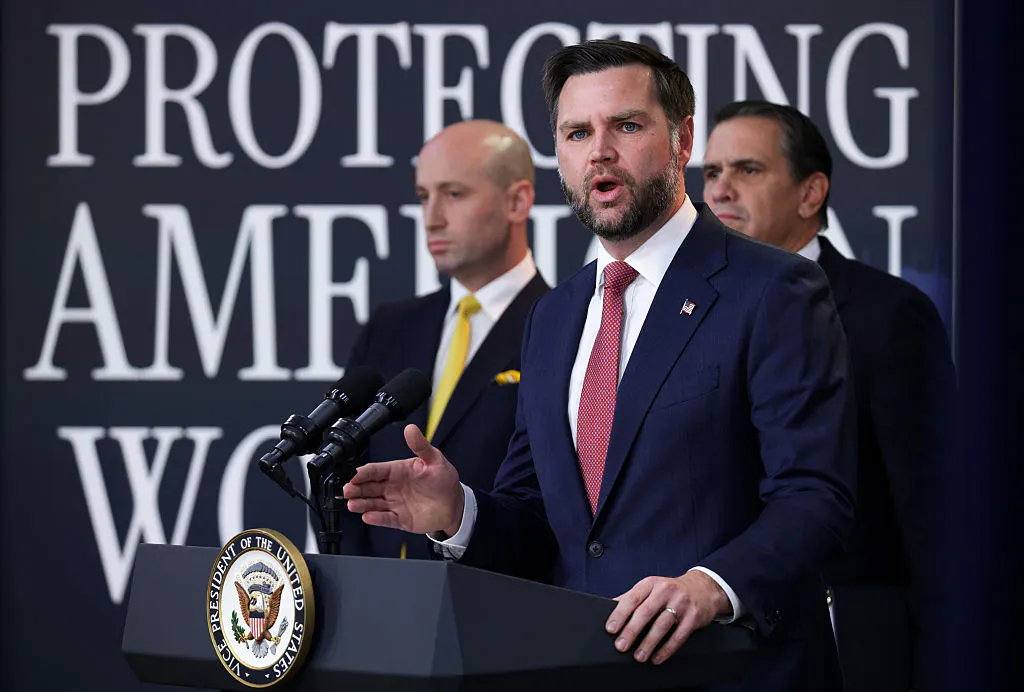
Trump defended H-1B visas for highly skilled foreign workers in December 2024, aligning himself with tech-industry leaders who support the program, despite restricting access to the visas during his first term. Now, the president is taking a closer look at the visas, and Vice President JD Vance and other administration officials have accused employers of exploiting the program to replace American workers with cheaper foreign labor.
The administration has taken executive action to tighten oversight of employment-based visas. In September, Trump signed an executive order directing federal agencies to scrutinize H-1B applications more closely, including whether employers have laid off American workers in comparable positions. Trump extended a policy requiring a $100,000 payment for certain new H-1B workers entering the country from abroad, while a separate rule now gives higher-paid applicants better odds in the visa selection process.
The administration argues that these programs should address genuine labor shortages rather than undercut American wages — or, as the Tennessee residents warned, jeopardize American lives.
More from this network:
Domains for Sale · GOTPeople.org · TheDSAPlatform · The Truth About Socialism
What's Your Reaction?
 Like
0
Like
0
 Dislike
0
Dislike
0
 Love
0
Love
0
 Funny
0
Funny
0
 Wow
0
Wow
0
 Sad
0
Sad
0
 Angry
0
Angry
0

I am just an average American. My teen years were in the late 70s and I participated in all that that decade offered. Started working young, too young. Then I joined the Army before I graduated High School. I spent 25 years in, mostly in Infantry units. Since then I've worked in information technology positions all at small family owned companies. At this rate I'll never be a tech millionaire. When I was young I rode horses as much as I could. I do believe I should have been a cowboy. I'm getting in the saddle again by taking riding lessons and see where it goes.
Premium domains for sale




















Comments (0)