

Dolly Parton RIP: The Story of Her Most Famous Song Embodies the Her Life Story—and the American Dream
Premium domains for sale
Freedom Is Back In Style
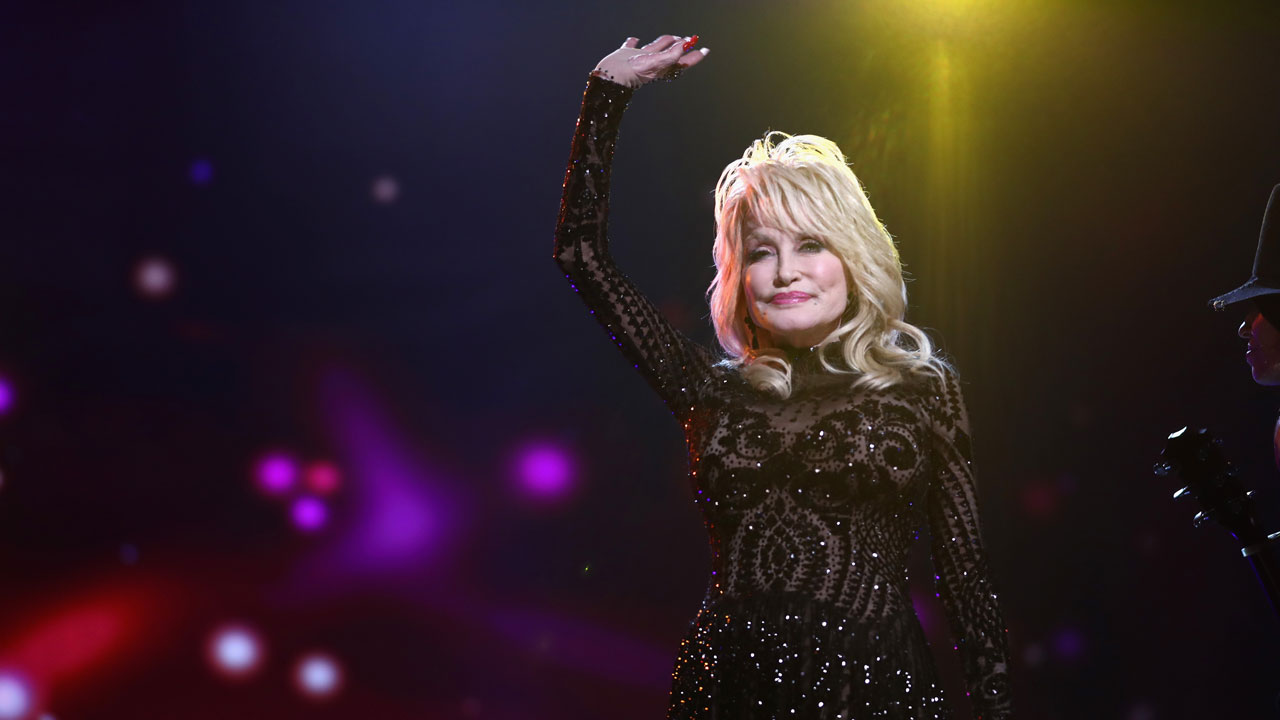
Dolly Parton died Tuesday of cancer at the age of 80 surrounded by loved ones. She was loved like few other entertainers in American history.
Freedom Is Back
In Style
Premium domains for sale
The story of how her most famous song, “I Will Always Love You,” came to be – and how Whitney Houston came to record it, may be the best of all the Parton stories you’ll hear as the nation grieves her loss. And celebrates her life
Parton was born dirt poor in 1946 to a loving family in the mountains of Tennessee. Her father couldn’t read or write, and often worked two jobs to make ends meet, but he inspired her strong work ethos. It was her mother who instilled in young Dolly her love of music.
Whitney Houston grew up well-to-do in New Jersey’s biggest city, Newark, the child of musical royalty. Her mother, Cissy, was a Grammy award winning gospel artist, her first cousin was singer Dionne Warwick, and her distant cousin was opera legend Leontyne Price.
The two could not have come from more different backgrounds. But one of pop music’s greatest love songs brought them together.
The song, written and recorded by Parton in 1973, wasn’t about the end of a romantic love. It was, rather, the end of a long-standing professional relationship with country star Porter Wagoner.
Wagoner gave Parton her break in show businesses, signing her to a long-term deal on his nationally syndicated musical variety show. The two enjoyed great success together, creating a succession of country hits.
But as time passed, Parton wanted her freedom, creatively and financially. She wanted to leave the man who’d done so much for her career–but how to do it with grace and gratitude?
“We were going around and around,” Parton told the Daily Tennessean in 2015. “So, finally, I thought, ‘How am I gonna make him understand how much I appreciate everything, but I have to go?’ So, I thought, ‘Well, what do you do best?’ And I sat down and out of a very emotional place wrote this song.”
How did Wagoner react?
“He said, ‘It’s the best thing you ever wrote,” Parton recalled in the Ken Burns documentary, “Country Music.”
“’OK, you can go, but only if I can produce that record,’” he said, according to Parton.
“I Will Always Love You” made its way to #1 on the country charts in 1974, establishing Parton as one of country music’s best performing artists and one of Nashville’s best songwriters.
That’s where Elvis comes into the story.
Parton’s song had come to the rock legend’s attention through his manager, Colonel Tom Parker.
“[Elvis] loved the song and wanted to do it,” Parton told BBC Radio. “They’d already called me to come down to the studio to hear part of the song.”
But the Presley cover of Parton’s song never came to be. The night before the recording, Parker told Parton that he didn’t allow Presley to record anything without half of the publishing rights.
“I said, ‘I’m sorry, but I can’t give you the publishing,’” Parton told W Magazine. “I wanted to hear Elvis sing it, and it broke my heart. But I had to keep that copyright in my pocket. You have to take care of your business!”
Parton, it turned out, was also a shrewd businesswoman. She understood the value of her intellectual property and wasn’t about to give it away–even to the King of Rock and Roll.
How did one of R&B’s greatest divas come to perform Parton’s country balled?
One of America’s most famous actors, Kevin Costner, loved the song and was producing “The Bodyguard,” which he co-starred in alongside Houston in 1992. He called Parton and asked if he could use the song in the soundtrack. She said yes, but never heard back about how–or if–it would be used.
Parton first heard the song the way millions of Americans did: driving in her car around town. “I had the radio on, and when I heard it, I just freaked out. I had to pull over because I thought I was gonna wreck. It was the most overwhelming feeling.”
America–and the world–was overwhelmed, too. The song catapulted to the top of the Billboard charts and stayed there for an astonishing 14 weeks, a record at the time. It would go on to sell over 20 million singles worldwide.
Parton’s decision to keep her publishing rights was one of the best business decisions of her life.
“I made enough money to buy Graceland,” she told a reporter about the royalties she earned from Houston’s cover.
Houston’s version of “I Will Always Love You” became–and still is–the best-selling single ever recorded by a female artist of all-time. Parton still holds the record for the best-selling single ever written by a female artist.
It’s a quintessentially American story.
A talented white woman from the Great Smokey Mountains of Tennessee wrote a song that a brilliant black female singer from urban New Jersey brought to the world in ways no one could plan let alone imagine.
There was no talk of cultural appropriation. The two women did what musical artists in America have done from the beginning of time: borrow any and all forms of music and make it their own.
The Houston cover of “I Will Always Love You” changed the life of the writer—and the singer—forever, making both of them a small fortune. And the world is a better and more beautiful place for it.
That may have been Parton’s greatest gift–her ability to cross not just generations but musical genres, too. And open herself up to the most unlikely collaborations. She recorded and performed with everyone from Vince Gill to Brad Paisley, Julio Iglesias to Queen Latifah, Norah Jones to Willie Nelson–and her greatest collaboration of her life with Kenny Rogers, performing the Bee Gees’ “Islands in the Stream,” which would top the pop, country and adult contemporary charts in the U.S.
But one duet just a few years ago stands above the rest for its raw emotional power–and confessional nature: The Zach Williams’-penned song “There Was Jesus.”
It may be the most personal performance of her life and showcased the most remarkable vocal performance of Dolly’s career as she joyously shared her love for her God.
The song won a Grammy in 2021 for Best Contemporary Christian Music Performance/Song.
Parton lost the love of her life, Carl Dean, in 2025 after 59 years of marriage. In a video statement from the family, Parton’s nephew Bryan Seaver shared these words:“Dolly has lived in the light and is in the arms of Jesus, surely met by Carl, her parents, and countless others who have watched her and longed for her to meet them in the heavens.”
This article was originally published by Newsweek.
We publish a variety of perspectives. Nothing written here is to be construed as representing the views of the Daily Signal.
More from this network:
Domains for Sale · GOTPeople.org · TheDSAPlatform · The Truth About Socialism
What's Your Reaction?
 Like
0
Like
0
 Dislike
0
Dislike
0
 Love
0
Love
0
 Funny
0
Funny
0
 Wow
0
Wow
0
 Sad
0
Sad
0
 Angry
0
Angry
0

I am just an average American. My teen years were in the late 70s and I participated in all that that decade offered. Started working young, too young. Then I joined the Army before I graduated High School. I spent 25 years in, mostly in Infantry units. Since then I've worked in information technology positions all at small family owned companies. At this rate I'll never be a tech millionaire. When I was young I rode horses as much as I could. I do believe I should have been a cowboy. I'm getting in the saddle again by taking riding lessons and see where it goes.
Premium domains for sale









Comments (0)