

GM had big plans to move past Apple CarPlay. Drivers had other ideas.
Premium domains for sale
Freedom Is Back In Style
If you don’t buy it, they’re not selling it.
Freedom Is Back
In Style
Premium domains for sale
I say this all the time: Consumers have more power over the auto industry than they realize.
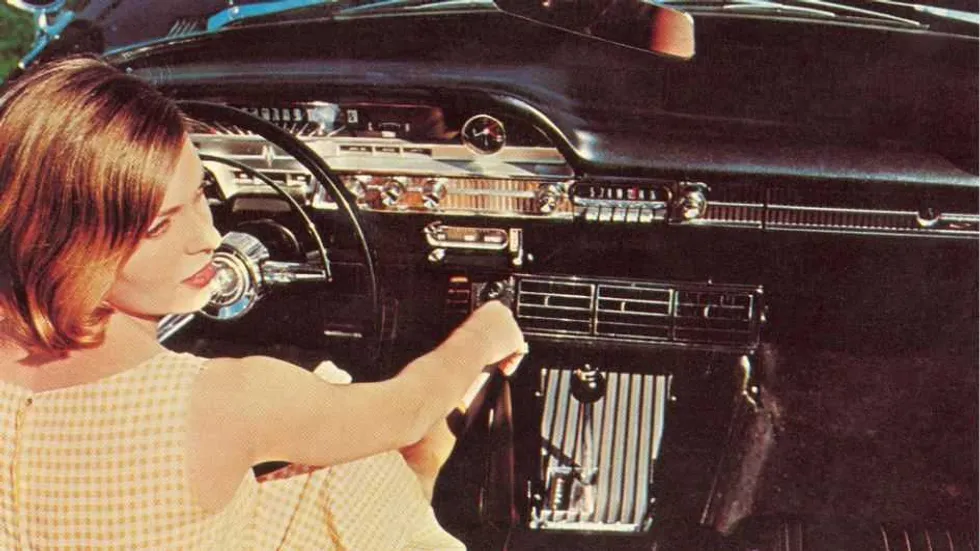
For many drivers, CarPlay isn't an exciting feature anymore. It's plumbing. You connect the phone and expect your stuff to appear.
Automakers can announce grand plans for the future. Engineers can decide they’ve come up with something better. Executives can explain why the technology they want to give us is really what we wanted all along. But eventually somebody has to walk into a dealership and buy the vehicle.
If it ain't broke ...
The best example of this at the moment is what's going on with General Motors.
The company recently unveiled the completely redesigned user interface that will debut in the 2027 Chevrolet Silverado and GMC Sierra — GM’s highest-volume vehicles. There are new displays, Google Gemini, Google Maps, over-the-air updates, and plenty of other technology.
There's also Apple CarPlay and Android Auto. And GM says it has integrated both of them more deeply than ever before in its light-duty pickups. CarPlay or Android Auto can occupy a large portion of the screen alongside native truck functions, such as trailering information and vehicle status.
Why is this notable? Because for the past several years, GM has been preparing drivers for a future without Apple CarPlay and Android Auto, making the case that its own built-in software could do the job better.
Best laid plans
In 2023, GM laid out an ambitious plan to move away from Apple CarPlay and Android Auto in favor of its own deeply integrated software, beginning with its new electric vehicles.
There were legitimate engineering reasons for the decision. A native system can communicate more directly with the vehicle, incorporating charging, range calculations, route planning, and other functions that aren't simply being projected from a phone.
Then GM did something automakers don't always do particularly well: It asked customers what they actually wanted.
The result was a dose of reality. GM took a sweeping software strategy and adjusted it to the way people actually use their cars.
Button pushing
GM says the development process for the new Silverado and Sierra interface included customer clinics and ongoing usability testing.
According to Sebastian Bauer, GM’s executive director of human interface design, drivers complained about “hunting for controls,” taking too many steps to accomplish basic tasks, and encountering interfaces that behaved inconsistently.
So GM simplified things.
Frequently used functions, such as climate controls and camera views, were made easier to reach. Key vehicle settings are one tap away. And — an increasingly welcome sentence in any new-car announcement — GM says physical controls remain available for customers who prefer tactile feedback.
And GM had another realization: Most drivers don’t want a new digital ecosystem. They’re perfectly happy with the one already on their phones.
“People really like CarPlay and Android Auto because they’re so user-centric,” GM product executive Mike Wahlstrom said.
That sounds obvious. Apparently it took some customer research to rediscover.
GM says drivers wanted the simplicity of the phone interfaces without losing fast access to the things the truck itself does. So the new system lets both co-exist instead of forcing drivers to bounce completely between one world and the other.
RELATED: What happened to the $20,000 used car?
 Universal History Archive/Getty Images
Phone fans
Automakers increasingly think of cars as software platforms, and modern vehicles certainly need a lot of software. Cameras, driver-assistance systems, navigation, entertainment, climate controls, towing functions — all of it has to work together.
But there's also money in controlling the dashboard.
Software creates opportunities for connected services, subscriptions, and a continuing relationship with the customer long after the vehicle leaves the dealership.
The trouble is that drivers already have their own way of doing all this — using the phone in their pocket.
Our contacts, music, podcasts, messages, maps, and apps already live there. For many drivers, CarPlay isn't an exciting feature anymore. It's plumbing. You connect the phone and expect your stuff to appear.
That makes replacing it a lot harder than simply designing a technically superior dashboard.
Consumer win
Not that GM is giving up on its native software. The new Silverado and Sierra use Google built-in alongside CarPlay and Android Auto. The same underlying interface architecture is designed to expand across electric, gasoline, and diesel vehicles, and GM plans to keep adding capabilities through software updates.
But look at what happened when GM designed the system for the trucks that sell in enormous numbers.
Drivers said they were tired of digging through menus. GM reduced the number of steps. Some wanted real controls. GM kept them. And customers liked Apple CarPlay and Android Auto. GM made them work better with the vehicle rather than asking buyers to choose.
GM can call that whatever it likes. I call it listening to the customer.
More from this network:
Domains for Sale · GOTPeople.org · TheDSAPlatform · The Truth About Socialism
What's Your Reaction?
 Like
0
Like
0
 Dislike
0
Dislike
0
 Love
0
Love
0
 Funny
0
Funny
0
 Wow
0
Wow
0
 Sad
0
Sad
0
 Angry
0
Angry
0

I am just an average American. My teen years were in the late 70s and I participated in all that that decade offered. Started working young, too young. Then I joined the Army before I graduated High School. I spent 25 years in, mostly in Infantry units. Since then I've worked in information technology positions all at small family owned companies. At this rate I'll never be a tech millionaire. When I was young I rode horses as much as I could. I do believe I should have been a cowboy. I'm getting in the saddle again by taking riding lessons and see where it goes.
Premium domains for sale

























Comments (0)