

How A Doll Empire Exposed A Big Cultural Blind Spot
Premium domains for sale
Freedom Is Back In Style
I will never forget the year I found out the truth about Santa Claus. The first thing I remember my mom, who worked long hours, saying to me was: “Oh good. Now you can help me wrap the presents.”
Freedom Is Back
In Style
Premium domains for sale
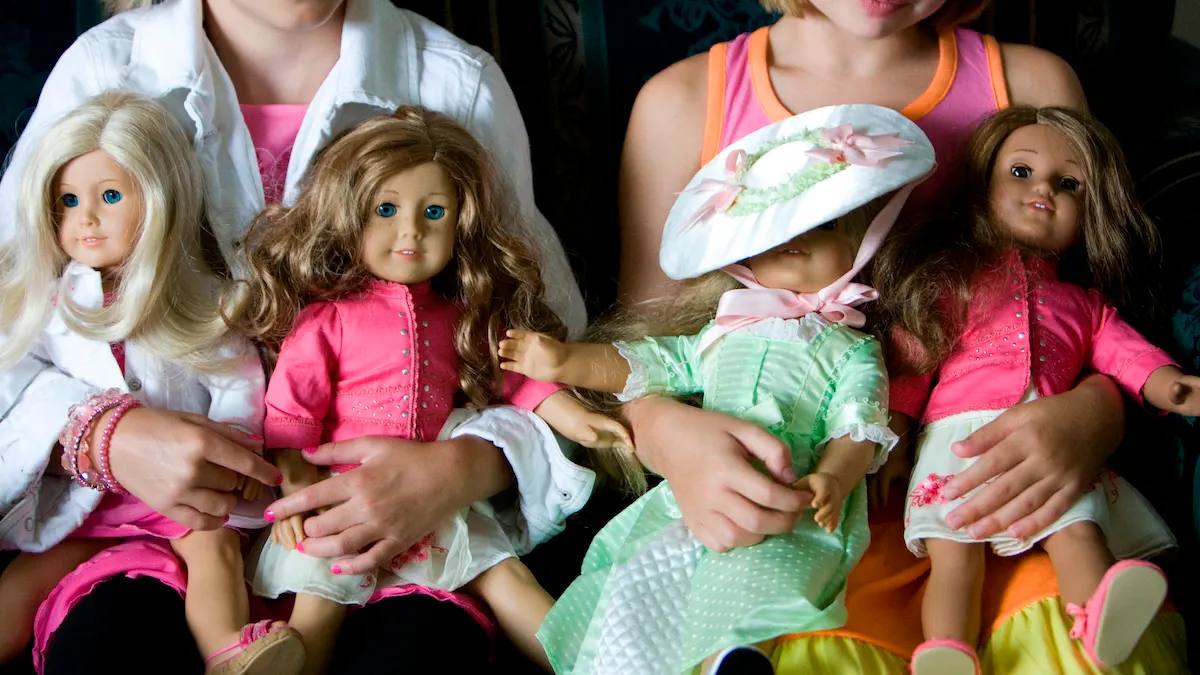
Within a matter of weeks, I was deeply regretting my decision to tell her the jig was up. Picture me, somewhere around the age of 11, relegated to the basement after school every day to wrap each individually boxed miniature notebook, picnic lunch, sweater, and ruffle-clad bedspread meant to go with the eternally popular Samantha Parkington American Girl doll.
“Can’t we just throw all this stuff in a big box and wrap that?” I asked.
“Are you kidding me? Do you know how expensive this stuff is?!” was her reply.
It was the mid-1990s, and even though I was only slightly past the target age for the dolls, it was my five-years-younger sister who was the lucky recipient of so many miniature wrapped presents on Christmas morning.
These days, that vintage Samantha doll with all her original furniture is worth a small fortune.
Amanda FitzSimons’ “An American Girl: How a Billion-Dollar Doll and Its Unlikely Founder Changed Girlhood Forever” is pitched as “a deeply researched, invigorating love letter to the beloved American Girl brand, its unforgettable female founder Pleasant Rowland, and her then radical, now iconic line of eighteen-inch dolls that surprised and transfixed a nation.”
To describe the book as a love letter feels like a bit of a stretch. It’s well researched and informative, with twists and turns to rival a fiction thriller. FitzSimons introduces the rivalry between Rowland and Jill Barad, the eventual Mattel CEO, only to reveal later that Rowland sold Barad the entire company after the two spent nine hours talking over lunch.
But there is something exhausting about the scrutiny heaped upon a woman who built a wildly successful business because she fails to satisfy today’s ultraprogressive sensibilities. It wasn’t enough that Rowland, who had no children of her own, peddled books featuring strong girls being brave and meeting challenges head-on. It wasn’t enough that she built her business from scratch in the intimidating, heavily male-dominated toy market.
No, it took only three pages for the phrase “internalized racism” to make its debut. FitzSimons seems bewildered by Rowland’s reluctance to do interviews or explain herself to the inquisitive public. She questions the founder’s business decisions, including when and how Pleasant Company introduced nonwhite and non-Christian dolls. FitzSimons sought out former employees, seemingly in search of drama, but was largely met with praise and professions of loyalty.
The book does provide a fascinating account of how Rowland, a former educator and journalist, built the American Girl empire after recognizing a major gap in the toy market and figuring out how to fill it.
For many, the appeal of American Girl was never especially difficult to understand. While Barbie existed in a world of plastic pink convertibles, sparkly clothes, and notoriously impossible proportions, Rowland offered something altogether different. American Girl dolls were beautifully made to look like actual children, each accompanied by books that transported their owners to another time in American history. These were dolls, but they weren’t like any other dolls. Rowland’s impeccable taste and legendary attention to detail set them apart.
Samantha, Kirsten, Molly, and the other girls who came later were so much more than toys to so many. Perhaps the most important thing Rowland did was take children seriously and trust them to appreciate beautiful things. The prices were just within reach for suburban middle-class families like mine: not easy, but not impossible. An American Girl doll was special. It was something you saved for and cherished. It was the longed-for item beneath the Christmas tree. It was the reason I have a strong case for childhood labor law violations filed against my mother.
Rowland understood that girls could be captivated by history without being lectured about it, and that a doll could be both a beloved possession and a gateway to something more meaningful. She famously described the dolls as the chocolate cake and the accompanying educational books as the vitamins. The genius was getting girls to devour the vitamins without realizing they were taking them. A spoonful of sugar, and all that.
FitzSimons recognizes the brilliance of this business model, but she makes it clear that she’s less comfortable with the particular vision of girlhood that made it work. American Girl was aspirational, certainly, but it was also restrained, traditional, and distinctly American. The brand offered a vision of childhood worth preserving. At the time, society largely agreed with those basic values. That’s not the case anymore.
American Girl’s story has something in common with the modern conservative movement. Both have demonstrated that there is a substantial audience for products and ideas the cultural establishment might dismiss as unfashionable, unsophisticated, or hopelessly out of step with the times. You don’t have to convince everyone. Find the right audience, and they’ll reward you with fierce loyalty.
Even at the time, American Girl wasn’t for everyone. It was considered too precious and too pretentious, and Barbie fans reportedly called the brand “nerdy.” But the company was never trying to be Barbie, and its refusal to chase the same market was precisely the point. There was room for a doll that valued historical storytelling over glamour, and Rowland was shrewd enough to recognize that a very specific niche could serve the market well.
Interestingly, FitzSimons at times claims that American Girl could be considered a product of feminism, celebrating the spunky heroines who challenged expectations and made their way through difficult circumstances. But the feminism angle doesn’t really work.
The historical characters weren’t appealing because they somehow exemplified the values of modern liberal women. Instead, they had distinct personalities and recognizable childhood experiences. They lived in a world with moral boundaries and social expectations, and their stories allowed girls to imagine what it might have been like to grow up in another era. They were brave, clever, and resourceful. They were not miniature activists.
By any reasonable measure, this is an underdog success story. Early in the book, FitzSimons questions Rowland’s decision to autograph the first iterations of the dolls, comparing it to Mickey Mantle signing his rookie trading card “before ever stepping up to bat.” But maybe Rowland knew she’d stumbled on a great idea. At worst, some people would end up owning an 18-inch doll with some random woman’s name on it.
Even the name Pleasant Company, with Rowland’s own first name embedded in it, speaks to a founder who wanted to put her stamp on something she believed in. Rowland competed against companies with enormous resources and did it with a product that asked more of its audience than the average toy. The dolls have resonated with generations of girls because they offer something the modern toy industry too often overlooks: the idea that childhood doesn’t need to be hurried along and that history is worth knowing.
Unsurprisingly, FitzSimons spends a substantial portion of the book on racial issues, particularly the experiences of black characters in the American Girl universe. Historical fiction for children inevitably involves choices about what to include, what to simplify, and how to introduce young readers to difficult topics.
But FitzSimons seems genuinely shocked to discover that, according to Pleasant Company, more white customers purchased the black American Girl doll Addy than black customers did. She questions Addy’s backstory and features, yet acknowledges that Oprah Winfrey loved the doll so much she featured her on her talk show, reportedly sending phone lines crashing under the influx of orders.
American Girl celebrated brave girls who didn’t always fit the expectations of their own eras, and Rowland herself was hardly a conventional corporate figure. She built a company around an unfashionable idea, trusted her instincts, and refused to let the prevailing wisdom of the toy industry dictate what she should create. She was, by all accounts, a “girl boss.” You’d think the author would approve.
“An American Girl” is worth reading for the story of how Rowland turned a great idea into a business, and FitzSimons is well versed on the topic. But the book is less convincing during the parts when it puts Rowland on blast for not being progressive enough. American Girl didn’t become a phenomenon because it anticipated every argument that would dominate progressive cultural commentary decades later. The dolls became popular because they offered girls something distinctive and meaningful.
They still do.
***
This article is part of Upstream, The Daily Wire’s new home for culture and lifestyle. Real human insight and human stories — from our featured writers to you.
More from this network:
Domains for Sale · GOTPeople.org · TheDSAPlatform · The Truth About Socialism
What's Your Reaction?
 Like
0
 Dislike
0
 Love
0
 Funny
0
 Wow
0
 Sad
0
 Angry
0

I am just an average American. My teen years were in the late 70s and I participated in all that that decade offered. Started working young, too young. Then I joined the Army before I graduated High School. I spent 25 years in, mostly in Infantry units. Since then I've worked in information technology positions all at small family owned companies. At this rate I'll never be a tech millionaire. When I was young I rode horses as much as I could. I do believe I should have been a cowboy. I'm getting in the saddle again by taking riding lessons and see where it goes.
Premium domains for sale














Comments (0)