

How JD Vance Turned A War Into Republican Party Collapse
Premium domains for sale
Freedom Is Back In Style
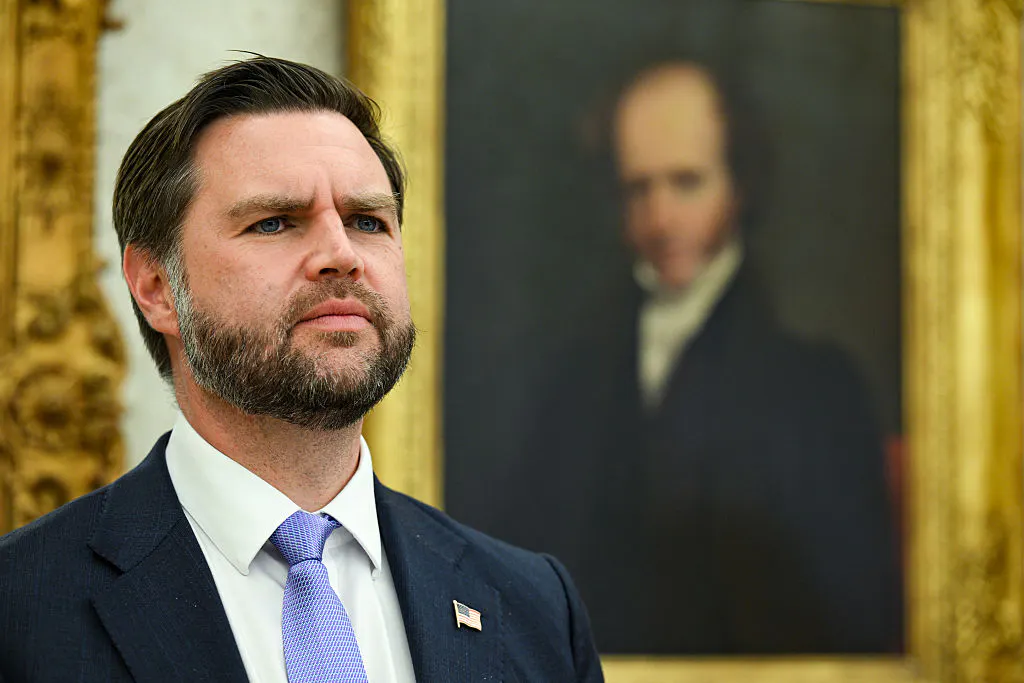
In September, Vice President JD Vance resisted calling the conflict in Iran a war. “I wouldn’t call it a war,” he told reporters when asked whether it would end before the midterms. Major combat operations, he explained, had lasted about six weeks.
Freedom Is Back
In Style
Premium domains for sale
After Republicans lost the midterms, his terminology became considerably more convenient.
“The reason we lost is the war,” Vance announced Wednesday. He cited an unnamed pollster, described voters abandoning the Republican coalition, and insisted that an honest discussion of the defeat must begin there.
Fine. Let’s have that discussion. But let’s include the part where Vance was supposed to help end the war and didn’t.
The central failure Republicans need to confront is not Trump’s willingness to use force against Iran. It is the failure to turn military gains into a durable peace. Trump’s decision to strike and the ceasefire strategy Vance led deserve separate scrutiny.
On April 8, the White House announced that American forces had “achieved and exceeded” their core military objectives in 38 days, and that Vance would lead the negotiating delegation to Islamabad. The press secretary said he “has played a very significant and a key role in this since the very beginning.” The administration’s premise was that military success had created an opening for a settlement. Vance was assigned to help secure that settlement.
Nearly seven months later, Americans were voting with the conflict still unresolved.
The Islamabad talks ended without a deal. A weak memorandum signed in June collapsed within a month and expired in August. Strikes flared again in September, the same week Vance declined to call it a war. By the eve of the election, Iran was still demanding that Washington lift its naval blockade, release frozen funds, and permit oil sales before discussing its nuclear program. Asked Monday whether Tehran faced a deadline before strikes resumed, Vance said, “No, we haven’t set deadlines.” That record deserves more explanation than a post blaming “the war.”
The June memorandum’s terms matter because Vance sold them as a victory. The 14-point text required Washington to begin lifting its naval blockade and issue oil waivers on signing, and make Iran’s frozen funds “fully available” on implementation. It committed Washington and regional partners to develop a reconstruction plan of at least $300 billion, without saying who would pay. Iran promised “best efforts” at safe passage through Hormuz, “with no charge for 60 days only.” The document said nothing about Iran’s missile program.
Vance called the dollar figures “Iranian propaganda,” promised “not a single cent of American money,” and said “the United States wins either way”: Iran would get nothing or “fundamentally transform” itself. The memorandum did not produce that transformation. Iran was attacking shipping again within weeks. In July, Vance told Joe Rogan there would be “a lot of stops and starts.” They continued through Election Day.
Republicans who supported the strikes are now criticizing the ceasefire. Ari Fleischer, who called the decision to attack “the right decision,” answered Vance: “The problem was not the Iran War. It was the ceasefire.” He said Vance had negotiated a truce that failed and left Americans facing higher prices with troops still deployed. Brit Hume said Vance had been “hornswoggled by the Iranians into a deal they would never live up to, and didn’t.”
Americans are still paying for the unresolved conflict at the pump. A trucker buying diesel cannot pay his fuel bill with assurances that another round of negotiations looks promising. Diesel was about $3.76 a gallon when the first bombs fell. It set its all-time record, $6.53, on September 21, more than five months after the initial campaign ended.
The NBC News exit poll found that 87% of voters were concerned about gasoline and diesel costs, 74% called the war a crucial or major factor in their vote, and 63% believed military action was the wrong decision. Republicans should confront those findings honestly. But that retrospective judgment cannot tell us what voters would have thought of a six-week campaign followed by an enforceable settlement. Nor does it establish that the course pursued since April was the best available. Vance cannot use dissatisfaction with the outcome to exempt his own role in producing it from examination.
Trump is president and bears ultimate responsibility for his administration’s decisions. Vance does not independently command the military or dictate foreign policy. But that does not make him a spectator. If his role was important enough to lead the negotiations, it belongs in his account of what went wrong.
Trump, to his credit, has defended the original decision. Asked Wednesday about Vance’s post, he called it “largely true,” and said he would make the same decision again. He defended its purpose: “We stopped them from having a nuclear weapon, and they will never have a nuclear weapon.” Asked whether the war was worth it, Trump said yes. One can disagree, but the president has stated a position for which he can be held accountable. That is leadership.
Vance owes Americans the same clarity. What settlement did he believe was achievable? Which concessions did he recommend? Did he reassess the approach as the talks stalled, and what did he advise the president to do? Nobody can guarantee that another military course would have produced immediate peace. But uncertainty about the alternatives does not establish the wisdom of the course taken.
The polling argument needs scrutiny, too. Vance says an unnamed pollster asked former Trump voters what would bring them back: ending the war, addressing living costs, putting America first, and changing the relationship with Israel.
That last item in particular has a longer history than Wednesday’s post. Since June, Vance has repeatedly pointed at Israel when defending his Iran diplomacy. In July, for example, he told Joe Rogan that “certain people within the Israeli government” were behind “a literal foreign influence campaign” to “tank the very deal that I was pursuing.” On Wednesday, “change our relationship to Israel” became the fourth thing Trump voters supposedly want, on the word of a pollster he has not identified.
That pandering has an audience. Vance’s good friend Tucker Carlson has consistently cast the war as serving Israel’s interests while praising the VP. In a post viewed 95 million times in the campaign’s final days, he wrote that Netanyahu “needs this war” and praised Vance as one of two men in the administration arguing for a deal. Marjorie Taylor Greene replied to Vance’s post: “You should have listened to me and Tucker.”
Vance certainly appears to be courting that crowd, with an asset a vice president controls: his account of who is to blame. Not everyone in that crowd wants him, either. Nick Fuentes told his followers to vote for Democrats to punish Republicans and said on election night that the party must be rebuilt “with the groypers” and that “it cannot involve Trump, Vance.”
But shifting blame is no substitute for explaining his own record.
A deal that collapsed, a war that would not end, a blockade still in place: that record demands an accounting of the decisions made in Washington and Tehran. Vance’s own role in the failed negotiations disappears from his account. Israel does not. Publish the poll. Did voters volunteer Israel, or were they prompted? What change did they actually want? Anger over the war does not, by itself, establish a mandate to change an alliance.
Vance is right that the party needs an honest reckoning. That reckoning must examine why a campaign the administration declared successful in April remained an unresolved crisis in November.
The president has answered for his decision to fight.
The vice president needs to stop scapegoating and start answering for the peace he has failed to deliver.
***
Dr. Mark Goldfeder, Esq., is Director of the National Jewish Advocacy Center.
More from this network:
Domains for Sale · GOTPeople.org · TheDSAPlatform · The Truth About Socialism
What's Your Reaction?
 Like
0
 Dislike
0
 Love
0
 Funny
0
 Wow
0
 Sad
0
 Angry
0

I am just an average American. My teen years were in the late 70s and I participated in all that that decade offered. Started working young, too young. Then I joined the Army before I graduated High School. I spent 25 years in, mostly in Infantry units. Since then I've worked in information technology positions all at small family owned companies. At this rate I'll never be a tech millionaire. When I was young I rode horses as much as I could. I do believe I should have been a cowboy. I'm getting in the saddle again by taking riding lessons and see where it goes.
Premium domains for sale







Comments (0)