

Influencers Are Wrong About Marriage And Young Women Are Suffering The Consequences
Premium domains for sale
Freedom Is Back In Style
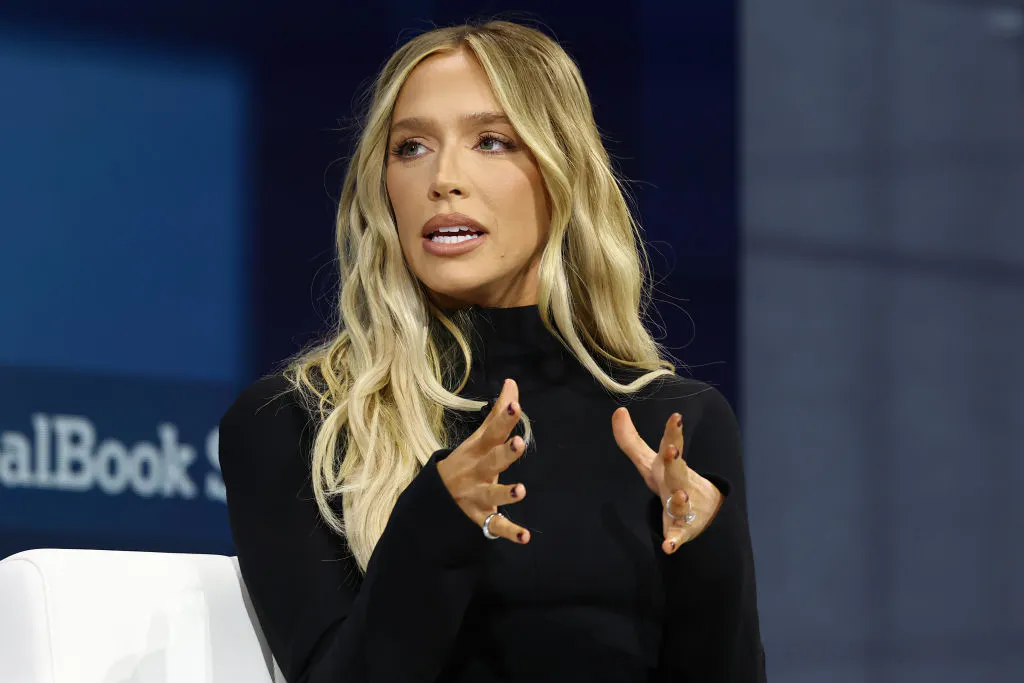
On a recent episode of the very raunchy “Call Her Daddy” podcast, host Alex Cooper and actress Sophia Bush talked about divorce as casually as retiring a pair of ill-fitting jeans. If a woman is questioning whether she could do better than her marriage, Cooper told her audience of predominantly young women, “the answer is always yes.” When critics pushed back, Bush dismissed them as people who “hate a woman with agency.”
Freedom Is Back
In Style
Premium domains for sale
No one should stay in a marriage marked by abuse or one where differences would make raising children together harmful. Women in those situations deserve support, not judgment. But “the answer is always yes” is not about them. It is a shrug at the most serious promise most of us will ever make, offered up to millions of young women still deciding what kind of lives to build.
This is a shallow way to view marriage and a terrible message to send millions of young women. Cooper wants us to believe that a spouse is less a partner than a placeholder, someone to keep around until a better option comes along. Marriage becomes one more product to review, return, and upgrade, and the highest virtue is never settling. That recipe leads to permanent dissatisfaction.
Cooper and I both got married in April 2024. That is where our similarities end. I knew fairly quickly after meeting my now husband that he was someone I wanted to build a life with. We are alike in all the important ways: we share our Catholic faith and values, and believe that family comes first. What I did not fully appreciate when we met is how much richer our lives would become precisely because we promised them to each other.
Commitment is not the price of a good marriage. It is the reward. There is a particular kind of freedom in being fully known by someone who has chosen you for good, and in never wondering whether you are one bad week away from being traded in for someone “better.” Our promise to each other is what lets us make plans years out, take risks, and build something bigger than either of us. That security is the foundation of everything.
That kind of commitment appears to be losing its value in our culture. Twenty years ago, 54% of Americans told Gallup that couples planning to spend their lives together should legally marry. This year, just 37% said the same. Marriage is the most obvious example, but our lives are built on countless smaller commitments: showing up for a shift, coaching the team you volunteered for, calling your mother back. Together, they are the quiet machinery that keeps our families, communities, and country running.
Growing up, my parents never allowed me to quit anything. If I signed up for a week of swim camp or a season of soccer, the deal was spelled out in advance: When it was over, if you didn’t want to do it again next year, you didn’t have to. But you will not be able to quit halfway through to pursue a different activity instead.
The point was never to make me a star athlete. It was to teach me to think carefully about the choices I was making, and instill a stick-to-itiveness that feels increasingly rare. More importantly, I learned how good it feels to simply follow through on a promise. Keeping your word is the hallmark of someone others can count on: a good teammate, a good friend, a good spouse, a good citizen. It is also how we learn to count on ourselves.
Cooper and Bush are confusing freedom with their ability to walk away from commitment. A life spent constantly wondering whether someone (or something) better is just around the corner leaves little room to appreciate what you already have. There is nothing empowering about teaching young women to view commitment as settling or to mistake temporary dissatisfaction for a reason to walk away.
Young women deserve, and frankly need, better advice than that. Cooper has an enormous platform, and tens of millions of young women take her words to heart every week. That kind of influence comes with a responsibility to tell them the truth.
Freedom isn’t the ability to walk away from everything that feels mildly uncomfortable. Freedom is the ability to choose what you want to stand by and then follow through on it. My parents taught me that on a soccer field. My marriage proves it every day.
***
Abbey Lower is a communications and political strategist whose career spans politics, fashion, and public affairs. She currently serves as Chief of Staff and Head of Marketing for Public Affairs in the Office of the Secretary of War, following previous roles at the Republican National Committee and Tommy Hilfiger.
More from this network:
Domains for Sale · GOTPeople.org · TheDSAPlatform · The Truth About Socialism
What's Your Reaction?
 Like
0
 Dislike
0
 Love
0
 Funny
0
 Wow
0
 Sad
0
 Angry
0

I am just an average American. My teen years were in the late 70s and I participated in all that that decade offered. Started working young, too young. Then I joined the Army before I graduated High School. I spent 25 years in, mostly in Infantry units. Since then I've worked in information technology positions all at small family owned companies. At this rate I'll never be a tech millionaire. When I was young I rode horses as much as I could. I do believe I should have been a cowboy. I'm getting in the saddle again by taking riding lessons and see where it goes.
Premium domains for sale




















Comments (0)