

Inside The Terrifying Apocalyptic Trans Death Cult
Premium domains for sale
Freedom Is Back In Style
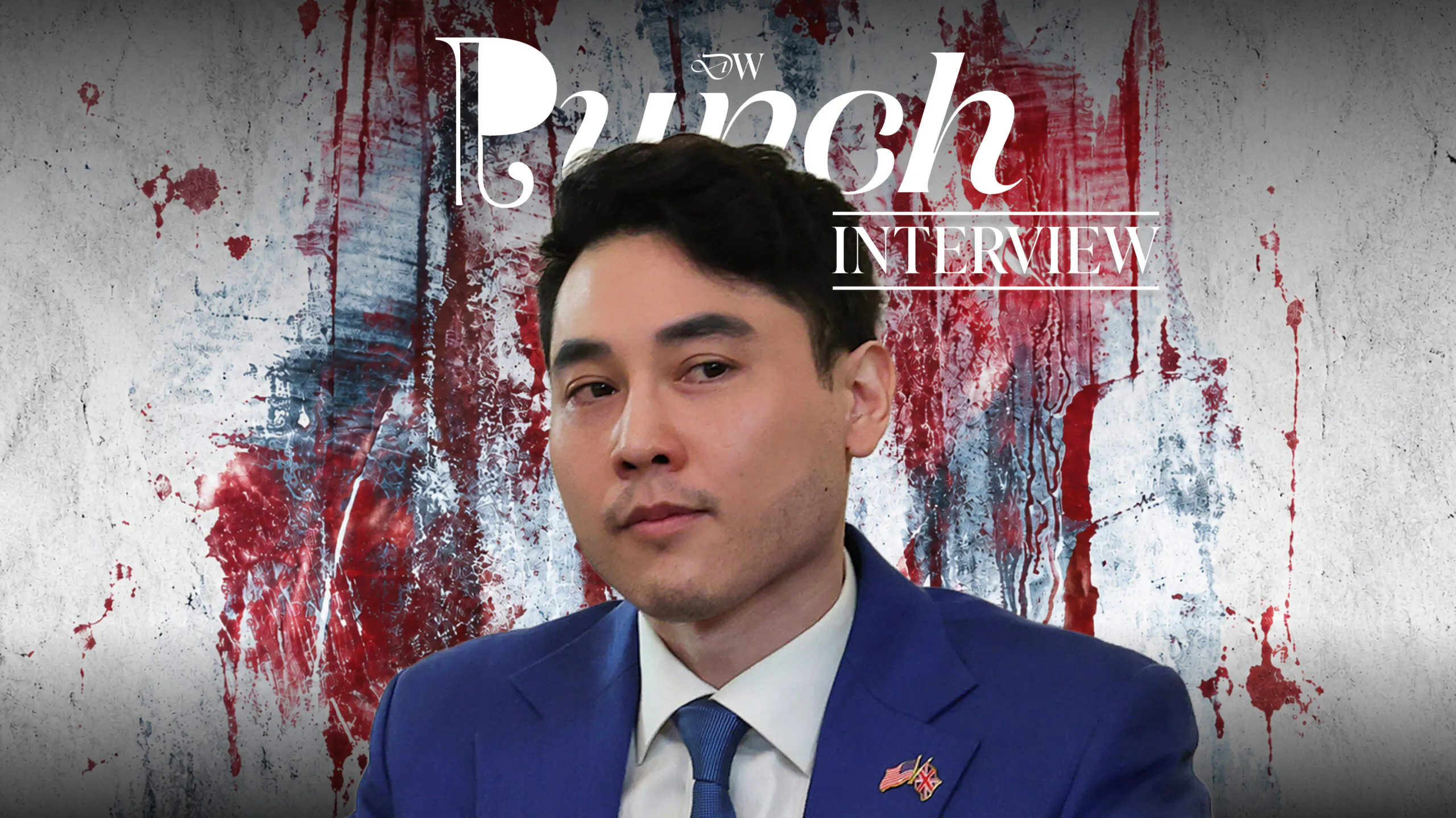
Andy Ngo first hit the national scene reporting on the explosive clashes of Antifa forces in major American cities against law and order and, more broadly, normal social order. In that immediate post-George Floyd “woke” era, Ngo often found himself not only at the center of torrential waves of this violent, antisocial movement, but also a deliberate target — and the reporting put his very life in danger. Now, he’s back investigating a seemingly parallel movement that, from its roots, springs an even deadlier, paranoid, more violent, cultish underground organization that sounds like the stuff of a horror movie. In this weekend’s Punch interview, Ben Domenech discusses this group as detailed in Ngo’s new book, “The Zizians: Inside a Trans Death Cult,” its ties to Silicon Valley, AI, and transgender identity, and why this obsessive, deranged plotline is grossly underreported by the mainstream media.
Freedom Is Back
In Style
Premium domains for sale
***
Ben Domenech: Andy, I want to thank you for taking the time to talk to me about a subject I know you have devoted an enormous amount of time to researching and to digging into. This is an incredible story, and I’ve been a little obsessed with it because of its odd nature, but I’m not sure many Americans are familiar with it. So if you were outlining to a friend who’s never heard of the Zizians and everything that beget this story, how would you describe it to them – as in, here’s broadly what went on here and why you should pay attention to it?
Andy Ngo: The Zizian story has all the components that would make media and broadcast television go crazy. There are murders, suicides, coverups, money, revenge, fake death, and yet most people have never heard of this cult. And I believe there’s a very particular reason for that. The cast of characters are almost all transgender-identifying, and the ideology of the esoteric group itself pulls heavily influenced from trans ideology. And that’s a kryptonite for mainstream media — liberal media — because transgenderism is one of their sacred cows. The story of the Zizians is how a group of Silicon Valley geniuses obsessed with AI existential risk eventually believed they could form their own vanguard of trans people who could “save the world.” And in their nine-year campaign across the United States, there is a trail of bodies behind them, people who were killed and maimed in very brutal ways.
As the cult became more radical over time and more reclusive and its members became fugitives, their alleged crimes became more violent, and their sense of persecution and paranoia intensified, particularly around the language of trans grievances. They believe there’s an ongoing trans genocide, that they are victims of it, and in their own writings and words, they believe that any actions of violence that they take, including murder, are justified because it’s vengeance and revenge for them, which they view as a form of “self-defense.”
BD: The odd thing about this, which you referenced, is that on paper, you would think this story would have enormous appeal to a broader media audience. You would think it would be picked up and retold by any number of legacy media journalists and podcasters, given the attention on true crime and issues related to AI fears in our modern discourse. You said that the reason that they have not taken that up is because of the element of the transgender identity of these people. When you were doing your research into this, what were some of the things that stuck out to you as examples of that — as examples where you said, “This story would be absolutely on the front pages if not for this one element”?
AN: Killings unfortunately happen every day and all over the United States. There’s nothing unusual about that. However, what made the story different, although not particularly surprising given what I know, is that the Zizians were able to exploit liberal sensibilities about transphobia to their full advantage, buying them time to drag out court cases. And if the criminal allegations are true, it led to deadly consequences for one particular individual who was an alleged victim of their violence: an elderly man named Curtis Lind, who, in 2022, at 79 years old, as a landlord who tried to evict them from his property in Vallejo, was ambushed in an attack with knives and swords and was impaled through the chest and lost an eye in that attack and was cut and stabbed and slashed over 50 times. He had a firearm for self-defense and, drenched in blood and barely alive, he fired off all remaining four rounds and was able to kill one of the Zizians and injure another one.
And the trial for that kept getting moved over the years because of the defendants – the Zizian defendants – their counsel constantly raised competency issues and also claims about mistreatment because of their clients being trans, and many other frivolous motions, and also attempts by these Zizians to shut down the court hearings, and causing delays. And as the years went on, the one key and only eyewitness to that attack, Curtis Lind, was aging in his early 80s. And then last year, a person in the Zizians group who was completely not on the radar of anybody suddenly appeared in Vallejo, California, and is accused of ambushing Curtis Lind and stabbing him repeatedly and pulling his head back and slitting his throat, and he died.
And the trial still hasn’t happened, and that whole case is at risk now because the key eyewitness is dead. The other witness to the aftermath of the attack is also in his 80s and suffering multiple strokes. Meanwhile, the Zizians who have been charged over those attacks have been able to use all these tactics to buy themselves time and time to plan. So, to answer your question about what stood out to me, it was this pattern of failure by law enforcement and the courts to hold them accountable over time, even as they were allegedly involved in criminal conduct. It was so easy for them to take up time in criminal cases and then disappear, faking their deaths, going into hiding in different jurisdictions, and just moving across the U.S. in new communes, picking up new names and identities. Which, by the way, is why, for my book’s introduction, I have a guide to reading the book and letting readers know that I was able to find the legal names of every known Zizian member and associate that’s named in the book, and everybody is referred to by their birth names as well as their biological sex.
So there’s no ambiguity because for many trans extremists and trans radicals, they do exploit laws and media sensitivities around pronouns and names to be able to use different identities to their benefit. And in my research in the writing for this book, it was extremely difficult to find some of these names. They’re real names because, in some jurisdictions, they actually seal those records if it’s done for the reason of a gender identity. So this is what I mean when I say that there’s a bigger story here than just a true crime story of murders and suicides and coverups and violence. But rather, the Zizians are part of a pattern we’re seeing of rising trans violence, where there are lots of gears in a machine that is creating feedback loops where disturbed individuals in the tail end of this demographic are committing acts of violence, including mass violence, mass killings, and they are – on their pathway to violent radicalization – they are supported by institutions, the media, oftentimes courts, and propaganda that gives them the feedback loop of the sense of persecution where they need to take up deadly weapons for so-called self-defense. And I noticed this pattern several years ago in my reporting on Antifa because disproportionately the suspects and convicts who were involved in that type of so-called anti-fascist militancy were and are trans identifying.
BD: I want to rewind for a moment. I’m older than you, and I remember the point where the rationalist community online was kind of a Samizdat-type experience where it was spread across multiple blogs and websites and ephemera and bits of information here and there that you could pick up and read and see that there were common threads and sometimes common authors. But at the time, I found them to be essentially hyper-autistic nerds given to obsessions, but essentially harmless. What is it that made the Zizians sort of an offshoot of that — a category given to violence as opposed to what you think of as sort of the typical…nerd rationalist community where they’re a bit odd and they might have an argument about how we’re going to be viewed in the future for having eaten animals or something or AI consciousness versus human souls and that kind of thing.
Those didn’t strike me as dangerous arguments to have at midnight in a college dorm. But for the Zizians, it branched out into attempting to build a rationalist fleet, doing all sorts of other crazy things, and then resorting to violence. Why did that violence element enter into it?
AN: It’s suspected that the majority of the Zizian members are autistic. In fact, I was able to confirm that four of them have diagnoses of autism spectrum disorder, particularly Asperger’s syndrome. Many of the young people who were moving to the Bay Area — Silicon Valley in particular — to work in tech and to join rationalist and effective altruist organizations such as MIRI [Machine Intelligence Research Institute] were concerned with the existential risk coming from AI a decade ago. So we’re only now hearing about it in the mainstream because of some former developers at Anthropic and OpenAI who went very viral, had the support of a number of politicians, and have given many interviews. But this debate has been going on for many years now. And one common trait that can be found in people with autism spectrum disorders is obsession.
We saw that, for example, in an individual like Greta Thunberg when she was a teenager, and her family’s been open about her autism, and she was obsessed with climate change concerns and viewed it as catastrophic and existential, and devoted her life to it. The Zizians have that same type of obsession, but about AI existential risk. And in the rationalist community, with many of them being “aspy,” very brilliant, and nerds and geeks, primarily male, they found organizations where they were able to have these endless debates and discussions about what can be done. And they came up with very complicated mathematical algorithms and models for potential solutions and ways that people can maximize good.
You asked what made the Zizians become allegedly violent and extreme from this group, from the subculture. Well, I think in that paranoia climate of AI destroying the world, there are going to be some, in the tail end of that population, who will feel that not enough is being done and that the risk is existential and it’s coming here very soon. And so this is where “Ziz” is having what appear to be narcissistic traits, thinking that he could be the leader of a vanguard of rationalists and effective altruists who could save the world. As part of his beliefs, he thought that transgender people were more likely to have the special and rare cognitive traits that he was looking for to form this vanguard. And so his ideas were written down in tens of thousands of words — hundreds of thousands of words — in his blog called “Sin Seriously.” And that functioned in a way as part autobiography and part manifesto.
And there were rationalists all around the world who consumed his blog writings and his ideas and reached out to him. And that’s often how he made some of the contacts with people who became recruits. He also recruited in real life from Silicon Valley. He worked for a time at Google and other tech startups, he went to rationalist meetups where he met other people. And there was also an aspect of trans social contagion going on in that particular community. A lot of the people were in polyamorous relationships. So just a lot of, I’ll just use the term “alternative ideas” and alternative lifestyles. And San Francisco has a long history of that. There’s a reason Charles Manson had his start in San Francisco, for example. And I think there are lots of parallels between the Zizians and the Charles Manson family.
BD: I think that this is a fascinating story, but I also think that one of the things that gives people pause about reading what is essentially true crime is a feeling that we’re being drawn into thinking dark thoughts or something like that. There’s been a debate recently in conservative circles about whether you’re even supposed to watch Halloween movies, for instance, which I find kind of laughable. But the thing I think is important to understand is why the Zizians exist and what they tell us about the dangers of a particular path of extreme rationalist thought or some of the other things that are associated with this coming from very smart people, which I think Americans are not typically used to. They’re used to thinking of murderers as people who are stupid or who are fundamentally having their worldview perverted by, say, radical religion or something along those lines.
Why do you think the Zizian story is important for Americans to understand in this century and for them to understand the dangers and the elements that are going on around us that may seem unfamiliar, but are definitely something that, I’m not saying they’re widespread, but they have more allegiance to them than I think Americans necessarily recognize.
AN: The stories of the Zizians are important because in my book, I contextualize it as part of a pattern of rising trans violence. I identify the multiple variables that I believe are involved in causing these feedback loops that, in some instances, will result in deadly violence and catastrophic attacks. So there’s been an observation for the last 10 years that we now have this new phenomenon of mass killers, mass shooters, and those who kill their family members and kill children, who are trans identifying. This was practically unheard of before. There has been a larger and much longer documented history of sexual, violent criminals who identify as trans. But the type of killings that we’re seeing today, where, if there are manifestos left behind, writing, or social media posts where trans ideology is at the forefront. Just a couple of weeks ago, there was a transgender identifying man in Washington State who uses the name “Melody” who was federally charged for allegedly having been an accomplice to the transgender mass shooter in British Columbia earlier this year.
At Tumbler Ridge, that trans killer murdered eight women and children in one of Canada’s deadliest mass shootings. And the evidence that was released by American prosecutors, which was covered up by Canadian officials, is that the guns that were used to murder the children had trans pride symbols on them. So you have that. You have the manifesto that was left behind by the Annunciation School trans mass shooter in Minneapolis. You have the manifesto from Audrey Hale, the female in Nashville, Tennessee, who slaughtered children at a school shooting.
I bring all of this up to say that the Zizians arose out of a particular context. And even when the ideologies of these trans killers are disparate and diverse, there is this thread that kind of runs through all of them and other questions about the role of how other variables such as mental health comorbidities, autism diagnoses, all sex hormone use, propaganda about persecution and trans genocide, all these things coming together to create an environment where some disturbed individuals who are trans take up deadly weapons and kill. So as much as the Zizian story is indeed dark and disturbing, it gets to a bigger point — a really important point that I think everybody should care about, particularly if you are concerned about the future of this country and the welfare of the vulnerable, such as children. But these feedback loops don’t happen just in isolated vacuums. There are a lot of gears in the machine that produce these types of outcomes in rare, but nevertheless tragic and extremely violent situations.
BD: Tackling this had to be something that was incredibly emotionally hard and draining and took a lot of time, took a lot of work, took a lot of effort. What is your next project?
AN: I don’t know what my next project is yet. Honestly, I think I have PTSD from investigating and writing this book. A lot of the stuff I was learning and writing about is very evil, but I pushed on because people need to know the truth. If you just rely on Wikipedia and Google and the legacy media reporting on the Zizians, you come out with the sense that a group of women in Silicon Valley somehow just became linked to violence. You get nothing about how transgenderism was central to their own esoteric beliefs and also central to their sense of persecution against the world that allegedly motivated them to commit brutal acts of violence against elderly people and other victims who crossed their path. I’ve always written about things that make me hated, make me reviled. I am living in exile in England because of the violence against me in the past from Antifa and trans violent extremists.
But I hope I can do my part to change the trajectory we’re all on, whether we want to be or not.
More from this network:
Domains for Sale · GOTPeople.org · TheDSAPlatform · The Truth About Socialism
What's Your Reaction?
 Like
0
 Dislike
0
 Love
0
 Funny
0
 Wow
0
 Sad
0
 Angry
0

I am just an average American. My teen years were in the late 70s and I participated in all that that decade offered. Started working young, too young. Then I joined the Army before I graduated High School. I spent 25 years in, mostly in Infantry units. Since then I've worked in information technology positions all at small family owned companies. At this rate I'll never be a tech millionaire. When I was young I rode horses as much as I could. I do believe I should have been a cowboy. I'm getting in the saddle again by taking riding lessons and see where it goes.
Premium domains for sale







Comments (0)