

Ivy League Elite Quietly Collaborated With China’s Top Defense Universities
Premium domains for sale
Freedom Is Back In Style
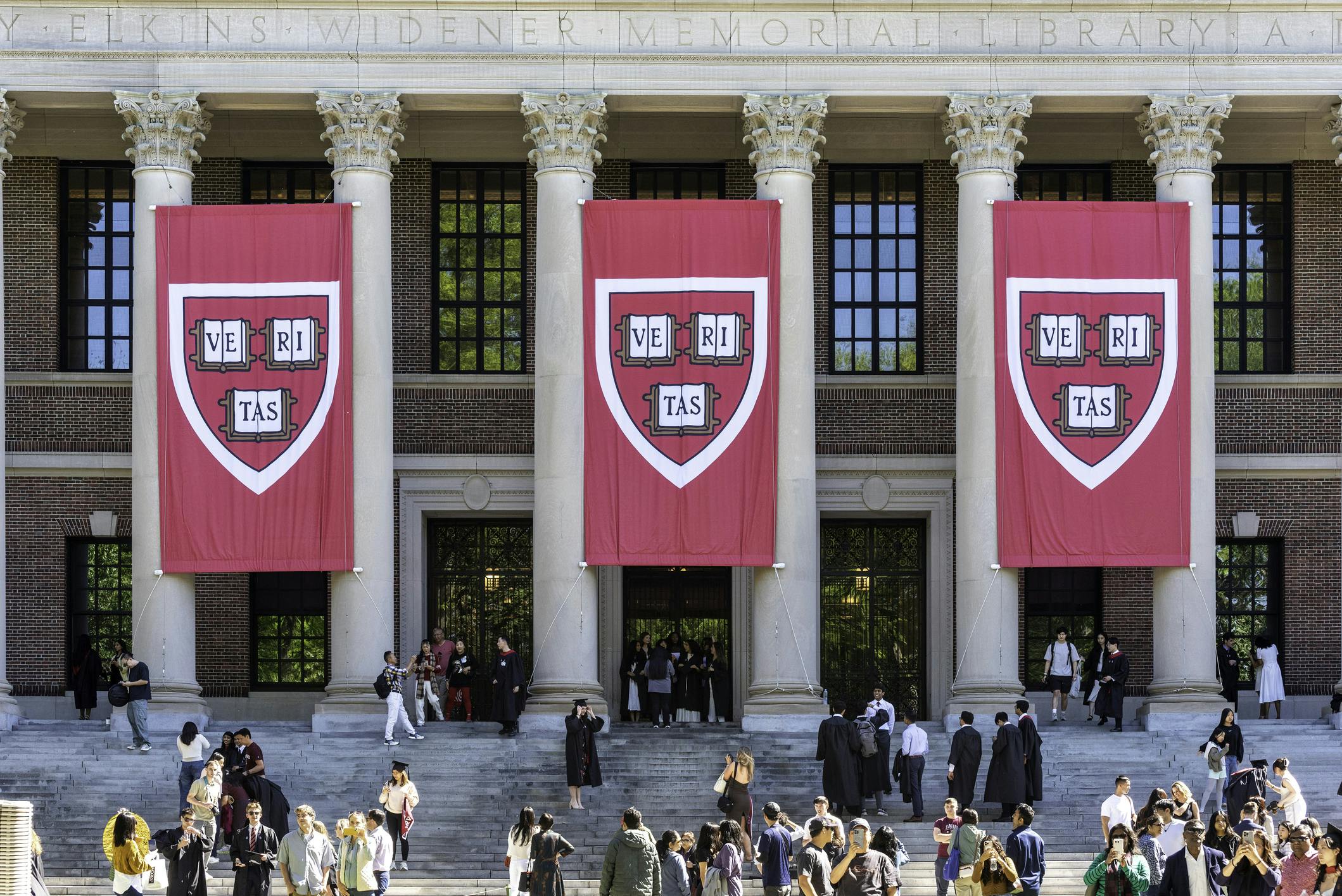
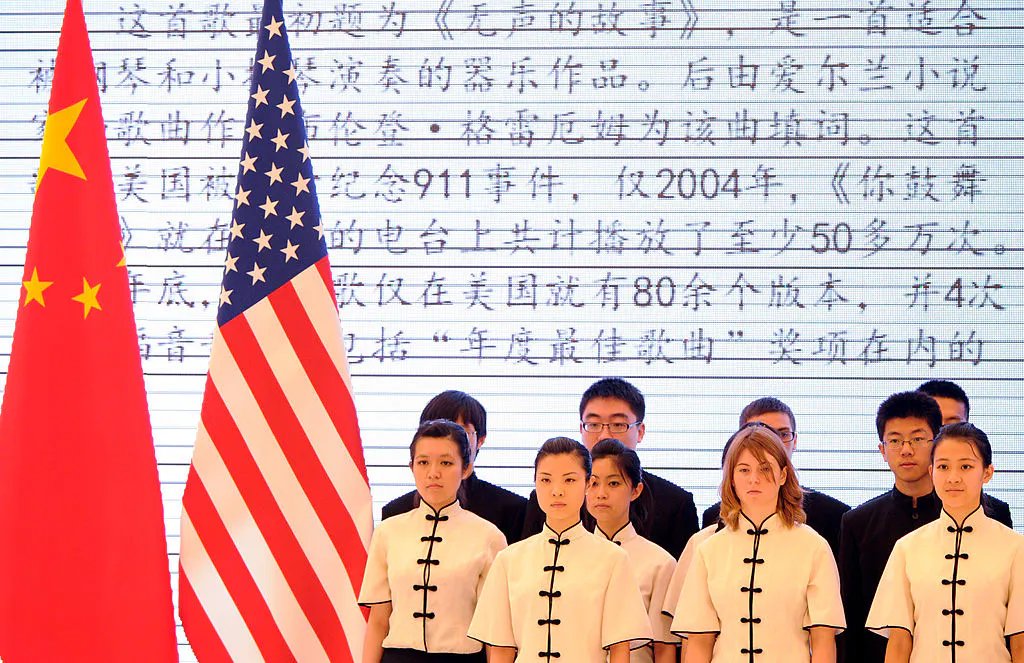
More than 140 research papers written by Harvard researchers were authored in collaboration with Chinese universities known as the Seven Sons of National Defense, according to a report from the House Select Committee on the Chinese Communist Party, Fox News reported. The Pentagon and other U.S. officials have identified those schools as central to China’s defense research and military modernization.
Freedom Is Back
In Style
Premium domains for sale
Lawmakers argue in the report that Harvard’s approach to research gave way to partnerships that could advance the technological and military capabilities of its biggest adversary.
“From allowing violence against anti-China protestors to collaborating with entities linked to the PLA [Chinese People’s Liberation Army], Harvard has made serious mistakes and must act now to prevent more,” said Committee Chairman Rep. John Moolenaar (R-MI). “It should use this investigation as a catalyst for significant reforms that end CCP influence on campus and prioritize secure American research.”
Education Department data cited in the report show Harvard received more than $600 million from China under Section 117 foreign gift rules, more than any other American university. The committee says the volume of that funding raises the need for tighter oversight of research partnerships and disclosure practices.
One 2023 paper looked at bio-inspired soft robots for deep-sea exploration. A Harvard-affiliated researcher shared authorship with a scientist from Beihang University (Beijing University of Aeronautics and Astronautics), which has been on the Commerce Department’s Entity List since 2001.
While Harvard’s research compliance office described the project as nonmilitary research, lawmakers noted the project could help possible military applications, such as underwater detection. The paper was one of the examples the committee highlighted when examining Harvard’s collaborations with institutions linked to China’s defense research.
Another 2023 paper involved a researcher at China’s National University of Defense Technology, an institution on a U.S. restricted list. That study examined magnetic materials and acknowledged partial support from the U.S. Army Research Office.
Engineering accounted for the largest share of the Harvard-affiliated research involving Seven Sons institutions, the committee found after reviewing publications across dozens of disciplines.
Harvard said it “shares the Committees’ concern about geopolitical risks, including threats posed by the Chinese Communist Party, and is committed to continuing to conduct research and academic programming with protections that prioritize U.S. interests and national security.”
“Harvard follows national security standards and guidance set by the federal government for its international collaborations,” a university spokesman said. “Additionally, where appropriate, federal agencies who are best able to assess real-time national security risks work with Harvard to put in place agency approved risk mitigation measures for federally funded research.”
The university added that it “disagrees with mischaracterizations that fail to reflect the university’s documented record of compliance, cooperation, and commitment to protecting and advancing U.S. interests, national security, and global standing.”
The committee also investigated Harvard’s executive education program with China’s National Healthcare Security Administration, which trained Chinese health officials on international health insurance systems.
Attendance and registration records listed officials connected to the Xinjiang Production and Construction Corps, or XPCC, in connection with some sessions. The Treasury Department sanctioned XPCC in 2020 over human rights abuses against Uyghurs and other ethnic minorities in Xinjiang.
The report acknowledges it is unclear whether XPCC officials ultimately attended every program in question. It states, however, that Harvard had advance participant information for a 2020 online session that included XPCC-affiliated officials and did not take further action.
Harvard professor Winnie Yip, who helped organize the program, told committee investigators she did not know XPCC was a sanctioned entity at the time and had not received training on sanctions compliance.
Committee members argued that Harvard’s research security process stayed too focused on narrow legal compliance and underweighted broader national security risks of working with Chinese military-connected institutions. Harvard research official John H. Shaw told investigators the university reviews collaborations on a case-by-case basis and does not ban all projects with Chinese institutions. The panel, however, said that research with entities inside China’s military civil collaboration system can still have military applications even when the work is unclassified and intended for publication.
The report also raises questions about Harvard Global Research and Support Services, a nonprofit affiliated with the university that can accept awards when Harvard is unable to accept a sponsor’s terms directly.
The report recommended that Harvard prohibit research relationships with entities on restricted or sanctioned lists and centralize its research security oversight. It also urged Congress to strengthen foreign funding disclosure requirements for universities.
More from this network:
Domains for Sale · GOTPeople.org · TheDSAPlatform · The Truth About Socialism
What's Your Reaction?
 Like
0
Like
0
 Dislike
0
Dislike
0
 Love
0
Love
0
 Funny
0
Funny
0
 Wow
0
Wow
0
 Sad
0
Sad
0
 Angry
0
Angry
0

I am just an average American. My teen years were in the late 70s and I participated in all that that decade offered. Started working young, too young. Then I joined the Army before I graduated High School. I spent 25 years in, mostly in Infantry units. Since then I've worked in information technology positions all at small family owned companies. At this rate I'll never be a tech millionaire. When I was young I rode horses as much as I could. I do believe I should have been a cowboy. I'm getting in the saddle again by taking riding lessons and see where it goes.
Premium domains for sale















Comments (0)