

Josh Hawley: Why I Am Investigating Flock
Premium domains for sale
Freedom Is Back In Style
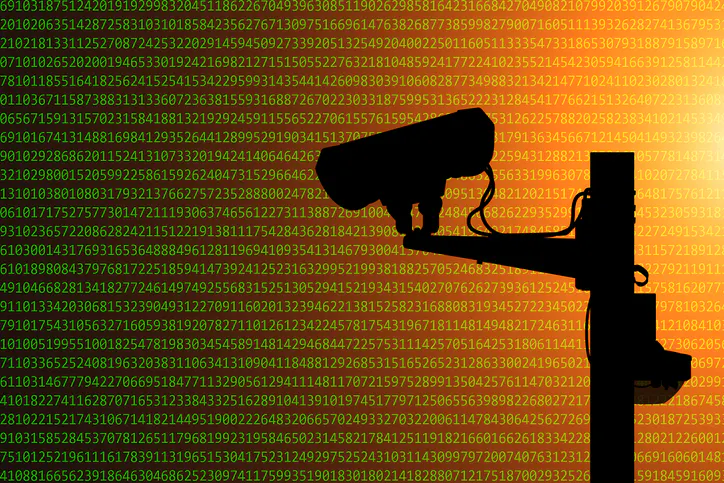
Every month, AI-powered cameras take 20 billion snapshots of cars in America. In almost every case, these photos capture drivers who did nothing wrong. These are regular folks on their way to work, picking up kids at school, or driving to church. Now, they are understandably asking what happens to the data captured by a network of more than 120,000 of these Flock cameras nationwide.
Freedom Is Back
In Style
Premium domains for sale
Even though this is new technology, it raises an issue older than our country itself. In 1761, a Boston lawyer named James Otis went to court to fight against something called writs of assistance, which gave customs officers virtually unlimited authority to search anywhere for smuggled goods. After the colonial court did not stop the writs, John Adams said American independence was born “then and there.” Otis never argued against law enforcement or the need for searches. He objected to open-ended authority without any limiting rules.
Today, Congress has not written any rules governing the data captured by national AI camera networks built by Flock Safety and similar companies. It may be governed by older statutes, and should have Fourth Amendment limits, but those are unsettled questions. For now, for practical purposes, the only privacy protections for hundreds of millions of Americans are those found in one company’s internal policies. I don’t know if Flock has broken the law, but I do know that technology is moving faster than Congress is keeping up. So I have opened an investigation in the Senate Judiciary Subcommittee on Crime and Counterterrorism, which I chair, into how this data is collected, retained, searched, and sold.
I heard about this issue in my home state of Missouri. The St. Charles County Police Department canceled its Flock contract this month, after an audit found a civilian employee running searches for personal reasons. Sadly, my state is not alone. In Milwaukee, prosecutors charged an officer with searching his girlfriend’s plate 124 times and her former boyfriend’s plate 55 times, typing the word “investigation” in the software’s justification field each time. Worse still, the system’s audit didn’t catch him; a private citizen did, after looking up his plate on a public website.
Adding insult to injury, the systems make mistakes. A Florida woman spent 13 days in jail on eight felony counts, three for vehicular homicide, after investigators searched Flock’s network for a vehicle description and arrested the owner. The prosecutors later dropped the charges because they had the wrong person. Los Angeles dropped its Flock contract after an audit found officers had stopped 161 drivers wrongly flagged as driving stolen cars. Another California police department found that 71 percent of its alerts were wrong.
Then we consider what happens to records generated by these cameras. Flock boasts an $8.3 billion valuation, which brings commercial pressures. Americans deserve to know whether and how their driving data is licensed, sold, and used. There are also concerns about whether data is sent or stored abroad. For example, reporters have described Flock using gig workers in the Philippines to classify data captured by cameras. Powerful AI models also automate parts of the process, supercharging these concerns.
All that said, I want police to have the tools they need. Cameras can help recover stolen cars, find missing children, and catch fleeing criminals. But people are concerned when private companies build unprecedented databases of personal information and want reasonable safeguards for that data. And the Supreme Court has found that people have a reasonable expectation of privacy against a “comprehensive” record of where they’ve been. Americans do not surrender all their privacy rights every time they leave the house.
So I have posed common-sense questions to Flock about how long it keeps data, who controls it, who can search it, what protections are in place, and who, if anyone, is buying what the cameras see.
I hope the company will commit to resolving these questions. But even if it does, Congress should not just take its word at face value; we should write protections into law. These safeguards must apply to every company and endure longer than the tenure of current CEOs. More fundamentally, the rules protecting Americans should be set by law and by the people, not by venture capital funds, AI executives, or big tech companies.
***
Josh Hawley serves as Missouri’s junior U.S. Senator.
More from this network:
Domains for Sale · GOTPeople.org · TheDSAPlatform · The Truth About Socialism
What's Your Reaction?
 Like
0
Like
0
 Dislike
0
Dislike
0
 Love
0
Love
0
 Funny
0
Funny
0
 Wow
0
Wow
0
 Sad
0
Sad
0
 Angry
0
Angry
0

I am just an average American. My teen years were in the late 70s and I participated in all that that decade offered. Started working young, too young. Then I joined the Army before I graduated High School. I spent 25 years in, mostly in Infantry units. Since then I've worked in information technology positions all at small family owned companies. At this rate I'll never be a tech millionaire. When I was young I rode horses as much as I could. I do believe I should have been a cowboy. I'm getting in the saddle again by taking riding lessons and see where it goes.
Premium domains for sale



















Comments (0)