

Keep your eyes on the road — your car is watching
Premium domains for sale
Freedom Is Back In Style
Automotive safety technology was supposed to help you keep your eyes on the road. Increasingly, it is keeping its eyes on you.
Freedom Is Back
In Style
Premium domains for sale
More new vehicles are equipped with cameras pointed directly at the driver, tracking where you look, whether your eyes are open, and whether the computer thinks you're paying enough attention. Look down at the touch screen too long and you may hear a warning. Turn your head away from the windshield and the steering wheel may vibrate.
There is a major difference between a sensor detecting that you're drifting out of your lane and a camera continuously observing your face.
This technology is no longer simply an optional gadget dreamed up by automakers. In Europe, regulators now require new vehicles to include systems capable of detecting driver distraction.
On a recent episode of "The Drive," co-host Karl Brauer and I spoke with longtime automotive journalist Michael Harley of Forbes about where this technology is heading.
The stated purpose is safety, and there are good reasons for that. But once a camera is installed inside your car, watching you every second you're behind the wheel, another question becomes unavoidable: Who else eventually gets to watch?
Stay focused
Subaru provides a good example of how quickly driver monitoring has moved into ordinary cars.
Its DriverFocus system uses a near-infrared camera aimed at the driver's eyes and head. Subaru says the system can identify signs of distraction or drowsiness and warn the driver accordingly. Because the camera is infrared, it can continue monitoring the driver even when the cabin is dark.
The intention is easy to understand. Distracted driving kills people, and so does falling asleep behind the wheel.
There is also evidence that many drivers appreciate the technology. An Insurance Institute for Highway Safety study of nearly 3,500 Subaru owners found that 87% used DriverFocus most or every time they drove, while about 70% said they would want the system on their next vehicle.
But that same research identified the downside. Drivers reported false alarms, and some said the warnings came too frequently. Annoyance was one of the main reasons owners switched the system off.
Karl and I have each experienced this ourselves in new vehicles. Modern cars increasingly offer automatic emergency braking, adaptive cruise control, lane-centering systems, and other technology specifically designed to compensate when a driver makes a mistake. Yet some of those same cars are becoming more aggressive about policing exactly where the driver is looking.
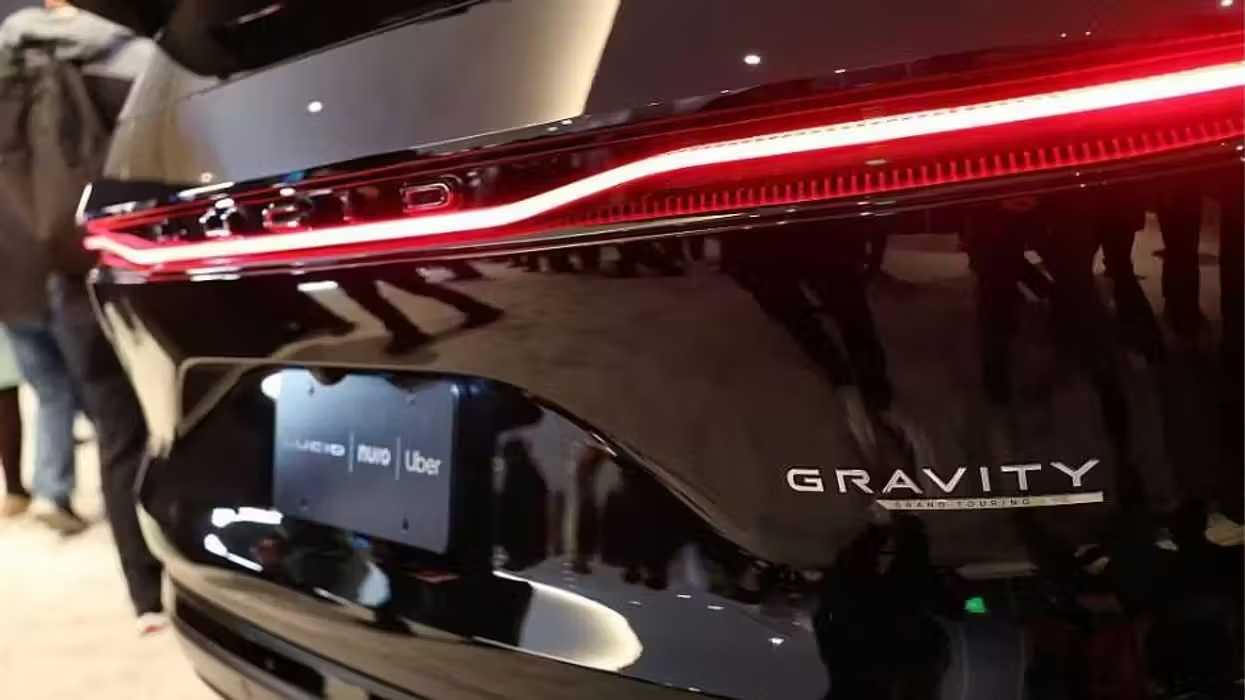
RELATED: Lucid makes one of the best EVs in America. That may not be enough to save it.
 Patrick T. Fallon/Getty Images
Nanny cam
This isn't only about automakers deciding what features customers might like.
Europe is turning driver monitoring into regulation.
Under the European Union's General Safety Regulation, all newly sold vehicles have been required since July 2024 to include technology warning drivers about drowsiness. Beginning in July 2026, additional rules require advanced systems designed to detect driver distraction as well.
The EU doesn't explicitly say every manufacturer must put an infrared camera in your face. The regulation is based on what the system must accomplish rather than specifying one particular piece of hardware.
In practice, however, camera-based systems are an obvious way to meet those requirements, and they're already becoming common.
Once these systems become mandatory in a market as enormous as Europe, automakers have another incentive to design them into vehicles everywhere rather than engineer completely different cars for different countries. That's why American drivers should pay attention.
Close quarters
Here is where I become uncomfortable.
There is a major difference between a sensor detecting that you're drifting out of your lane and a camera continuously observing your face.
Michael explained just how capable these systems already are:
“They’re [infrared] cameras ... watching every single thing in real time inside the car, and it's triggering verbal, audible and/or haptic alarms," he said.
“And you cannot defeat it. Some of them you can turn off, but the second you restart the car, it starts all over again. ... It's just a memory chip ... away from being able to record the telemetry."
Today's camera may simply analyze the information inside the vehicle and generate an alert. Technologically, however, there isn't an enormous distance between a camera that sees what you're doing and a system that stores or transmits what it sees.
Modern cars are already rolling computers connected to manufacturer servers through cellular networks. Automakers have collected driving data and shared information with third parties, while insurance companies increasingly offer policies based on telematics.
Cars can already record enormous amounts of information about speed, location, braking, acceleration, and crashes. Add an interior camera, and the vehicle potentially knows not only where you went and how you drove, but what you were doing while you drove there.
Were you looking at the road or at your phone? Were you yawning? Did you appear sleepy? Who else was inside the vehicle?
Manufacturers will tell us these systems have privacy safeguards, and many of them do. But privacy policies can change. So can software, regulations, and the circumstances under which information can be demanded by law enforcement or other third parties.
The hardware remains pointed at you.
Eyes have it
This is usually how intrusive technology arrives: not through some grand announcement that everybody will now be monitored, but through a series of individually reasonable steps.
It's there to detect drowsiness. It's there to make sure you're paying attention. It's there to prevent crashes.
Each argument has merit. I don't want a sleepy driver drifting across the center line any more than anyone else does. Consumers should nevertheless ask where the boundary lies.
A seatbelt protects me without needing to know where I'm looking. An airbag doesn't watch my face. Anti-lock brakes don't care who is sitting beside me.
Driver-monitoring cameras are different because they introduce something automobiles never historically required: a machine observing the occupants of the car in real time.
Governments are now beginning to require the systems capable of doing that.
New normal
There is one more irony.
Cars are becoming more capable of assisting the driver at precisely the moment manufacturers and regulators are becoming more insistent about monitoring the human being behind the wheel.
Your vehicle can steer, brake, maintain its distance from the car ahead, and in some cases even change lanes and navigate highway interchanges. But glance away for a little too long, and the same car starts scolding you.
Maybe these systems will save lives. I hope they do.
Before Americans normalize cameras watching drivers in every new automobile, however, we deserve clear answers about what those systems collect, whether any information leaves the vehicle, how long it can be retained, and who can obtain it.
Once the camera becomes standard equipment, the question is no longer whether the car can watch you. It's who gets access to what it sees.
More from this network:
Domains for Sale · GOTPeople.org · TheDSAPlatform · The Truth About Socialism
What's Your Reaction?
 Like
0
Like
0
 Dislike
0
Dislike
0
 Love
0
Love
0
 Funny
0
Funny
0
 Wow
0
Wow
0
 Sad
0
Sad
0
 Angry
0
Angry
0

I am just an average American. My teen years were in the late 70s and I participated in all that that decade offered. Started working young, too young. Then I joined the Army before I graduated High School. I spent 25 years in, mostly in Infantry units. Since then I've worked in information technology positions all at small family owned companies. At this rate I'll never be a tech millionaire. When I was young I rode horses as much as I could. I do believe I should have been a cowboy. I'm getting in the saddle again by taking riding lessons and see where it goes.
Premium domains for sale




















Comments (0)