

Martin Luther King’s American Dream
Premium domains for sale
Freedom Is Back In Style
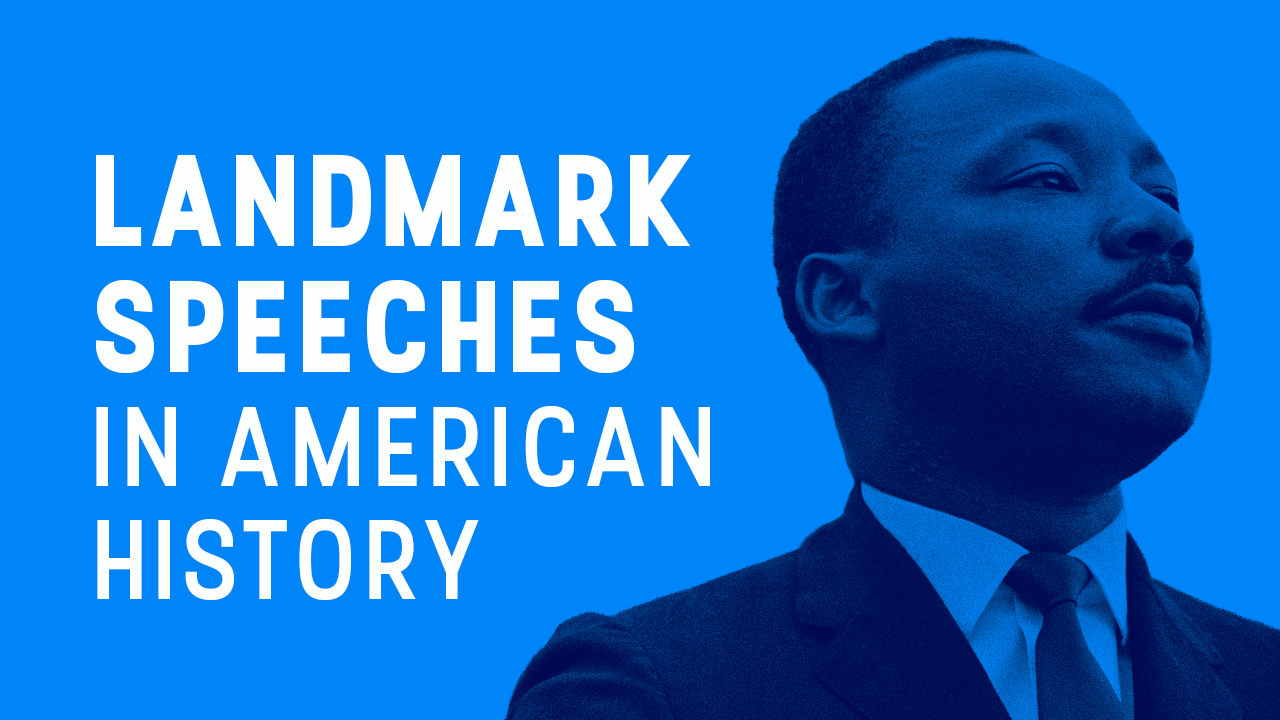
Welcome to the tenth in our series “Landmark Speeches in American History.” We are celebrating America’s 250th anniversary with articles by prominent authors about how some of the greatest speeches in our history—by celebrated orators like Ronald Reagan, Abraham Lincoln, and Martin Luther King Jr.—honored the vision of our founding document, the Declaration of Independence.
Freedom Is Back
In Style
Premium domains for sale
If Martin Luther King Jr. climbed the steps of the Lincoln Memorial before 250,000 hymn-singing demonstrators and delivered his “I Have a Dream” speech today, he would be excoriated by the American Left as an alt-right, crypto-fascist, Christian nationalist.
Bluesky’s pronoun avengers would accuse him of genocide. MSNOW hosts would compare the March on Washington to the Nuremberg Rallies. Trust-fund Bowdoin kids waving Palestinian flags would deface Ebenezer Baptist Church and demand the author of “Letter From Birmingham Jail” check his privilege.
Woke elites would be mortally terrified of King’s rhetoric. And they would be right to be. The “I Have a Dream” speech’s fundamental patriotism, Christianity, and conservatism testify to just how radical 21st-century progressives have become. It offers the Right a timely reminder of the core American principles we need to unite our divided nation around our common values—and against the Marxist saboteurs trying to tear us apart.
To read the full speech, click here.
King’s speech, —delivered Aug. 28, 1963, —is most famous today for its soaring conclusion. But the key to its success may be its opening:“Five score years ago, a great American, in whose symbolic shadow we stand today, signed the Emancipation Proclamation.”
King and his movement were controversial in 1963, and he knew it. He also knew this would be the largest audience he had ever addressed. He needed to connect with the tens of millions of television viewers watching at home. So he opened his remarks not with an indictment, but an invitation. He called back to Abraham Lincoln’s Gettysburg Address (“Five score”) and affirmed Americans’ pride in their national heritage (for all its faults).
King praised “the architects of our republic” and “the magnificent words of the Constitution and the Declaration of Independence.” He quoted the Founders: “Unalienable Rights,” “Life, Liberty, and the pursuit of Happiness,” “We hold these truths to be self-evident.”
King’s message was unmistakable: The American Experiment was good, and black Americans wanted nothing more than full membership in it—to finally cash the check the nation had written them a century earlier.
King’s dream was “deeply rooted in the American dream”—and, of course, in Christianity.
The Civil Rights Movement was a Christian mission—led by Christian witnesses (some of them martyrs), organized by Christian churches, and inspired at every step by Christian zeal. King’s speeches, including “I Have a Dream,” were pulpit sermons in all but name.
“Now is the time,” King told the Marchers that day, “to make justice a reality for all God’s children.”
His “Letter From Birmingham Jail,” written just months before, drew on the philosophy of Thomas Aquinas and Augustine. “A just law,” King wrote, “is a man made code that squares with the moral law or the law of God.” Throughout his career, King explicitly affirmed that the human rights he fought for came from God, not government.
King’s faith fueled the hope and optimism he shared with his fellow marchers: “Let us not wallow in the valley of despair, my friends.”
It also impelled him to adhere to the “dignity and discipline” of peaceful activism: “In the process of gaining our rightful place, we must not be guilty of wrongful deeds … Again and again, we must rise to the majestic heights of meeting physical force with soul force.”
All of this—King’s heroic faith, hope, and love; his reverence for the principles of the Founding and the Constitution; his patriotic confidence in the American people to do the right thing—put the “I Have a Dream” speech squarely in the tradition of American conservatism.
Consider how King’s ringing defense of American principles contrasts with the bitter, anti-American, racism-curious Left today.
Where King praised Lincoln, in 2020, woke activists in Portland, Oregon, tore down a statue of the Great Emancipator.
Where King lauded the ideals of the Founding, the leftist authors of the 1619 Project sneered they “were false when they were written.”
King’s assertion that rights come from God, not government—recently repeated by House Speaker Mike Johnson—sparked a spasm of theocracy-mongering from historically illiterate journalists.
King’s warning not to let militancy “lead us to a distrust of all white people” directly contradicts the virulent anti-white racism so fashionable in the elite Left today. King’s noble commitment to nonviolence sits uneasily with many on the far Left today!
Even King’s dream of a colorblind future—where his children would “not be judged by the color of their skin but by the content of their character”—is anathema to a contemporary Left obsessed with racial hierarchy and collective guilt.
Generations of conservatives have admired Dr. King for his courage and moral leadership. But especially today, conservatives owe King a more thorough reassessment.
For he is not just a figure of his time or his movement, but a towering hero of our national history. The modern Left’s abandonment of the virtues and values he championed—most gloriously in his “I Have a Dream” speech—only clarifies the point.
Martin Luther King Jr. is not simply becoming an American conservative icon. He has been one all along.
More from this network:
Domains for Sale · GOTPeople.org · TheDSAPlatform · The Truth About Socialism
What's Your Reaction?
 Like
0
Like
0
 Dislike
0
Dislike
0
 Love
0
Love
0
 Funny
0
Funny
0
 Wow
0
Wow
0
 Sad
0
Sad
0
 Angry
0
Angry
0

I am just an average American. My teen years were in the late 70s and I participated in all that that decade offered. Started working young, too young. Then I joined the Army before I graduated High School. I spent 25 years in, mostly in Infantry units. Since then I've worked in information technology positions all at small family owned companies. At this rate I'll never be a tech millionaire. When I was young I rode horses as much as I could. I do believe I should have been a cowboy. I'm getting in the saddle again by taking riding lessons and see where it goes.
Premium domains for sale






Comments (0)