

Monty Python joked about harvesting organs from the living. Now we need laws against it.
Premium domains for sale
Freedom Is Back In Style
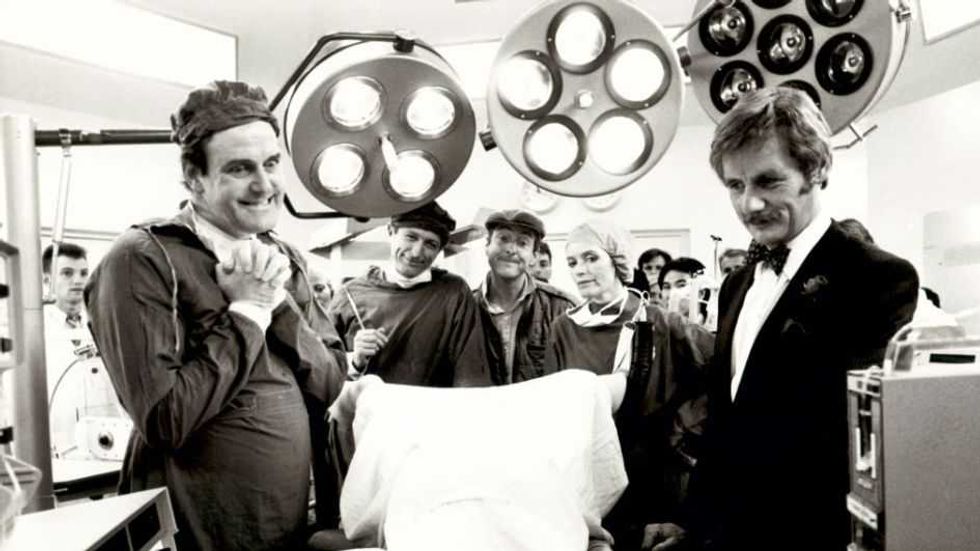
My mom wouldn’t let me watch Monty Python when I was growing up in the ’80s. The British comedy troupe was a little too crass for her taste.
Freedom Is Back
In Style
Premium domains for sale
So it wasn't until later in life that I watched their 1983 feature "The Meaning of Life," a collection of outrageous sketches lampooning everything from birth to death. One of the 1983 film’s most grotesque bits was “Live Organ Transplants.”
For decades, we have chipped away at the principle that every human being possesses inherent dignity regardless of age, health, consciousness, independence, or usefulness.
Two men in lab coats arrive at the home of an unsuspecting organ donor and ask for his liver. The man points out the obvious: He is still alive. In fact, he is using his liver.
No matter. He signed an organ donor card.
When he protests that the card applies only in the event of death, the response is pure Monty Python: Nobody who has had his liver removed by them has ever survived!
That joke isn't funny anymore
The scene works because it’s absurd. No civilized society would harvest vital organs from a living person. More than four decades later, the sketch is considerably less funny.
Anthony Thomas “T.J.” Hoover II suffered a drug overdose and was taken to a Kentucky hospital in 2021. His family agreed to organ donation after believing he would not recover.
Then Hoover began showing signs of life.
According to subsequent reporting and federal investigations, Hoover cried, moved his body, and shook his head as preparations for organ procurement continued. Doctors ultimately refused to proceed, and Hoover survived.
Earlier this month, the U.S. Department of Health and Human Services began the process of decertifying Network for Hope, the organ procurement organization whose predecessor was involved in Hoover’s case.
Federal investigators reviewed 351 cases in which donations had been authorized but later canceled. They identified concerning features in 103. In 73 cases, patients exhibited neurological signs that should have made them ineligible for donation. Network for Hope disputes the findings and is appealing.
Dead certain
Kentucky lawmakers responded with House Bill 510, signed into law in April. It requires a “pause” in organ procurement when questions arise about a patient’s neurological status or other indications of life.
Think about that.
We’ve reached the point where state law must explicitly ensure that organ procurement stops when there is evidence the donor may not actually be dead.
Monty Python couldn’t have written it better.
Let’s be clear: I support organ donation. Donating organs after death can be a profoundly generous act that saves lives. Precisely because it is so noble, the public must have absolute confidence that a donor’s life is protected until death has actually occurred.
The deeper issue is how our culture views vulnerable human life.
Inherent dignity
For decades, we have chipped away at the principle that every human being possesses inherent dignity regardless of age, health, consciousness, independence, or usefulness.
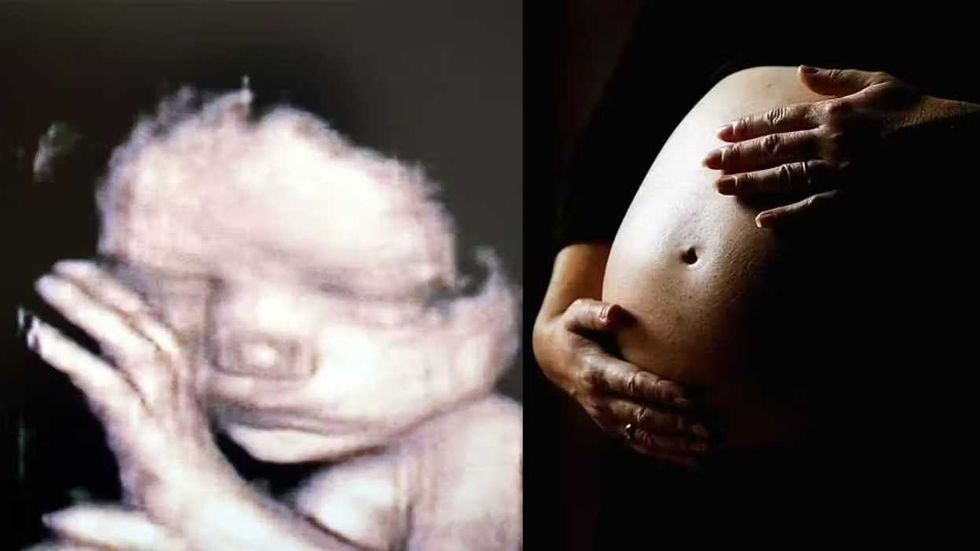
Abortion tells us that the right to life can depend upon whether an unborn child is wanted.
Doctor-assisted suicide extends that mentality to the sick and disabled, where suffering can become not merely something to alleviate but a reason to help someone die.
Consider 26-year-old Australian Annaliese Holland, who suffers from autoimmune autonomic ganglionopathy, a devastating illness that has left her in constant pain and dependent on intravenous nutrition. Holland has been approved for voluntary assisted dying and has chosen a date to end her life, though she has kept that date private.
Much of the coverage has treated Holland’s decision with solemn approval, framing her planned death as an understandable — even empowering — exercise of personal choice.
But Holland deserves compassion, not termination. That is precisely the point: When someone is suffering terribly, our response should be to surround that person with care — not offer death as the solution.
 L/R: Fotopress/Getty Images; Ian Waldie/Getty Images
What Teresa knew
Mother Teresa offered a radically different answer.
She spent her life among those the world found easiest to overlook: the abandoned, diseased, disabled, and dying.
In her Nobel Peace Prize acceptance speech, she described taking in a man found dying in the street, his body partly eaten by maggots. After being washed and cared for, he told her that he had lived like an animal in the street but was going to die “like an angel,” loved and cared for.
That was Mother Teresa’s answer to suffering.
She didn’t calculate whether someone’s life was still worth living. She was convinced that the person before her possessed infinite worth simply because he was human.
The saintly nun understood an essential distinction modern medicine must never lose: There is a vast moral difference between allowing a person to die naturally and deliberately causing that person’s death.
Once human dignity becomes conditional — dependent upon health, independence, consciousness, or perceived quality of life — the boundaries protecting all of us begin to erode.
A culture that accepts ending a human life because that life is judged no longer worth living should not be surprised when other calculations about the value and usefulness of human beings creep into medicine.
Human dignity is inherent. Life is valuable precisely because it is human. Our Creator has granted that dignity, and we have no authority to withdraw it.
Monty Python once imagined the unthinkable for laughs.
When reality begins catching up with satire, it is time to ask whether we still believe every human life is worth protecting.
Thanks for the life lesson, Mom.
More from this network:
Domains for Sale · GOTPeople.org · TheDSAPlatform · The Truth About Socialism
What's Your Reaction?
 Like
0
Like
0
 Dislike
0
Dislike
0
 Love
0
Love
0
 Funny
0
Funny
0
 Wow
0
Wow
0
 Sad
0
Sad
0
 Angry
0
Angry
0

I am just an average American. My teen years were in the late 70s and I participated in all that that decade offered. Started working young, too young. Then I joined the Army before I graduated High School. I spent 25 years in, mostly in Infantry units. Since then I've worked in information technology positions all at small family owned companies. At this rate I'll never be a tech millionaire. When I was young I rode horses as much as I could. I do believe I should have been a cowboy. I'm getting in the saddle again by taking riding lessons and see where it goes.
Premium domains for sale










Comments (0)