

One atmosphere, 50 courts — what could go wrong?
Premium domains for sale
Freedom Is Back In Style
The Supreme Court opened its new term Monday with one of the most consequential climate cases in years. The justices do not have to decide whether climate change is real or whether carbon dioxide warms the planet. They face a more basic question: Who pays the tab?
Freedom Is Back
In Style
Premium domains for sale
In Suncor Energy v. Boulder County, Boulder County and the city of Boulder want ExxonMobil and Suncor to pay under Colorado law for local costs they attribute to global warming, while also alleging deceptive marketing. The Colorado Supreme Court allowed the claims to proceed.
A Colorado jury cannot set national climate policy, but a patchwork of state tort verdicts could begin to approximate one.
The U.S. Supreme Court is considering whether federal law precludes them and whether it has jurisdiction to decide that question at this stage. The Trump administration is backing the companies.
This is not simply about two oil companies and one county. Boulder’s alleged injuries trace to greenhouse gases accumulated in a single global atmosphere over generations, from energy used in every state and nearly every country. Yet Colorado tort law would determine liability for selected companies.
Now multiply that. California could have one theory of damages, New York another, Hawaii a third. Nearly 60 state and local governments have brought similar cases. Different juries could impose different costs for alleged harms arising from the same global emissions pool. If every jurisdiction can pursue its own theory, climate tort begins to look less like compensation for a local injury and more like carbon pricing by litigation.
Boulder says it is applying ordinary state tort law, not regulating emissions. But whatever label courts use, large judgments against energy producers will not remain confined to the courthouse.
Then there is China. According to the Global Carbon Project, China accounts for roughly 32% of global fossil carbon dioxide emissions, compared with about 13% for the United States. A Colorado court cannot impose comparable liability on Chinese state-owned producers for emissions in China. That asymmetry is hard to ignore.
New York offers a warning. Its Climate Change Superfund Act sought $75 billion from fossil fuel companies for historical emissions. One federal judge struck it down on August 31; another did the same on September 23. Both relied on the Clean Air Act and the federal government’s authority over foreign affairs. Those cases involved a state statute rather than tort claims, but they show that the federalism problem is not theoretical.
RELATED: Finally! EPA poised to repeal some climate hysteria over carbon emissions
 Iiievgeniy/Getty Images
The lawsuits also leave out the other side of the ledger. Fossil fuels underpin synthetic nitrogen fertilizer that supports food production for roughly half the world, along with medical plastics, sterile packaging, transportation, and dispatchable power. A tort case can price alleged harms without pricing those benefits. Successful climate lawsuits would still raise costs somewhere in the system.
Nor did weather disasters begin with today’s carbon dioxide levels. The 1900 Galveston hurricane killed an estimated 6,000 to 12,000 people. In 1871, after a summer of drought, the Peshtigo fire burned more than a million acres and killed between 1,200 and 2,400 people. The Dust Bowl followed in the 1930s.
None of that settles the science. It shows something narrower: Disaster causation is not binary. A court asked to assign one company a share of a particular drought, fire, or flood must separate baseline risk from any incremental climate effect and then apportion responsibility across global emissions.
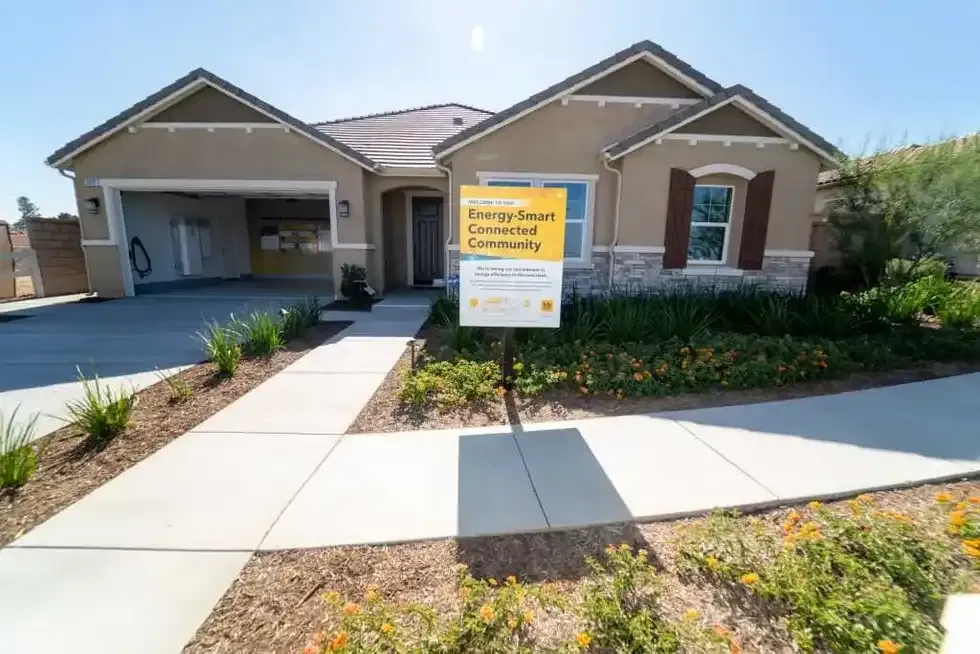
RELATED: Your new house comes with a green surcharge
 Kyle Grillot/Bloomberg/Getty Images
Then comes the question of who pays. Energy demand is relatively inelastic in the short run. To the extent that judgments raise costs for American suppliers, some of those costs will be passed through at the pump, on heating and electricity bills, and in the price of goods. Lower-income households spend a larger share of their budgets on energy, so they feel increases most.
Congress can write national climate law. The EPA can regulate within the authority Congress gives it. Voters can hold both accountable. A Colorado jury cannot set national climate policy, but a patchwork of state tort verdicts could begin to approximate one.
The justices do not have to settle climate science. They have to decide whether state courts, one lawsuit at a time, may impose liability for a global emissions problem.
The answer should be no.
More from this network:
Domains for Sale · GOTPeople.org · TheDSAPlatform · The Truth About Socialism
What's Your Reaction?
 Like
0
Like
0
 Dislike
0
Dislike
0
 Love
0
Love
0
 Funny
0
Funny
0
 Wow
0
Wow
0
 Sad
0
Sad
0
 Angry
0
Angry
0

I am just an average American. My teen years were in the late 70s and I participated in all that that decade offered. Started working young, too young. Then I joined the Army before I graduated High School. I spent 25 years in, mostly in Infantry units. Since then I've worked in information technology positions all at small family owned companies. At this rate I'll never be a tech millionaire. When I was young I rode horses as much as I could. I do believe I should have been a cowboy. I'm getting in the saddle again by taking riding lessons and see where it goes.
Premium domains for sale


















Comments (0)