

Only Christ can banish the terror of death
Premium domains for sale
Freedom Is Back In Style
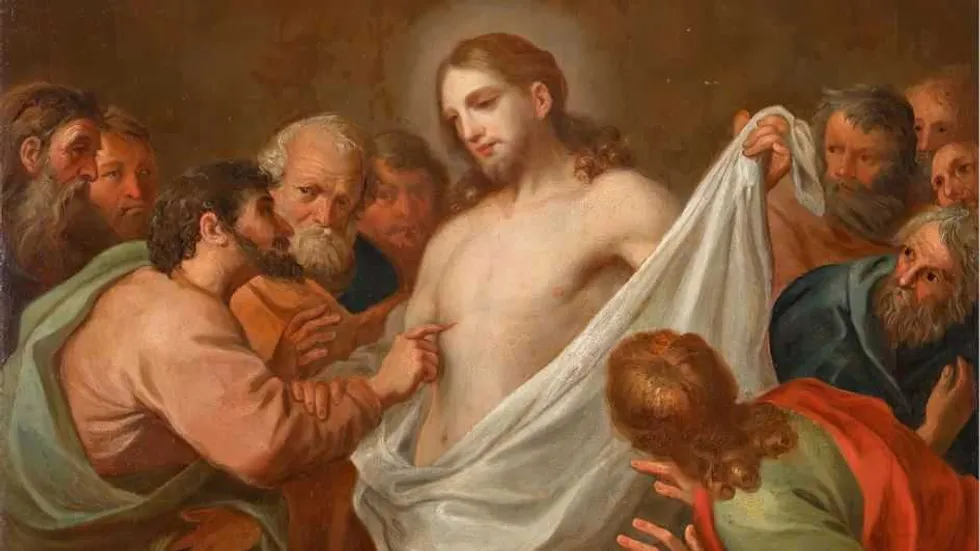
The resurrection lies at the very heart of the Christian faith.
Freedom Is Back
In Style
Premium domains for sale
When Paul describes what the gospel consists of, he lists two foundational elements — “Christ died for our sins” and “he was raised on the third day.” Both events happened “in accordance with the Scriptures,” and the risen Jesus was seen by numerous individuals (1 Corinthians 15:3–8).
'After all the reasoning and all the rationales, I’d still desperately prefer to be a conscious, healthy human being than a corpse. Who wouldn’t?'
Unlike most other religions, whose teachings consist of moral or metaphysical principles, Christianity depends crucially on the historical death and resurrection of its founder.
As New Testament scholar Craig Blomberg observes in his commentary on 1 Corinthians:
Older Eastern religions do not even require the actual historical existence of their founders for their beliefs and practices to make sense. In some ways they are more akin to philosophies than to historical truth-claims (e.g., Hinduism, Buddhism, Confucianism). But Christianity lives or dies with the claim of Christ’s resurrection.
'If Christ has not been raised'
Indeed, Paul states this to be the case: “And if Christ has not been raised, then our preaching is in vain and your faith is in vain. ... Your faith is futile and you are still in your sins” (1 Corinthians 15:14, 17).
But Christ has been raised, and his resurrection vindicates his divine identity and all that he taught. Having proclaimed that “This Jesus God raised up,” Peter summarizes what this reveals: “God has made him both Lord and Christ, this Jesus whom you crucified” (Acts 2:32, 36). Similarly, in Acts 17, Paul tells the philosophers in Athens that the evidence that Jesus will one day judge the world is that God “has given assurance to all by raising him from the dead” (17:31).
Given the centrality of this event to Christianity, is there good reason to believe it truly happened? It’s beyond the scope of this article to provide an in-depth defense of the resurrection, but a few points will suffice to show that it stands on solid historical ground.
Original creed
Returning to 1 Corinthians 15, scholars have recognized that Paul is quoting a pre-existing creed addressing the resurrection in verses 3-7. Paul wrote 1 Corinthians in approximately A.D. 54, a mere 20 years (roughly) after Jesus’s death. The creed he quotes, however, is much earlier than this, showing that belief in the resurrection was present from the beginning of the Christian movement and not a later legend that developed over decades, as some skeptics assert.
The eminent New Testament scholar James D.G. Dunn concurs, stating we can be "entirely confident" that this tradition was formulated within months of Jesus’ death. Other scholars date the creed somewhat later, to within a few years of Jesus’ death, but in any case, it is an extremely early witness to belief in the resurrection, and Paul likely received it directly from Peter and James, the brother of Jesus, both of whom were eyewitnesses (Galatians 1:18-24).
Thus, the belief that Jesus rose from the dead was present almost immediately after the crucifixion and was based on the firsthand testimony of those who say they witnessed it.
Our deepest longings
As human beings, we yearn to find meaning for our lives and see death as something to be avoided. The renowned psychiatrist Viktor Frankl observed that the “striving to find a meaning in one’s life is the primary motivational force in man.” Likewise, philosopher Clifford Williams points out that we “intensely want our lives to be meaningful, to count for something, to matter not only in individual and social ways but in a ‘cosmic’ way.”
If we accept the West’s dominant philosophy of naturalism, however, objective meaning is lost and mortality is assured. Naturalist philosopher Alex Rosenberg expresses it this way:
What is the purpose of the universe? There is none.
What is the meaning of life? Ditto.
Why am I here? Just dumb luck.
... Is there a soul? Is it immortal? Are you kidding?
... What happens when we die? Everything pretty much goes on as before, except us.
Rosenberg attempts to obscure the implications of naturalism with humor and nonchalance, but it’s undeniable that losing meaning and facing our own extinction is devastating. As physician Alex Lickerman confesses in Psychology Today, “I’ve tried to resolve my fear of death intellectually and come to the conclusion that it can’t be done, at least not by me.”
In that same article Lickerman notes that he’s “always surprised by people who say they're not afraid to die. ... I’ve always wondered if that answer hides a denial so deeply seated it cannot be faced by most. Certainly, this has been the case with me. I love being here and don’t want to leave.”
RELATED: Fine-tuned for life: How our one-in-a-million universe points to God
 Heritage Images/Getty Images
No consolation
Most prominent nonbelievers seem to agree.
Even in "The Consolations of Mortality" — a book meant to help readers accept death — writer Andrew Stark admits, “After all the reasoning and all the rationales, I’d still desperately prefer to be a conscious, healthy human being than a corpse. Who wouldn’t?”
Similarly, notable atheist Sam Harris concedes that his philosophy does little to banish dread of mortality: “I think we can admit that atheism doesn’t offer real consolation on this point. ... The thing that gets lost, the thing for which there is no real substitute, is total consolation in the face of death.”
Death defeated
But what if death has been overcome and God has a purpose for our lives?
The apostle Peter declares that God has given believers “a living hope through the resurrection of Jesus Christ from the dead ... so that your faith and hope are in God” (1 Peter 1:3, 21). The resurrection doesn’t merely demonstrate that human beings survive death, but that Jesus conquered death for all of us. “Death is swallowed up in victory” (1 Corinthians 15:54). Even now, while on earth, we can experience “the power of his resurrection” (Philippians 3:10).
Contrary to naturalism, for those who place their faith in Christ, life will continue in the presence of loved ones and in fellowship with our Creator. We will fulfill the purpose for which we were created: to know God, to love him, and to enjoy him forever. The paradise we lost in Eden will be regained in a new heaven and new earth (Revelation 21). We’ll spend eternity learning more about God’s infinite nature and enjoying fellowship with his people from every age. We’ll also continue to create things of “glory and honor” that will contribute to the splendor of God’s kingdom (Revelation 21:26). The popular idea that people in heaven will spend their days floating on clouds while playing harps has no basis in Scripture.
Let’s be thankful to God that because of Christ’s sacrifice for our sins and resurrection, we have a glorious destiny if we receive this gift. May we also share this good news with those who lack hope and see no real purpose for their lives.
More from this network:
Domains for Sale · GOTPeople.org · TheDSAPlatform · The Truth About Socialism
What's Your Reaction?
 Like
0
Like
0
 Dislike
0
Dislike
0
 Love
0
Love
0
 Funny
0
Funny
0
 Wow
0
Wow
0
 Sad
0
Sad
0
 Angry
0
Angry
0

I am just an average American. My teen years were in the late 70s and I participated in all that that decade offered. Started working young, too young. Then I joined the Army before I graduated High School. I spent 25 years in, mostly in Infantry units. Since then I've worked in information technology positions all at small family owned companies. At this rate I'll never be a tech millionaire. When I was young I rode horses as much as I could. I do believe I should have been a cowboy. I'm getting in the saddle again by taking riding lessons and see where it goes.
Premium domains for sale





















Comments (0)