

Oregon burns, Portlanders shrug: It's just 'wildfire season' — get used to it
Premium domains for sale
Freedom Is Back In Style
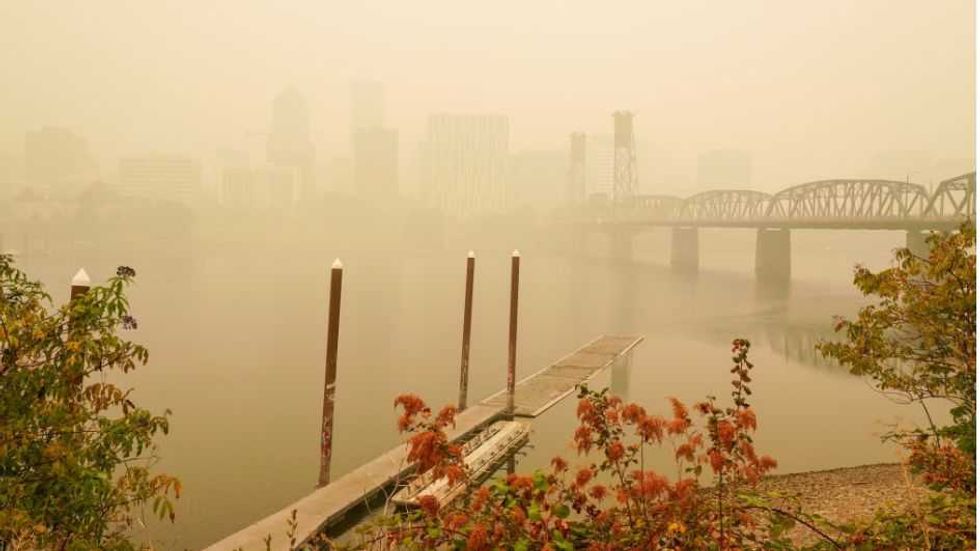
Here in Portland, we’ve had a bad week of wildfire smoke. It’s been at DON’T GO OUTSIDE levels. You literally feel the ache in your chest. Your eyes begin to burn.
Freedom Is Back
In Style
Premium domains for sale
This recent event brought to mind the Great Portland Smoke-Out of 2020, which followed the most devastating and deadly wildfires in Oregon history.
I went to relax in a lounge chair by the hotel pool. But as I lay there, I noticed the sky slowly change from blue, to a dull yellow, and then to a reddish gray.
Thanks to that ordeal, people know what to do during smoke events. They stay inside. They wear masks. They seal their doors and windows.
One thing I noticed during this year’s wildfire emergency: There’s been little talk about what anyone could have done to prevent it.
After 2020, Oregon spent nearly $200 million on wildfire prevention and preparedness. The state promised more prescribed burns, more fuel reduction, and more resilient forests. Six years later, there’s plenty of bureaucracy devoted to wildfire, but it’s hard to tell what any of it has accomplished.
Liberals hardly even talk about "climate change" anymore. Whatever you thought of that explanation, at least it implied there was a problem to fix.
Now, we just call it “wildfire season." As if it's an inevitable part of the cycle of life. It comes every year. Like the snow melts in the mountains. Or the leaves change in the fall.
We’ve normalized the burning of our state.
Worst year ever
In 2020, we were already dealing with riots; and then COVID lockdowns; and then terrible fires; and then dense walls of smoke descended on Portland.
The first day of smoke was bad. The second day was nightmarish.
I woke up that day at 6 a.m. I could already feel the burning in my lungs. I’d had serious respiratory problems in the past, so I made the immediate decision to evade the coming smoke by whatever means necessary. I jumped out of bed and quickly packed a bag.
I clicked on the radio and consulted various smoke maps on my laptop. Northeastern Oregon still looked clear, so I got in my car and started driving east toward Pendleton, 200 miles away.
Surely that was far enough. I could stay there for a couple days, until the smoke cleared.
As I passed through downtown Portland, the smoke was as thick as fog. As I continued east, through the Columbia Gorge, the smoke was so dense you couldn’t see the Columbia River, 50 yards to your left.
The air smelled toxic. The smoke blocked out the sun. You couldn’t tell what time it was by the ambient light. You had to look at your watch.
They didn’t see it coming
In Pendleton, I could finally see blue sky. But according to the weather radar on my phone, the smoke was right behind me. I remember that the teenage employees at the Pendleton Burger King didn’t know anything about it. I had to explain to them that in an hour they’d be engulfed.
I got back in my car and drove farther east to Boise, another 200 miles. When I got there, the skies were clear. I had outrun the smoke. And hopefully outdistanced it as well.
I checked into a hotel. I thought, OK, I’ll just hang out here for a couple days.
I went to relax in a lounge chair by the hotel pool. But as I lay there, I noticed the sky slowly change from blue, to a dull yellow, and then to a reddish gray.
How could the smoke have caught up with me? I had driven here at 80 mph!
The next day I drove to Pocatello and the day after that to Salt Lake City.
Salt Lake was a ghost town because of COVID. There, I checked into an eccentric-looking two-star hotel. It was the only place open.
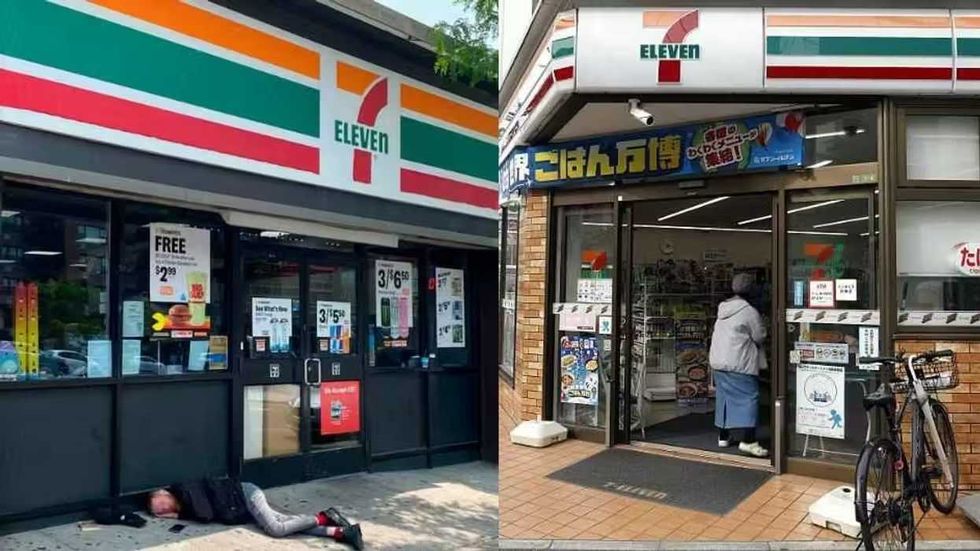
RELATED: Is America still a 'first world' country? Not compared to Japan
 UCG/Bloomberg
Salt Lake City
The smoke eventually arrived in Salt Lake City too, but only faintly. It wasn’t the suffocating soup it was in Oregon.
I kept thinking, One more day, and I’ll head back. But then I’d check the air quality in Portland, and it was still “extremely hazardous.”
On Facebook, my Portland friends were hunkered down, taping up their windows, sealing their homes. They were stuck inside with their kids, their pets; nobody was going outside. They put on brave fronts on Facebook, but I could tell they were losing their minds.
In SLC, I was just bored. I walked around a lot. My hotel was full of weirdos. Some of them lived there. They appeared unaware that the world was on fire.
In my room, I had the Weather Channel on continuously. By now, I was an expert at tracking smoke. My laptop bookmarks were everything from obscure NOAA wind maps to meticulous air quality websites based in Switzerland.
Throughout all of this, I kept thinking: This can’t last more than another couple days. But in fact, it lasted eight more days.
Finally, when the sky was visible in Portland, I began the long drive home.
Homecoming
It took days to air my apartment out. At first, I felt survivor’s guilt. My traumatized friends and neighbors looked like they’d been through a war.
Of course, this recent smoke event wasn’t nearly as bad as the Great Portland Smoke-Out of 2020. This one only lasted four days. Most people didn’t bother to tape their doors and windows shut. But they could have. They know how. They’ve done it before.
Like I said, Portlanders are accepting this. Like they accepted mask mandates. Like they accepted transgender children.
They even named our new WNBA team the Portland Fire. It’s almost like they’re asking for it.
More from this network:
Domains for Sale · GOTPeople.org · TheDSAPlatform · The Truth About Socialism
What's Your Reaction?
 Like
0
Like
0
 Dislike
0
Dislike
0
 Love
0
Love
0
 Funny
0
Funny
0
 Wow
0
Wow
0
 Sad
0
Sad
0
 Angry
0
Angry
0

I am just an average American. My teen years were in the late 70s and I participated in all that that decade offered. Started working young, too young. Then I joined the Army before I graduated High School. I spent 25 years in, mostly in Infantry units. Since then I've worked in information technology positions all at small family owned companies. At this rate I'll never be a tech millionaire. When I was young I rode horses as much as I could. I do believe I should have been a cowboy. I'm getting in the saddle again by taking riding lessons and see where it goes.
Premium domains for sale





Comments (0)