

Play Stupid Games, Win Stupid Prizes: Will A Man Be The WNBA Rookie Of The Year?
Premium domains for sale
Freedom Is Back In Style
For nearly 30 years, the WNBA has operated under the once-unremarkable assumption that the “W” in its name meant something. But in our enlightened, post-biological era, the Women’s National Basketball Association has found itself in a peculiar existential crisis: What, indeed, is the W?
Freedom Is Back
In Style
Premium domains for sale
Instead of simply stating its position, the WNBA has presented what could best be described as a masterclass in semantic evasion.
Article XIII of the league’s collective bargaining agreement states that “only players who are women are eligible to play in the WNBA.” Simple enough. Unfortunately, the agreement never explains what qualifies someone as a woman. Anatomy? Chromosomes? Hormone levels? Gender identity? Jar-opening ability? Throw-pillow-to-couch ratio? The league has yet to say.
And so the WNBA finds itself in the remarkable position of maintaining a women-only professional sports league while refusing to clearly define the one characteristic every player is required to possess.
Cue the mischief-makers with a point.
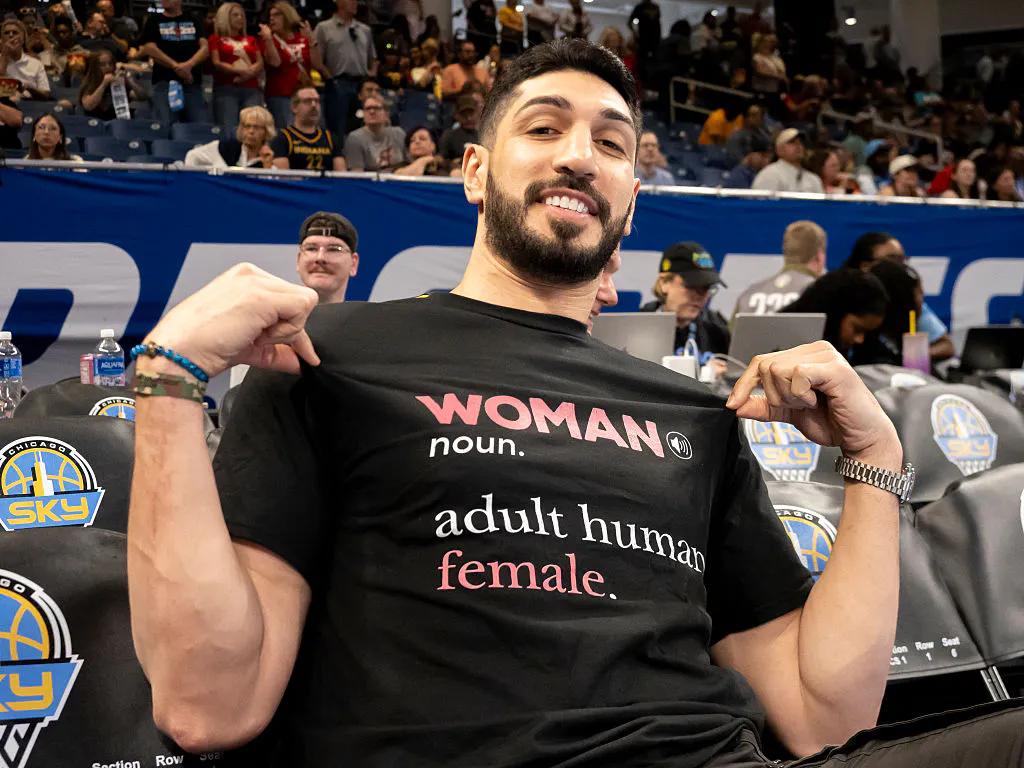
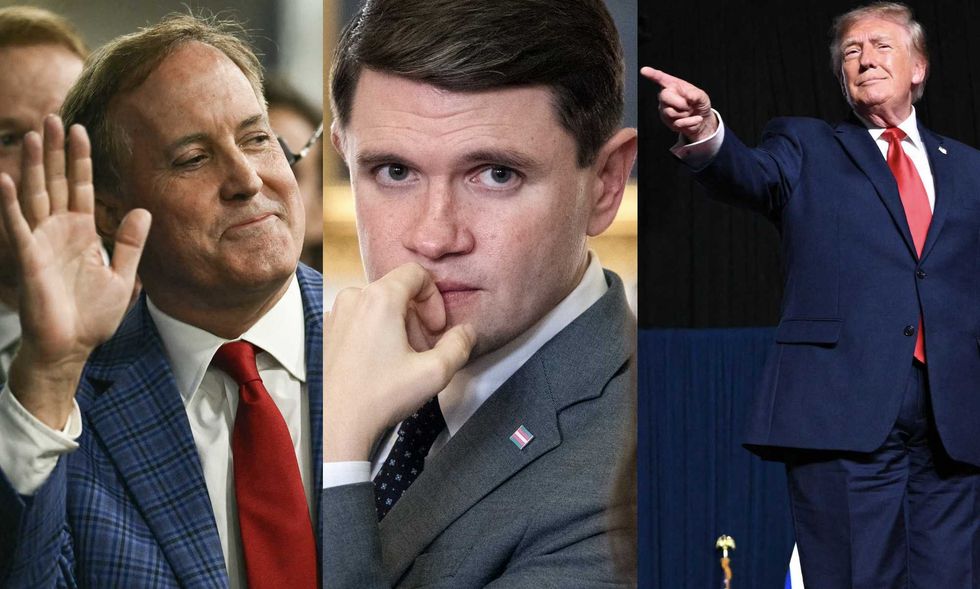
Former NBA players Enes Kanter Freedom and Royce White decided to stress-test the league’s eligibility criteria and both announced that they identify as women and intend to enter the 2027 WNBA Draft. Freedom’s argument was straightforward: “If simply declaring who you are is all that’s required, then I meet every single requirement necessary to compete in the WNBA.” White followed suit, announcing, “I identify as sometimes identifying as a woman for purposes of basketball … so I’ll be declaring for the WNBA.”
The WNBA, understandably, would prefer not to RSVP to this particular circus. Representatives have dismissed the declarations as “publicity stunts” and declined to be dragged into what they see as an ideological spectacle. But dismissing the stunt doesn’t resolve the question the stunt was designed to expose.
If Freedom and White are not women for the purposes of the WNBA, then there must be some objective criterion by which the league knows that. And if such a criterion exists, it shouldn’t require Sherlock Holmes, three philosophers, and a team of lawyers to locate it.
Because definitions still matter, even when they become politically inconvenient.
This debacle is the fruit of years of indulging the “your truth” and “my truth” language so long as the consequences are mostly inconsequential. For example, your coworker’s “truth” may be that he’s a gifted singer, while the rest of the team considers his karaoke performance a violation of the Geneva Convention. Civilization continues.
But shared institutions require shared definitions and shared standards by which they are evaluated.
A society can entertain one person insisting “up is down” while another insists “down is up” right up until both approach a staircase. That is why the question popularized by Matt Walsh’s 2022 documentary “What Is a Woman?” remains so culturally explosive. The difficulty isn’t that humans spent several thousand years unable to distinguish men from women until documentary filmmakers arrived. The difficulty is that answering the question clearly forces us to confront whether biological categories describe something objectively real or whether individual identity can override them.
Freedom and White have simply transported that philosophical dispute onto a basketball court, where abstractions suddenly acquire height, weight, muscle mass, eligibility requirements, and the occasional jump shot.
The WNBA now has to decide where it plants its flag: biology or self-identification? Reality or ideology? There is no neutral position hiding comfortably between the two. If personal declaration determines who a woman is, the league needs to explain why Freedom and White don’t qualify. If biological sex determines eligibility, it needs to say so. Refusing to answer may postpone the controversy, but not the contradiction.
Of course, taking a clear position carries a cost. But the league’s reluctance reflects a broader cultural problem: definitions draw boundaries, boundaries necessarily exclude, and “exclusion” now ranks somewhere between using a plastic straw and murder in the modern American list of cardinal sins.
This is how words like “inclusion” and “tolerance” mutate into something much stranger. Instead of meaning, “I will treat you with dignity even though I disagree with you,” tolerance begins requiring everyone else to affirm your description of reality. And once institutions accept that bargain, definitions become dangerous things.
Perhaps that explains why the WNBA reportedly doesn’t want to “give oxygen” to Freedom and White’s stunt. But oxygen is not the problem. Reality does not suffocate when we refuse to discuss it.
The WNBA can decline the interview, ignore the stunt, avoid the politics, and leave “woman” conspicuously undefined in its eligibility rules. What it cannot do is operate a professional league exclusively for women without eventually deciding what the word means.
***
Phoenix Hayes is coauthor of “The War on Reality: Recovering Truth in a World that Celebrates Lies,” alongside Frank Turek. She equips Christians to think clearly about culture and politics while defending their faith.
More from this network:
Domains for Sale · GOTPeople.org · TheDSAPlatform · The Truth About Socialism
What's Your Reaction?
 Like
0
Like
0
 Dislike
0
Dislike
0
 Love
0
Love
0
 Funny
0
Funny
0
 Wow
0
Wow
0
 Sad
0
Sad
0
 Angry
0
Angry
0

I am just an average American. My teen years were in the late 70s and I participated in all that that decade offered. Started working young, too young. Then I joined the Army before I graduated High School. I spent 25 years in, mostly in Infantry units. Since then I've worked in information technology positions all at small family owned companies. At this rate I'll never be a tech millionaire. When I was young I rode horses as much as I could. I do believe I should have been a cowboy. I'm getting in the saddle again by taking riding lessons and see where it goes.
Premium domains for sale












Comments (0)