

Red Alert: Trump’s Famed ‘Closed’ Border Could Reopen in Six Months
Premium domains for sale
Freedom Is Back In Style
AUSTIN, Texas—In July, the world watched in fascinated horror as some 80,000 North Africans swamped the well-secured, walled Spanish city enclave of Ceuta on the Moroccan coast in under 48 hours.
Freedom Is Back
In Style
Premium domains for sale
The purported trigger was mere word that a new Spanish Supreme Court ruling would let them apply for asylum and thereby get to live in Europe.
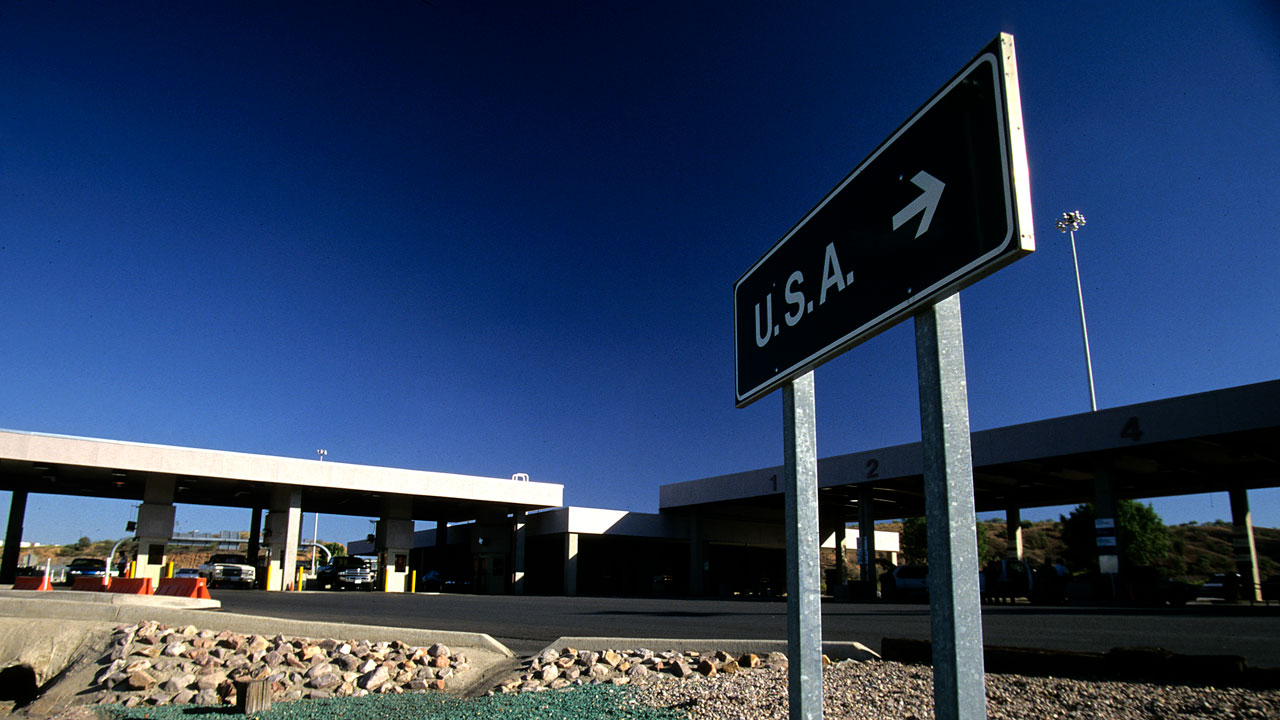
For a similar Supreme Court ruling about asylum, that kind of crazy scenario just became very possible for President Donald Trump’s signature second-term achievement, the most secure southern border in U.S. history.
Another mass migration at the U.S. Southwest border is in the offing because on Friday, Nov. 13, the Supreme Court agreed to review Mullin v. Refugee and Immigrant Center for Education and Legal Services and decide whether to keep or discard the single most impactful authority Trump used to end the 2021-2025 mass migration crisis. Most Americans would hardly recognize the title but will soon enough: Section 212(f) of the Immigration and Nationality Act.
A ruling on it should hit America by June.
How 212(f) Closed the Border
Section 212(f) is the statutory authority Trump invoked in a presidential proclamation on Day One in office, which ended the ability of illegal aliens to claim asylum after crossing the border.
From my interviews with thousands of en route economic migrants in eight different transit countries, I learned this much: Mass migrations start or stop depending on access to asylum systems all over the world. The ability to start meritless asylum claims at the U.S. border is the most powerful of all magnetic draws.
That’s because just staking a claim verbally gets crossers released into the country with authorization to work, live, and collect public welfare during yearslong adjudication and appeals processes, often forever.
With fast returns on smuggling-fee investments like that, shared on encrypted apps, it was no wonder that poor ineligible foreign laborers came by the millions. Then Trump slammed on the brakes with 212(f) and ordered Border Patrol to catch, detain, and expel the historic few who occasionally still bother to try their luck.
The chaos stopped almost overnight because, as many trapped in Mexico told me, there was no reason to spend thousands of dollars in smuggling fees if expulsion is the only menu option.
“The Americans would just grab us and deport us if we try. Now your president is very tough,” said Jonathan Leonardo Montilla, father of a Venezuelan family of four who’d come to claim asylum just before Trump entered office in January 2025. Later in Juarez, he told me he wouldn’t bother trying now because smuggling prices had spiked to $4,000 a head, $16,000 for the family. Most refused to pay, so the smuggling business collapsed in Juarez.
“They say the mafia is not even working right now because the situation is too strong on the American side,” Montilla said.
But if the Supreme Court strikes down Trump’s somewhat novel use of 212(f) and returns the asylum option to the menu, Americans and the administration should prepare for worst-case mass-crossing scenarios.
The Supreme Court could, of course, uphold 212(f) as Trump is using it, and the border will remain tranquil. Other outcomes might land somewhere in between, which most Americans still wouldn’t want.
Suing Trump’s keystone border policy to death
One measure of this development’s high stakes is that a coalition of nonprofit resettlement and advocacy groups, which earn millions resettling border jumpers, immediately set about suing 212(f) to death.
They claimed that 212(f) illegally conflicted with other statutes requiring asylum at the border.
To understand the basic legal issues, a short read of Section 212(f) is necessary: “Whenever the President finds that the entry of any aliens or of any class of aliens into the United States would be detrimental to the interests of the United States, he may by proclamation, and for such period as he shall deem necessary, suspend the entry of all aliens or any class of aliens as immigrants or nonimmigrants, or impose on the entry of aliens any restrictions he may deem to be appropriate.”
The U.S. District Court for the District of Columbia and the U.S. Court of Appeals for the D.C. Circuit both agreed that Trump’s use of 212(f) could not supersede asylum statutes. In Mullin v. Refugee and Immigrant Center for Education and Legal Services, the administration asked for a Supreme Court ruling and just got the hearing.
Now these same pro-illegal immigration groups are trilling with hope that the Supreme Court will fire the silver bullet that reopens the southern border.
“The president does not have the right to unilaterally override the protections Congress has afforded those fleeing danger,” wrote Lee Gelernt, lead counsel and deputy director of the ACLU’s Immigrants’ Rights Project, in an ACLU press release. “We look forward to making our case before the Supreme Court.”
“We are honored to represent these asylum seekers and their advocates, as this important case proceeds,” wrote Keren Zwick, executive director of the National Immigrant Justice Center.
Thin U.S. policy options
Based on what they learn in real-time chat groups, economic migrants will probably start pushing north soon, increasing in numbers and determination as June approaches.
The same clock is ticking for the Trump administration to cobble together plans of the sort that Spain obviously failed to assemble.
The administration will rely heavily on Mexican President Claudia Sheinbaum, who is already resentful that Trump’s tariff threats have forced her help so far. Mexico would have to significantly ramp up military and police operations it now uses to break up migrant caravans and to thin intending border crossers from northern border cities.
Any American plan must presume that Mexico won’t be able or willing, especially if volumes of migrants coming in anticipation of a favorable Supreme Court ruling become too much to handle.
One obvious option is the so-called “Remain in Mexico” policy, a first-term Trump innovation that forces asylum claimants to wait out the long process inside Mexico, denying them the craved U.S. releases. It worked well once, as I reported back in 2019. Many just went home, and traffic decreased.
Mexico would have to be in the mood to play ball. But even if it does, Border Patrol and the Department of War should presume border jumpers will overwhelm their forces as they process Remain in Mexico aliens. That takes precious time.
Which raises the other main preparation question: Will there be enough detention space to avoid forced releases?
Whether Americans or the administration are paying attention and preparing matters for an important reason: No population in the world will be paying closer attention to this Supreme Court ruling than aspiring U.S. border jumpers everywhere.
More from this network:
Domains for Sale · GOTPeople.org · TheDSAPlatform · The Truth About Socialism
What's Your Reaction?
 Like
0
 Dislike
0
 Love
0
 Funny
0
 Wow
0
 Sad
0
 Angry
0

I am just an average American. My teen years were in the late 70s and I participated in all that that decade offered. Started working young, too young. Then I joined the Army before I graduated High School. I spent 25 years in, mostly in Infantry units. Since then I've worked in information technology positions all at small family owned companies. At this rate I'll never be a tech millionaire. When I was young I rode horses as much as I could. I do believe I should have been a cowboy. I'm getting in the saddle again by taking riding lessons and see where it goes.
Premium domains for sale



















Comments (0)