

Scientists Make A Breakthrough In Physics. Your Laptop May Never Be The Same.
Premium domains for sale
Freedom Is Back In Style
Forget everything you learned in high school science class.
Freedom Is Back
In Style
Premium domains for sale
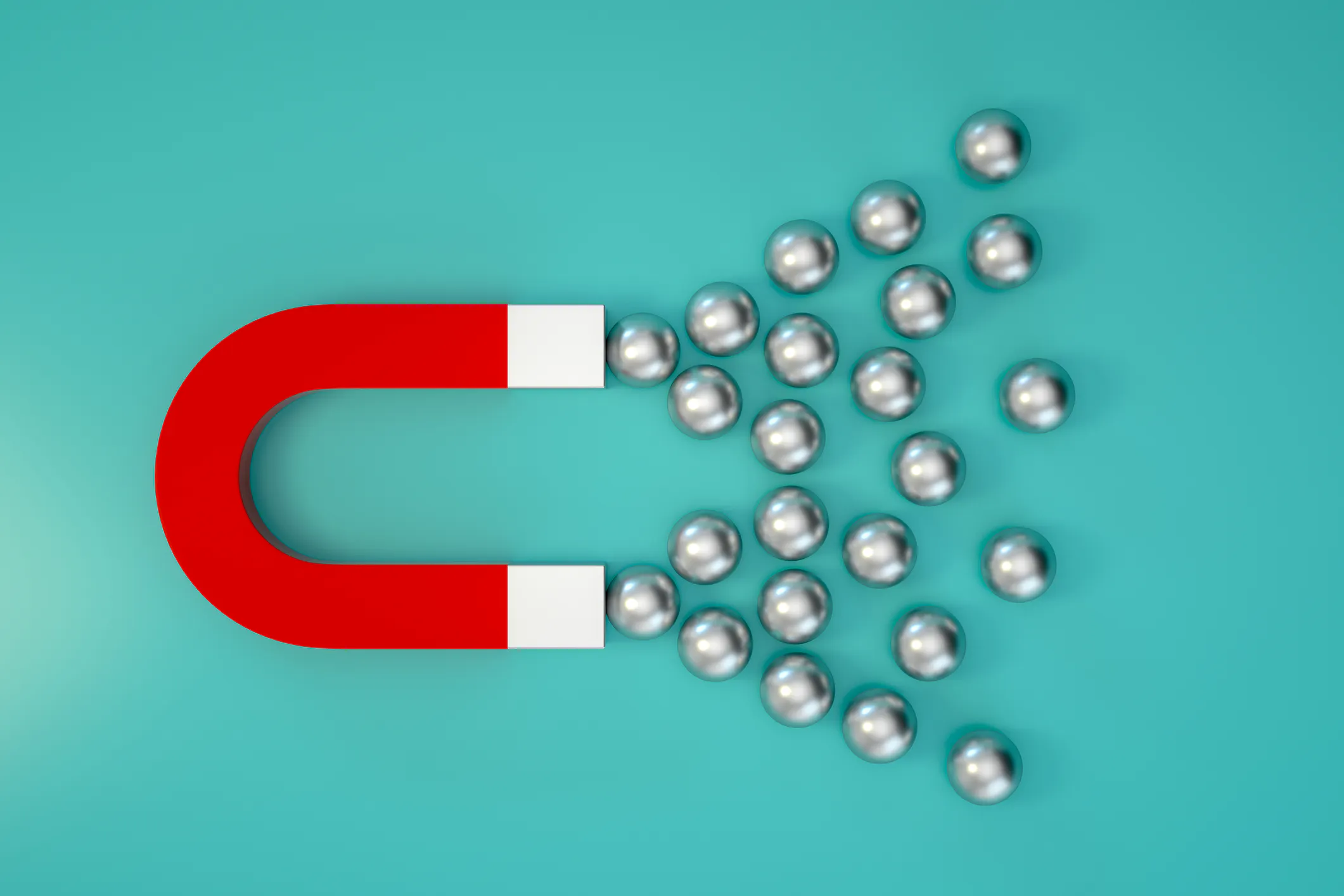
A team of researchers has confirmed a third kind of magnetism, and scientists say the find could one day lead to lightning-fast computers, gadgets that use less power, and internet server farms that use far less electricity.
For nearly nine decades, the rulebook said magnets came in only two kinds. The first is the everyday kind, ferromagnets. That’s the stuff holding your child’s report card to the refrigerator. Inside them, electrons all “spin” the same way, teaming up to create a magnetic pull.
The discovery, led by the federal Department of Energy’s SLAC National Accelerator Laboratory in California and published in the prestigious journal Science, provides the strongest evidence yet that a third category called “altermagnetism” is real.
The second, discovered back in 1933, is the antiferromagnet. Electrons close to each other spin in opposite directions and cancel each other out, so the material shows no outside pull at all.
But in recent years, scientists kept bumping into strange materials that didn’t fit the mold. They looked like the second type on paper but acted a lot like the first. In 2022, researchers started calling them “altermagnets.”
SLAC scientist Daniel Jost and his team focused on manganese telluride, considered an antiferromagnet, and took it to a giant X-ray facility in France.
The team blasted it with “circularly polarized X-rays, which have electric fields that rotate in either a left-handed or right-handed direction,” per Science Daily. A typical antiferromagnet would react the same way to both beams. But manganese telluride reacted differently, revealing a built-in “handedness,” like the difference between a left and a right glove.
That signal was exactly the fingerprint experts expected from an altermagnet. Jost said it gave researchers grounds to declare the new magnetism a class of its own.
The team first ran the tests in 2024, then went back in early 2025 and got the same result.
In an editor’s note accompanying the study, Science editor Jelena Stajic pointed out that “two groups are now reporting evidence of these chiral magnons,” magnetic ripples with a built-in left- or right-handed twist. A second team, using beams of polarized neutrons instead of X-rays, found similar evidence in a different material: manganese fluoride.
Today’s phones and computers work by pushing electrons around and reading their electric charge. But electrons have a second property, spin, that can also carry information. A field called spintronics wants to use both, which could make gadgets faster, sturdier, and far less power-hungry.
It’s similar to a road that suddenly gets a second lane. Using an electron’s spin as well as its charge gives data another way to travel.
But both old-school magnet types have drawbacks. Jost warned that devices built with regular magnets are so sensitive that simply walking past a device with a magnet in your pocket could scramble its stored data. Antiferromagnets are not bothered by interference, but they’re so magnetically “quiet” that reading information from them is a nightmare.
Altermagnets offer the best of both worlds. They’re stable like antiferromagnets yet can still send useful signals that carry information.
That could mean sturdier computer memory, better quantum tech, and data centers that use less power.
Researchers say lots of work lies ahead. Their next challenge is learning to control these magnets with light and electricity so they can be built into real-world devices.
More from this network:
Domains for Sale · GOTPeople.org · TheDSAPlatform · The Truth About Socialism
What's Your Reaction?
 Like
0
 Dislike
0
 Love
0
 Funny
0
 Wow
0
 Sad
0
 Angry
0

I am just an average American. My teen years were in the late 70s and I participated in all that that decade offered. Started working young, too young. Then I joined the Army before I graduated High School. I spent 25 years in, mostly in Infantry units. Since then I've worked in information technology positions all at small family owned companies. At this rate I'll never be a tech millionaire. When I was young I rode horses as much as I could. I do believe I should have been a cowboy. I'm getting in the saddle again by taking riding lessons and see where it goes.
Premium domains for sale













Comments (0)