

Sen. Slotkin Says Students Should Think Twice Before Working for Trump
Premium domains for sale
Freedom Is Back In Style
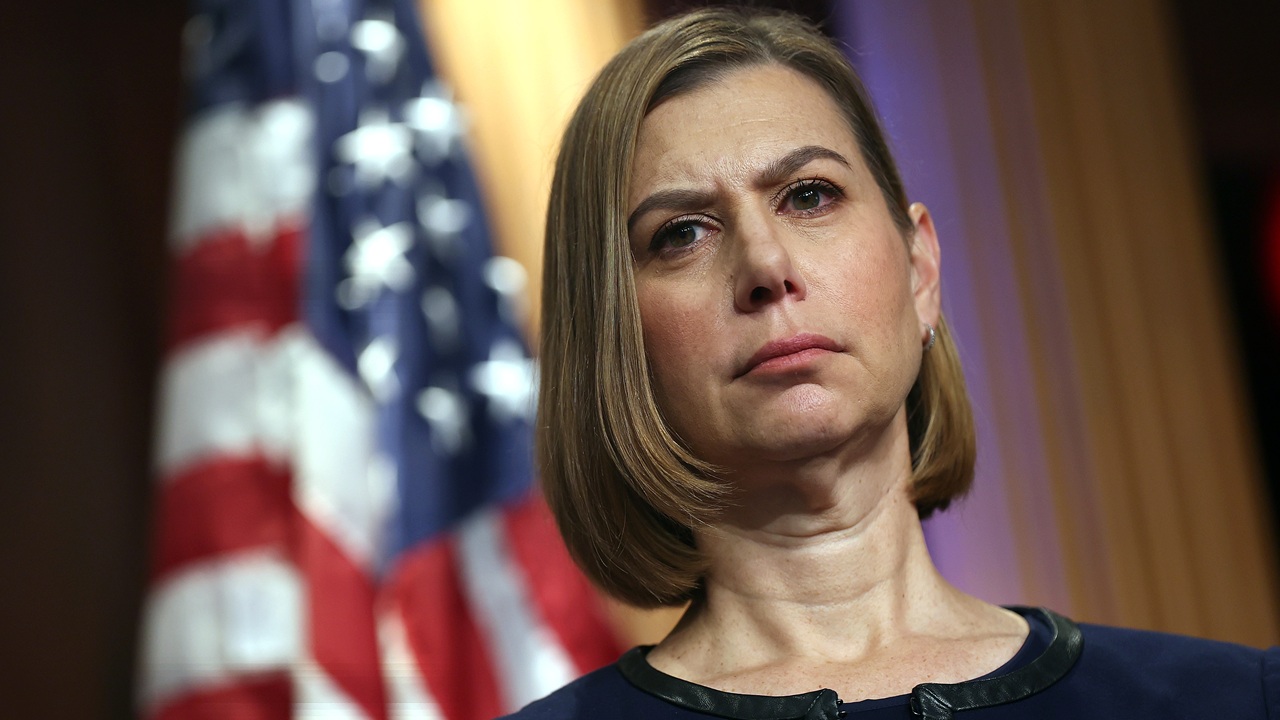
During an exchange at the University of Chicago, Sen. Elissa Slotkin, D-Mich., suggested that future prosecutions of Republican political leaders should discourage young conservatives from pursuing careers in politics.
Freedom Is Back
In Style
Premium domains for sale
“I want young people coming out of school to say, should I go work for the Trump administration?” she said during an Oct. 13 event.
“I want them to be like, Lord, that might be buying myself a ton of problems that I don’t want, and so let me avoid participating in that,” she continued. “I want that deterrence message.”
When I accepted an invitation to become a Pritzker Fellow at the University of Chicago’s Institute of Politics, I knew exactly what I was walking into. I—a two-time Trump White House alumnus was entering an institution overwhelmingly liberal in its leadership, culture, and student body. But I accepted the invitation anyway.
I did not do so because I expected to bring about any kind of dramatic change, but because I believed something increasingly rare in American politics: People who disagree should still be willing to sit across from one another and have a conversation.
That conviction is why I found Slotkin’s recent remarks so troubling. It is also why I am so disheartened seeing conservative students on campuses across our nation retreating.
The University of Chicago prides itself on intellectual freedom and vigorous debate. Its Institute of Politics, which hosted the Slotkin event, is supposed to expose students to competing perspectives and inspire the next generation of public servants. It’s an admirable mission. Unfortunately, there was a considerable gap between that aspiration and my experience working with contemporary college students.
By my observation, roughly 90% of students attending the programming leaned left. In my seminars, the contrast was striking. Here I was, a supporter of President Donald Trump who was raised in a working-class, single-parent, minority household, sitting across from students who often came from some of America’s most privileged communities. For some, I may have been the first unapologetic Trump supporter they had ever engaged with in a serious conversation. In addition, I am a member of a racial minority, and my background challenged their assumptions about who supports the president.
Today’s college students have spent much of their politically conscious lives in the Trump era. Their understanding of conservatism has been shaped by a hyperpolarized media environment that too often substitutes caricatures for conversations. They knew what leftist commentators say about Trump, but now they had the chance to sit down with someone who supported him, worked for him, and could explain why.
To be clear, my seminars weren’t campaign rallies; they were opportunities for students to challenge me, ask difficult questions, and hear a perspective they rarely encountered. I didn’t need them to agree with me. I simply wanted to help them understand that disagreement doesn’t require contempt.
I wanted to prove that Americans with vastly different backgrounds and political convictions could engage one another without treating the other side as an enemy.
What troubled me most wasn’t that the campus leaned liberal—students, like any other Americans, are entitled to their beliefs. What worried me was the apparent reluctance of conservatives to defend or even express their views.
When students believe their political convictions could invite social isolation, reputational damage, or professional consequences, many simply stop speaking, refraining from raising their hands or joining political organizations. Some who were previously intent on public service may reconsider whether it is worth the hostility.
Slotkin’s remarks didn’t create this chilling effect. They reinforced a problem that was already present at colleges and universities throughout the country. When a United States senator positively discusses the prospect that prosecutions could discourage young conservatives from entering politics, she sends a message.
Slotkin and I agree that no public official is above the law. Genuine criminal wrongdoing deserves accountability, regardless of party.
But what she describes sounds much less like equal justice than it does politically motivated prosecution used as a deterrent against conservatives.
Universities should be among the last places where Americans feel pressure to conceal their political convictions. Yet meaningful bipartisanship was too often an aspiration rather than a reality during my own experience. Inviting an occasional conservative fellow or speaker is not the same as cultivating a genuinely collegiate institution that values the contributions conservatives can make.
Intellectual diversity requires leadership willing to challenge its own ideological comfort zone, welcome competing perspectives, and ensure conservative students feel just as empowered to participate as their liberal classmates.
I encountered thoughtful students who challenged me and demonstrated genuine intellectual curiosity. Those exchanges were the most rewarding part of my fellowship. But they also reinforced how desperately our country needs institutions willing to facilitate these conversations rather than retreat into ideological conformity.
I served President Trump proudly, twice. I worked alongside talented Americans who sacrificed professional opportunities, personal privacy, and time with their families because they believed in serving their country. Young Americans who want to serve our nation should be encouraged, not intimidated.
Conservative students on campus have long been implicitly told in a hundred ways to keep their heads down. Slotkin just said it out loud.
American universities shouldn’t have to teach students which political views are safe to hold. They should be teaching them that their country is worth serving, even when the people sitting across the table disagree.
We publish a variety of perspectives. Nothing written here is to be construed as representing the views of the Daily Signal.
More from this network:
Domains for Sale · GOTPeople.org · TheDSAPlatform · The Truth About Socialism
What's Your Reaction?
 Like
0
 Dislike
0
 Love
0
 Funny
0
 Wow
0
 Sad
0
 Angry
0

I am just an average American. My teen years were in the late 70s and I participated in all that that decade offered. Started working young, too young. Then I joined the Army before I graduated High School. I spent 25 years in, mostly in Infantry units. Since then I've worked in information technology positions all at small family owned companies. At this rate I'll never be a tech millionaire. When I was young I rode horses as much as I could. I do believe I should have been a cowboy. I'm getting in the saddle again by taking riding lessons and see where it goes.
Premium domains for sale











Comments (0)