

Supreme Court Hears Contentious Arguments on Religious Freedom Fight Over Preschool Program
Premium domains for sale
Freedom Is Back In Style
The Supreme Court could deliver another blow to Colorado in a religious liberty case over the state’s exclusion of a Catholic church from a “universal” preschool program.
Freedom Is Back
In Style
Premium domains for sale
Justices heard oral arguments in St. Mary Catholic Parish v. Roy on Tuesday.
“This is not a zero-sum game. Letting families use universal preschool funding at Catholic schools won’t take away a single seat from the over 2,000 preschools already participating in the program,” argued the plaintiffs’ attorney Nicholas Reaves before the court. “In fact, letting Catholic schools in will create more seats for everyone even for families who disagree with Catholic teachings.”
Colorado’s actions were at the center of religious freedom disputes before the high court in 2018, 2023, and earlier this year, losing each case.
In this case, the state’s program provides all children with up to 15 hours per week of tuition-free preschool, but it requires participating schools to admit LGBTQ-identifying children and the children of LGBTQ-identifying parents.
Justice Sonia Sotomayor, a liberal justice, became animated at several points during her questioning, asserting that the “bottom line” was “Your Catholic schools will reject the child merely because their parents are homosexual.”
Reaves disagreed.
“If the government is excluding someone from a public benefit solely on account of their religious exercise, that would trigger strict scrutiny,” Reaves said. “The government would have to come forward and say, ‘we have a really good reason for this.’ And we just don’t think they’ve done that in this case.”
Justice Brett Kavanaugh later addressed the Sotomayor question, asking, “You don’t categorically exclude children of those in same-sex marriages.”
Reaves replied, “Correct.”
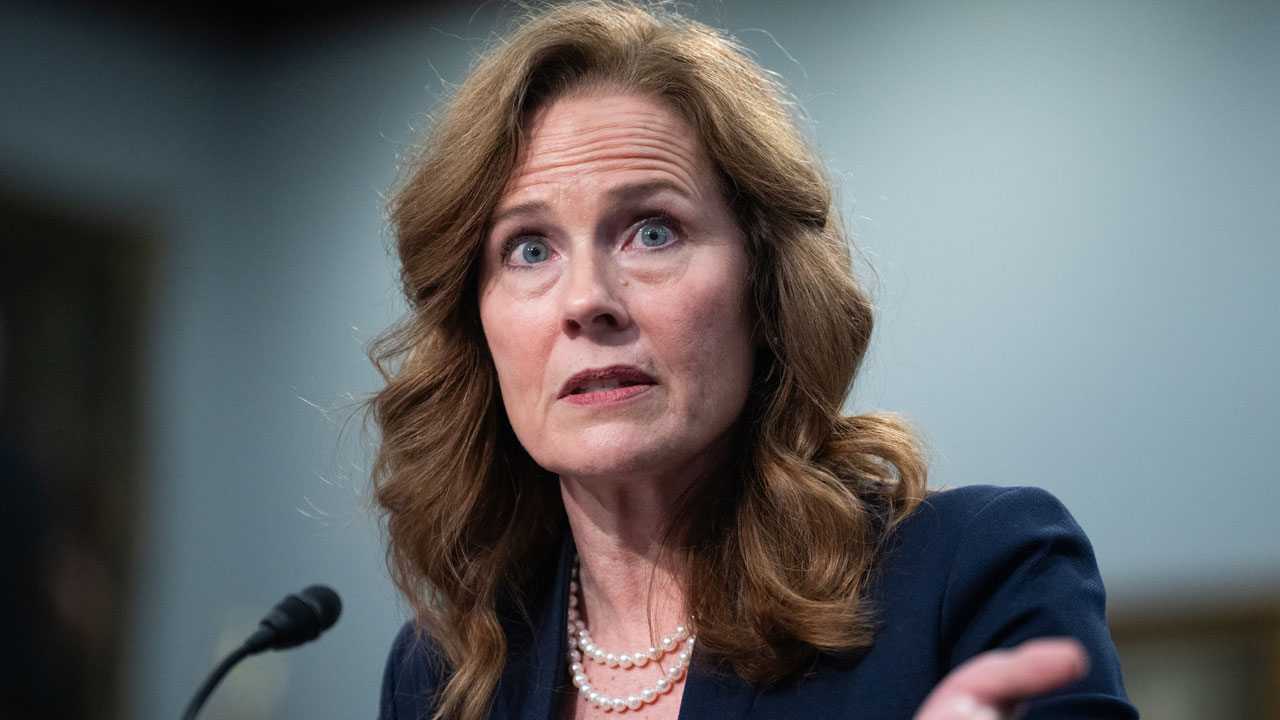
Helen Norton, arguing for Colorado, argued that the universal pre-K program, referred to as UPK, does not discriminate on the basis of religion, but Justice Amy Coney Barrett pressed her on the issue.
“You agree, don’t you, that Colorado could not say that Catholic schools or Evangelical schools or Orthodox Jewish schools were excluded from participation in the UPK program,” Barrett asked.
“Absolutely. They’re welcome,” Norton replied.
Barrett followed, “Then explain what the differences between that and then choosing to impose a condition that you know that those schools will be unable to agree to.”
Norton replied, “There’s no evidence of any animus hostility in this case.”
Barrett replied, “I’m not assuming animus against religion. But if you know that the effect of choosing that requirement will push out those of a contrary belief, how is that different?”
Norton replied that the state even convened a working group of faith-based providers that included St. Mary to solicit their input and welcome their inclusion in the program.
“It’s absolutely true that states engage in religious discrimination and triggers trick scrutiny when they have the intent to disfavor religion, regardless of whether that intent is transparent or hidden. Here, there is zero evidence of Colorado’s intent.”
St. Mary’s Catholic Parish preschool in Littleton, Colorado, has argued its exclusion from the state’s universal preschool program violates the First Amendment’s protection against religious discrimination.
The plaintiffs in the case are two Catholic parishes, two Catholic parents, and the Catholic Archdiocese of Denver. The defendant is Lisa Roy, executive director of the Colorado Department of Early Childhood.
A district court and the 10th U.S. Circuit Court of Appeals sided with Colorado, citing the Supreme Court’s 1990 decision in Employment Division v. Smith that the state’s rules were neutral and applied to every preschool without distinction.
In the 1990 precedent, the Supreme Court allowed Oregon to exclude a Native American man from receiving unemployment benefits because he had consumed the hallucinogen peyote, which he claimed was part of his religious practice. Congress then passed the Religious Freedom Restoration Act of 1993, which requires strict scrutiny for laws restricting religious freedom.
Plaintiffs also note that two federal appeals courts and two state supreme courts have ruled differently from the 10th Circuit on the same question.
The state has argued in its response that the parish seeks “an exemption from this law to allow them to receive public funding while turning away preschoolers because of their, or their parents’ gender identity or sexual orientation.”
A loss in this case would mark another setback for Colorado in religious freedom cases.
In March, the Supreme Court held that Colorado’s ban on talk therapy for minors regarding gender identity or sexual orientation violated the First Amendment because it imposed a viewpoint-based restriction on speech.
In 2023 and 2018, the high court held that Colorado could not compel a Christian website designer and a Christian baker, respectively, to provide specific creative services for same-sex weddings.
More from this network:
Domains for Sale · GOTPeople.org · TheDSAPlatform · The Truth About Socialism
What's Your Reaction?
 Like
0
 Dislike
0
 Love
0
 Funny
0
 Wow
0
 Sad
0
 Angry
0

I am just an average American. My teen years were in the late 70s and I participated in all that that decade offered. Started working young, too young. Then I joined the Army before I graduated High School. I spent 25 years in, mostly in Infantry units. Since then I've worked in information technology positions all at small family owned companies. At this rate I'll never be a tech millionaire. When I was young I rode horses as much as I could. I do believe I should have been a cowboy. I'm getting in the saddle again by taking riding lessons and see where it goes.
Premium domains for sale




Comments (0)