

Supreme Court Strikes Down Climate Lawfare Attempt to Penalize Oil Companies for Helping US During World War II
Premium domains for sale
Freedom Is Back In Style
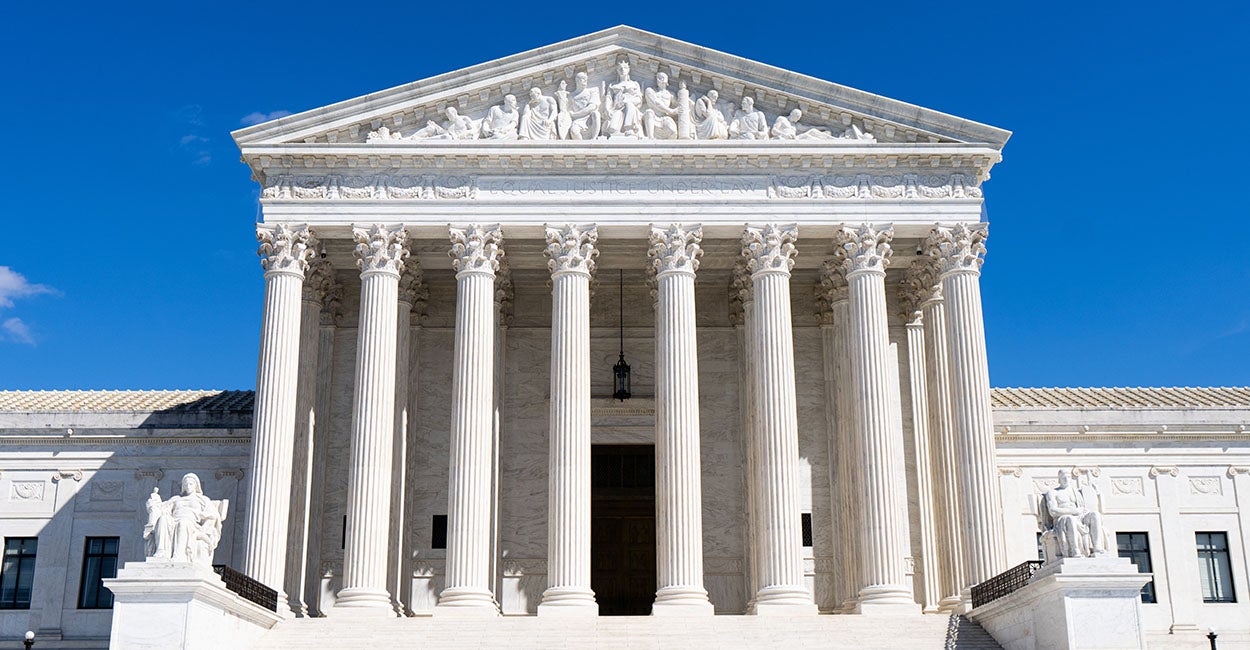
The Supreme Court on Friday unanimously struck down a bizarre effort at climate lawfare, which aimed to penalize Chevron for its role in boosting the U.S. war effort against the Nazis and Imperial Japan in World War II.
Freedom Is Back
In Style
Premium domains for sale
The ruling is good news for sanity, but it also sets an important precedent for the Left’s ongoing climate lawfare efforts. You see, climate alarmist lawyers have sought to weaponize state laws against oil and gas companies, and the ruling in Chevron v. Plaquemines Parish delivers a knockout punch to at least part of their nefarious strategy.
While the case turns on a technicality, that technicality means a great deal to the environmentalist trial lawyers seeking to make a buck and undermine the oil industry.
As Justice Clarence Thomas—a President George H.W. Bush appointee—notes in his opinion for the unanimous court, Plaquemines Parish, Louisiana, and its fellow parishes filed no fewer than 42 state-court lawsuits in 2013 against oil and gas companies under a 1978 state law for alleged violations in the 1940s.
Many of the oil companies successfully appealed to have the cases removed from state court to federal court, because the companies had been acting under a federal officer “of or relating to any act under color of such office.” Yet lower courts had rejected Chevron’s efforts to move the case out of state court, so Justice Thomas had to painstakingly explain that the phrase “relating to” can mean “to stand in some relation; to have bearing or concern; to pertain; refer; to bring into association with or connection with.”
Of course, this isn’t really about the meaning of the word “relate.” It’s all about whether judges who support the climate alarmist narrative can side with climate lawfare in the teeth of both the law’s text and common sense.
It does not make sense to use a Louisiana law to penalize an energy company in Louisiana state court for actions a previous version of that company took in service of a federal objective on the orders of the federal government.
This move from state to federal court may seem insignificant, but it is not. The oil and gas industry engages in interstate commerce, and its operations largely fall under federal law. Climate alarmist politicians in some states seek to pass laws restricting the industry’s operations, and climate alarmist lawyers seek to weaponize such laws against the industry as a whole, based on the idea that the human burning of fossil fuels is bringing about some indeterminate apocalypse.
Other Forms of Climate Lawfare
Suing oil companies for helping America defeat the Nazis is one thing, but the issue of whether state or federal law prevails in climate cases remains quite relevant, and it’s the centerpiece of another Supreme Court case.
Boulder, Colorado, sued Suncor Energy, claiming that its key business model of burning fossil fuels for energy has caused concrete harm under state law. The Colorado Supreme Court allowed Boulder’s case to proceed, so Suncor appealed to the Supreme Court, which agreed to hear the case.
Think about the implications of this for a second. Boulder claims that the burning of fossil fuels has caused concrete harm—even though it is unclear exactly how fossil fuels impact the global climate and most climate alarmist predictions have proven false. The city attributes specific weather harms not to God or the planet’s ecosystem but to a specific company, and then claims to know what is unknowable—how much that specific company’s efforts contributed to Boulder’s weather.
In doing so, Boulder takes upon itself the ability to regulate an industry that doesn’t just operate across state lines, but is vital to the global economic system.
But it gets worse. David Bookbinder, who served as part of the legal team representing Boulder at lower stages of litigation, described his climate lawfare efforts as “an indirect carbon tax.”
Tellingly, he added, “I’d prefer an actual carbon tax, but if we can’t get one of those… this is a rather, somewhat convoluted way, to achieve the goals of a carbon tax.”
In other words, this climate lawfare is a conscious effort to circumvent the voters.
The Supreme Court has agreed to hear Suncor’s case against Boulder, and the Plaquemines Parish ruling suggests the court may decide that state law is incapable of handling the regulation of a global industry.
Other Implications
Friday’s ruling also shores up America’s standing in the world. As Steven Bucci, a 30-year Army Special Forces veteran, explained last year, a ruling in favor of Plaquemines Parish would have undermined U.S. national security. State courts shouldn’t be able to second-guess federal wartime decisions, and if they could, that might lead companies to reconsider assisting in America’s defense.
Thankfully, the Supreme Court made the right decision, and it did so on the merits of the law, such that all eight justices who considered it—Justice Samuel Alito recused himself—agreed that Plaquemines Parish’s case is baseless.
Here’s hoping this represents a step toward blocking climate lawfare going forward. Suncor v. Boulder will be the real test.
The post Supreme Court Strikes Down Climate Lawfare Attempt to Penalize Oil Companies for Helping US During World War II appeared first on The Daily Signal.
More from this network:
Domains for Sale · GOTPeople.org · TheDSAPlatform · The Truth About Socialism
What's Your Reaction?
 Like
0
Like
0
 Dislike
0
Dislike
0
 Love
0
Love
0
 Funny
0
Funny
0
 Wow
0
Wow
0
 Sad
0
Sad
0
 Angry
0
Angry
0

I am just an average American. My teen years were in the late 70s and I participated in all that that decade offered. Started working young, too young. Then I joined the Army before I graduated High School. I spent 25 years in, mostly in Infantry units. Since then I've worked in information technology positions all at small family owned companies. At this rate I'll never be a tech millionaire. When I was young I rode horses as much as I could. I do believe I should have been a cowboy. I'm getting in the saddle again by taking riding lessons and see where it goes.
Premium domains for sale


















Comments (0)