

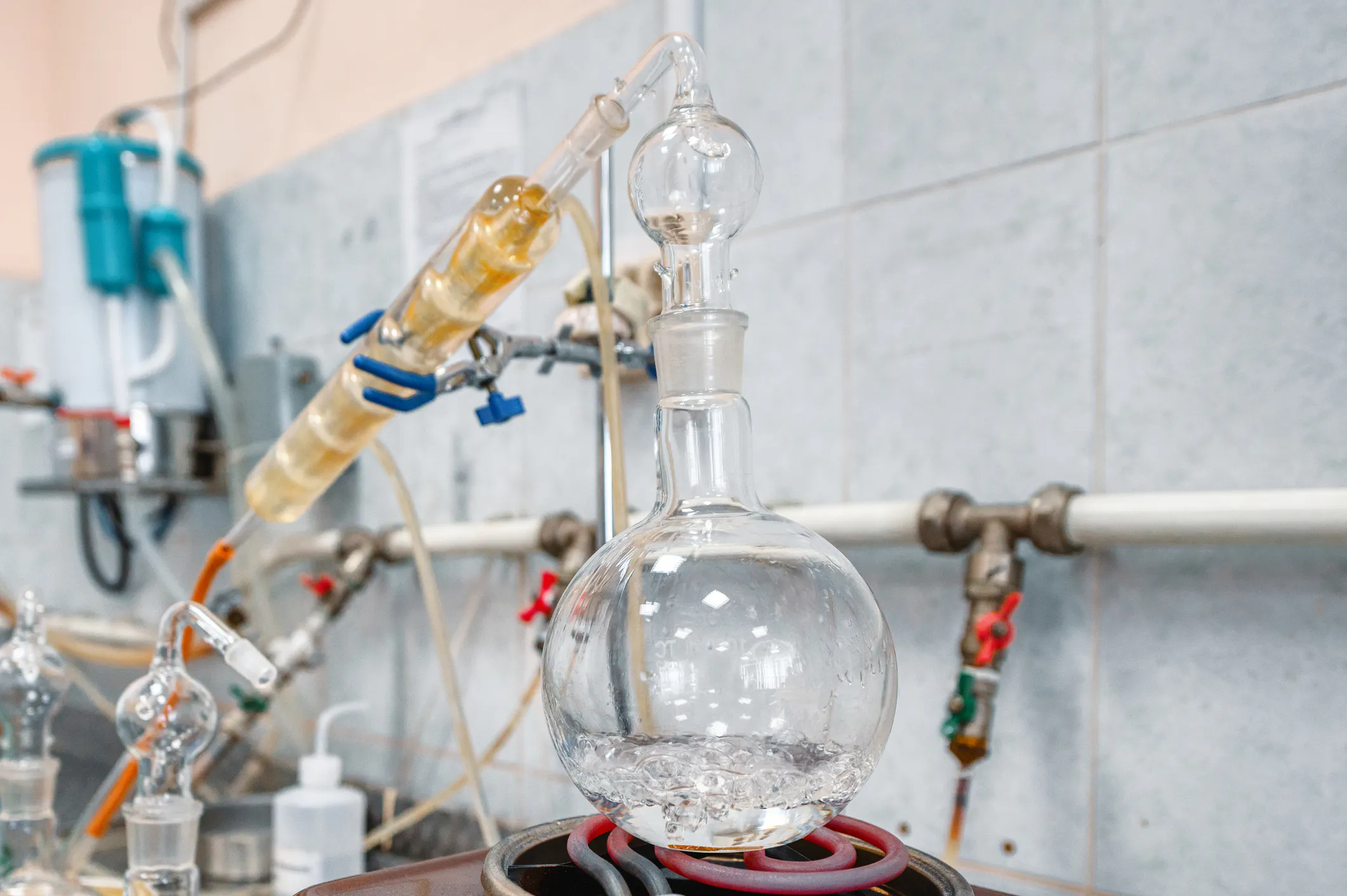
Supreme Court Takes Up 158-Year-Old Ban On Home Distilling
Premium domains for sale
Freedom Is Back In Style
Your Uncle Frank’s famous whiskey may soon be legal.
Freedom Is Back
In Style
Premium domains for sale
The Supreme Court announced on Monday that it would review an 1868 law banning home distilling, the Associated Press reported. The high court will consider whether Congress acted within its constitutional authority when it passed the law more than 150 years ago.
Federal law makes home distilling a crime punishable by up to five years in prison and a $10,000 fine.
The ban was enacted as part of an 1868 tax reform measure designed to curb fraud by commercial distillers. Plaintiffs in two separate cases argue that Congress overstepped its taxation powers by prohibiting home distilling. Government attorneys are pushing back, arguing that the restriction helps prevent tax evasion and that overturning it would improperly limit congressional authority.
The Supreme Court agreed to review Department of Justice v. McNutt after two recent challenges to the law resulted in conflicting federal appeals court rulings.
The primary case involves the Texas-based Hobby Distillers Association and individual would-be home distillers. A panel of the Fifth U.S. Circuit Court of Appeals ruled in their favor, finding that the ban exceeded Congress’ authority under the Constitution’s Taxation and Necessary and Proper clauses.
The other case centered around John Ream, a brewpub owner from Newark, Ohio, who wants to distill whiskey at home for his own personal consumption. A three-judge panel of the Sixth U.S. Circuit Court of Appeals ruled that the federal ban should stand.
“Our country’s founders would be rolling over in their graves to learn that a pastime in which even George Washington partook, which is as American as apple pie and certainly a lot older, has quite absurdly been turned into a federal crime,” Ream’s attorney Robert Alt said in a statement.
“The importance of this case and the questions it presents could hardly be overstated,” the plaintiffs’ lawyers wrote. “It presents fundamental questions of the extent of federal power and the powers reserved to the states and the people.”
The federal government also petitioned the Court to review the case, saying that the law was within the scope of Congress’ power because it was “convenient” or “useful” in carrying an enumerated power into effect.
“Congress restricted home distilling because a distiller can more easily conceal a distilling operation or thwart necessary inspections — thereby evading the requisite tax — if the still is located in” a private residence or similar structure, the government argued.
More from this network:
Domains for Sale · GOTPeople.org · TheDSAPlatform · The Truth About Socialism
What's Your Reaction?
 Like
0
 Dislike
0
 Love
0
 Funny
0
 Wow
0
 Sad
0
 Angry
0

I am just an average American. My teen years were in the late 70s and I participated in all that that decade offered. Started working young, too young. Then I joined the Army before I graduated High School. I spent 25 years in, mostly in Infantry units. Since then I've worked in information technology positions all at small family owned companies. At this rate I'll never be a tech millionaire. When I was young I rode horses as much as I could. I do believe I should have been a cowboy. I'm getting in the saddle again by taking riding lessons and see where it goes.
Premium domains for sale














Comments (0)