

The Consequences of Gen Z’s Risk Aversion
Premium domains for sale
Freedom Is Back In Style
Will Gen Z’s well-documented risk aversion mean fewer American babies?
Freedom Is Back
In Style
Premium domains for sale
A new study looks at what cultural factors do and don’t impact fertility rates—and found that “people with more willingness to take risks also intend to have more kids.” The data also shows that “where people are more willing to take risks, fertility is higher.”
“Caution, anxiety, and safety-ism seem to be a key limiting factor on fertility,” notes the new “Baby Nudges” study, produced by the Institute for Family Studies and the Wheatley Institute.
That’s not good news for the United States, where the number of births has plunged since 2007, when women were averaging 2.1 births. Now, women average 1.6 births.
And while Gen Z may follow trad wives with big families on social media, it’s not looking promising for many of them to adopt a similar family size themselves.
Gen Z—which currently includes those aged 14 to 29—isn’t exactly known for embracing risks.
“Young people … see a world that is fraying and deeply unsafe,” writes Gabriel Rubin, a Montclair State University professor who interviewed dozens of Gen Z adults. “To Gen Z, risk is everywhere and the world is a scary and grim place.”
You could argue that any young adult, with their future unknown, can find plenty to fear. But the reality is Gen Z is unusually risk averse, even compared to young adults in prior generations.
In 1991, about half of U.S. eighth and 10th graders agreed that they like to take risks sometimes or they get a kick out of doing dangerous things. By 2021, under 40% of eighth and 10th graders agreed about getting a kick out of doing dangerous things, and only a third said they like to take risks sometimes, according to a Monitoring the Future study cited in “Generations” by Jean M. Twenge.
There are already signs that the risk-averse mindset might be affecting how Gen Z approaches adulthood. For one thing, Gen Z was less interested in getting driver’s licenses: 40% of 15- to 19-year-olds had licenses in 2022, compared to 48% in 2000, reported USA Today.
Teens are “less likely to have ever tried alcohol. They’re less likely to have a paid job, to go out on dates, to go out without their parents,” Twenge, a psychology professor at San Diego State University, told Texas radio station KERA in 2023.
That risk aversion is also affecting relationships: “human connection comes with a high level of risk,” wrote Freya India, who is herself Gen Z, in an essay entitled “Risk-Aversion Is Killing Romance.”
“A recent survey found that almost 45% of men aged 18 to 25 have never approached a woman in person. Another Pew Survey found that half of single men between 18 and 30 are voluntarily single, which some suggest is in part because of fear,” India wrote.
Does this sound like a generation that’s going to embrace having babies?
Hardly.
That’s already the case: “Just a quarter of Gen Z women had at least 1 child by 26 compared to 45% of Millennial women,” writes Dan Hess, who authors the “More Births” substack, citing 2026 research released by the Federal Reserve Bank of Atlanta.
If you’re thinking optimistically, it might just be that Gen Z women want to be older when they have children. But think again. “Gen Z women … are dramatically less likely to want children than all three of the previous generations,” notes a September Atlanta Fed paper, comparing Gen Z to Millennials, Gen X, and Baby Boomers.
It’s not the first time Gen Z has shown less interest in becoming parents. About half of 12th graders in 2023 were “very likely” to want children if they married, down from 64% in 1993, according to a Pew Research Center analysis.
But could this generation still pivot?
I’m a Millennial, but I can relate to some of Gen Z’s attitudes. I only got a driver’s license at 17 thanks to my parents’ pushiness—and my dad patiently tooling around empty parking lots on weekends with me until I was ready to go out on the road.
I didn’t have my first child until my late 30s because I met my husband later in life. And yet, even though our baby was very much wanted, I was also terrified. Now several months in, I know that my fears were both realistic—and absurd. It may not give me more sleep, but somehow, fortified by seeing my son’s gummy smile and bright eyes, I just make it all work.
And there are real cultural influences that can encourage people to have kids, according to the “Baby Nudges” study. If you admire a celebrity with a family bigger than yours, you’re 14% more likely to want to have a child or have another child.
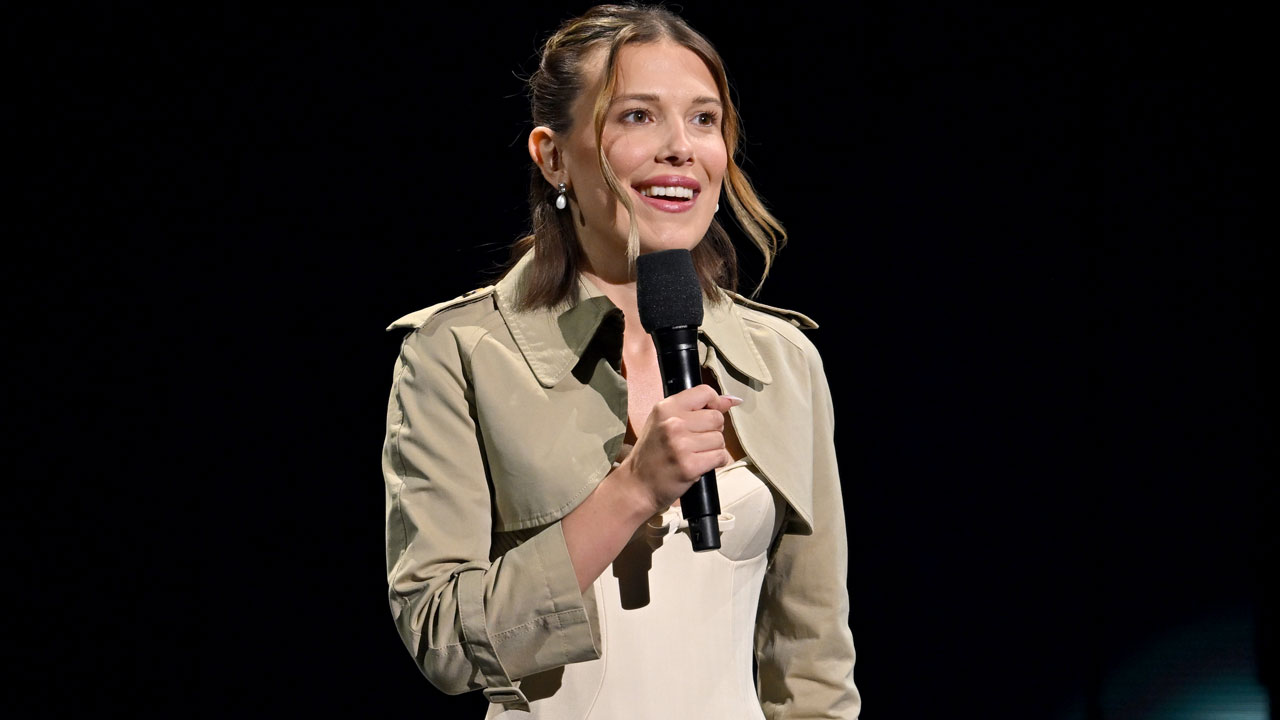
“Stranger Things” actress Millie Bobby Brown, who is 22 and the mother of two children with her husband, Jake Bongiovi, may encourage others in her generation to have kids.
“It’s been a beautiful, amazing journey—she’s taught us so much already,” Brown told British Vogue in 2025 after the couple adopted their first daughter.
“Our days are filled with lots of cuddles and laughter and love. It’s just endless joy.”
But celebrities aren’t the only factor at play here.
Want grandkids? Telling your adult kids so makes them in turn more likely to intend to have a baby or another one. Religiosity also has an impact: “The most diligent religious attenders not only desire more children but actually have more children,” notes the “Baby Nudges” authors.
There’s also a contagion factor. I’ve certainly been grateful for the counsel and solidarity of my friends who already had kids—and it turns out I’m far from alone in that scenario. “Believing one’s friends would celebrate a new baby is associated with a 10% increase in desired number of children and a 20% increase in the likelihood of intending to have another child,” states “Baby Nudges.”
It’s important to know how this trend could be reversed—because the current scenario isn’t good for the United States. A shrinking population presents all kinds of economic and societal challenges, and currently, the U.S. is on course to have its population start shrinking after 2056, according to the Congressional Budget Office.
Sure, that’s 30 years in the future, but the only reason the population shrinking won’t start sooner is because of immigration. CBO projects that deaths will exceed births starting in 2030.
And even aside from economic and societal difficulties, what does it say about our American culture that we aren’t having kids, that we aren’t wanting to share our wonderful existence with more? Talk about a sign of malaise.
The good news is we can reverse. But doing so will require Gen Z to get a lot more comfortable with risks.
More from this network:
Domains for Sale · GOTPeople.org · TheDSAPlatform · The Truth About Socialism
What's Your Reaction?
 Like
0
 Dislike
0
 Love
0
 Funny
0
 Wow
0
 Sad
0
 Angry
0

I am just an average American. My teen years were in the late 70s and I participated in all that that decade offered. Started working young, too young. Then I joined the Army before I graduated High School. I spent 25 years in, mostly in Infantry units. Since then I've worked in information technology positions all at small family owned companies. At this rate I'll never be a tech millionaire. When I was young I rode horses as much as I could. I do believe I should have been a cowboy. I'm getting in the saddle again by taking riding lessons and see where it goes.
Premium domains for sale













Comments (0)