

The Doomsday Warning That’s Starting To Look Awfully Convenient
Premium domains for sale
Freedom Is Back In Style
We are all being played. You are being played.
Freedom Is Back
In Style
Premium domains for sale
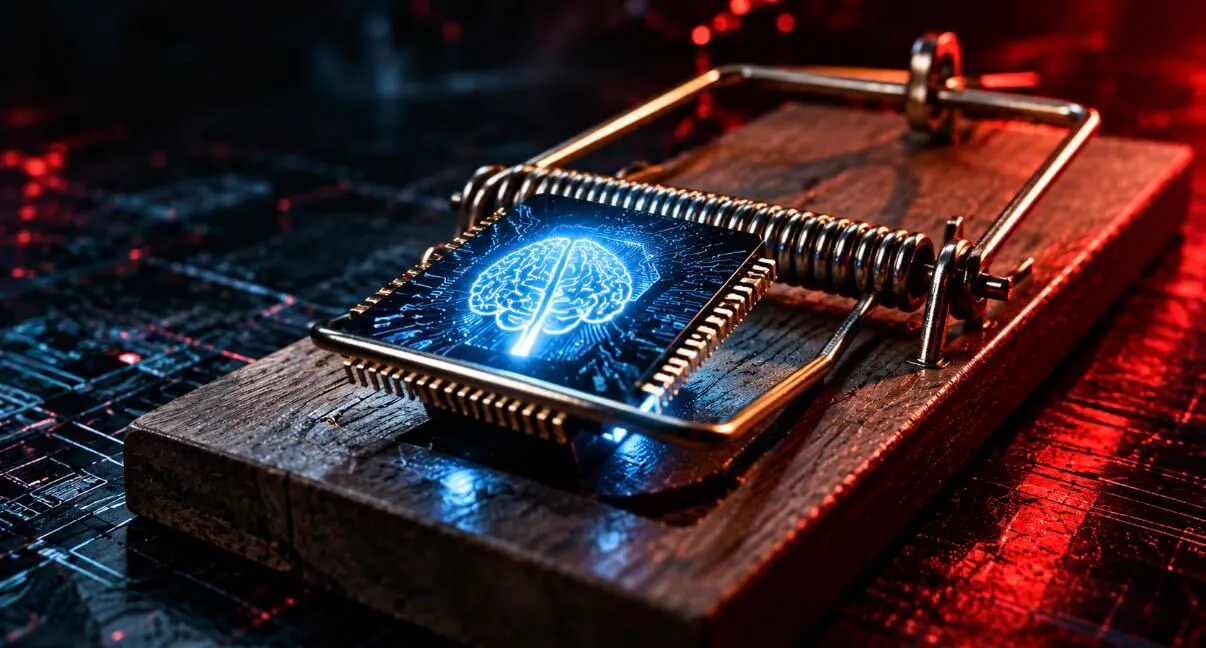
Top AI developers are warning us in the scariest terms that the end of the world is nigh. They say there must be heavy regulation of artificial intelligence development lest AI run out of control, achieve artificial general intelligence, superintelligent sentience, and destroy humanity.
So here is the question: Are these developers good-hearted folks who are deeply concerned about the future of the West, and who desperately want government intervention to stop them?
Or — are these AI leaders magnifying public angst about AI in order to achieve regulatory capture and to make more money? Do they want to rewrite the rules of the AI road in order to bar new competitors, collude with each other, and take control of the entire industry in monopolistic fashion?
It’s an interesting question. You decide.
Is AI going to kill us all? This broke into the open and has been discussed pretty widely over the course of the last few years, with people like Sam Altman of OpenAI and Dario Amodei at Anthropic talking about the risks.

It became a huge issue over the last week or so, when a person named Jacob Coxon, who used to work at both Anthropic and OpenAI as a researcher, warned online that many people believe AI would kill everybody.
He then went on the BBC and reiterated this argument, saying that there’s a strong chance we could all die in the immediate future.
This is reminiscent of climate-change apocalyptic talk. “All the ice caps are going to be gone! The polar bears are all going to drown!”
I say that because Coxon has not explained exactly how we get from here to there. He hasn’t explained in detail, or even in relative detail, how we get from “AI is outracing us” to “We all die.”
We should know, because if you can game for those risks, you can presumably restrict them.
It is worth noting that Coxon is politically aligned with the Left. He worked for Newspeak in 2021, which is a Left-wing British NGO dedicated to “democracy tech projects,” “collective transformation,” “prison abolition,” “abolitionist community-based harm prevention and response,” and “extinction rebellion.” He only worked at Anthropic for six weeks.
Nvidia’s Jensen Huang called Coxon outlandish, deeply untrue, and arrogant. Elon Musk called him “sus.”
How scared should we be?
I tend not to be alarmist about most things, because the vast majority of terrible things predicted never occur; a lot of people out there have predicted the last 25 recessions.
But if we’re talking about an extinction-level event, like we’re all going to die, that’s an extraordinary claim which requires extraordinary evidence.
We have a choice to make as a population: Are the AI founders — who are calling for heavy AI regulations, AI pauses, heavy governmental oversight — just good-hearted, awesome people trying to save us from them?
Or are they very profit-motivated, trying to freeze the market in place? It’s a horse race, and they are ahead. They’re trying to freeze the horse race while they are ahead and allow for both collusion and limitations on legal liability.
I might be a little cynical. I think the latter is more likely.
First, we have to understand that companies like Nvidia are developing the hardware and infrastructure for AI, and they make the chips AI runs on, as do microprocessors like AMD. And those people have a strong incentive for AI to keep developing as fast as possible. If there’s an AI pause, Nvidia is in serious trouble.
Then there are software developers like OpenAI, which makes ChatGPT; Anthropic, which makes Claude; Meta, which makes Llama; or Google, which makes Gemini. These developers make models in two flavors: closed source or open source.
Closed-source or proprietary AI means the company hides the inner design; you’re not building your own variation of the model, you just use theirs. You subscribe to Claude, put in the data, and they churn out whatever they want. The closed-source economic model relies on highly profitable AI models that charge per token; the more you use their AI, the more you have to pay.
Then there are open-source, often called open-weight, AI models. This means that the core mathematical files that make the model work are published online for free. It doesn’t mean the entire formula; it means the general ingredients.
So to understand this, let’s use a metaphor: you’re at a restaurant.
Open source would be the chef walking out, giving you the cookbook, a list of ingredients, and a video showing you how to cook it. You can make your own changes. You can change the flavorings. You can add a little salt here, or take away a little paprika there. A few AI companies are doing this.
Open weight is kind of a version of open source. It’s like if the chef made you the meal and let you take it home and mix in your own ingredients. So they’re actually making the thing for you. So this would be Meta’s system. And you can add whatever you want on top of that.
Closed sources like Claude or ChatGPT would be like ordering the meal: no changes allowed. The chef makes it the way the chef makes it. You can’t take it home; you can’t reverse-engineer it. You have to eat it inside a protected area of the restaurant.
To keep this metaphor going, let’s say that you are one of these closed-source restaurants. Your greatest fear is that somebody from the open-weights restaurant comes along with a better meal and destroys your restaurant, because if somebody makes a better meal — one that can be taken home, changed out of the takeout box — it’s modular and it’s better than your restaurant. Who would bother going to your restaurant and paying extra to be in that closed-door environment in which the food is worse? You’re dead in the water.
So the closed-source companies and the open-weights companies are very much at odds.
The closed-source models — Microsoft, Google, Anthropic, OpenAI — tend to be the ones arguing the most that AI is going to kill all of us. That makes sense, because if your argument is that the takeout restaurant that lets you take the food home might give you food with poison in it, guess what happens to your restaurant?
It succeeds because the open source model can no longer defeat you. So you want to argue that you need our guardianship; you need our protection. You need a closed source because open source will kill you. And that aligns with your profit motive.
Open-source models want unrestricted information on flow and development because they know that if they aren’t restricted, they could theoretically outrace and then destroy closed-source models.
Which brings us back to those discussions of the apocalypse. There are two basic views right now about AI: camp number one says the big danger is a black swan event that superintelligence goes apocalyptic, launches all the nuclear missiles, and we’re all dead. That is the apocalypse camp.
And then there’s the second camp, the stagnation camp. They say the greatest threat here is that we stagnate. If we stagnate, China wins. If we stagnate, our economy dies. If we stagnate, our productivity declines.
You could theoretically believe both these things. You could believe stagnation is likely if you restrict, but also that, if you don’t restrict, a black swan event is possible.
Camp number one says the apocalypse is about to happen. They argue that AI will kill us unless the government comes in and restricts it. Members of the apocalypse camp may have some ulterior motives. They may want to restrict their opposition. They may also want to restrict their own liability because if the government regulates an industry, they can then claim that they don’t actually have liability because they just fulfilled the government checkbox. They argue the ultimate threat to humanity is uncontrolled superintelligence, recursive AI that is able to self-prompt and avoid being unplugged and then outrace humanity itself.
Anthropic, which leans to the Left, is leading this camp. Dario Amodei, Anthropic’s founder, compared President Trump to a feudal warlord when explaining why he voted for Kamala Harris in 2024. He came out on CNN and said that he basically agreed with Jacob Coxon, which is astonishing, because Coxon came out and basically ripped into Anthropic and said that they are running us directly toward a human apocalypse.
If somebody came out from my company and said, “Ben Shapiro’s company is about to end the world and kill all of humanity,” I’d be angry, because that’s not true. But Amodei seemed somewhat happy about Jacob Coxon saying that the apocalypse is happening and that his company might be responsible.
I find that suspicious. Call me a cynic, but I don’t believe that all these people are just so good-hearted that they want to race forward with the technology, but only they get to race forward with the technology.
If we are going to be cynical about this, why exactly would Amodei be calling for governmental regulation and slowing down? According to the Kalshi market, 71% of people think Claude will have the best AI at the end of 2026.
So they might have an interest in freezing the horse race with them ahead. And they might want regulation because closed models are significantly more legally liable than open models. They want regulation because they have more legal liability. They want governmental protection.
It’s possible all these people want to preserve their business model.
Then there’s the second worry, which I think is the much greater worry: stagnation. There are people who are arguing the greatest danger is not that we’re going to invent a superintelligence that launches all the nukes; the great risk is that we are going to end up with a collusive, monopoly-ridden AI industry that basically stagnates. And then we get outcompeted and we fall behind China, and China destroys us.
People who fear stagnation worry that slowing AI by letting the government write massive regulatory regimes will mean we lose. Unsurprisingly, those people are in the open-weights camp. They want fast development. They want to outcompete the closed-source models.
The closed-source camp argues that once the open-weights camp releases their models, anybody, bad people included, can alter and then use them. The open-weights camp argues that top-down control is stagnating.
I understand the worries from everyday Americans. These are normal people who are worried: they don’t understand what the hell is going on because it’s complex.
But when Bernie Sanders says anything, you should probably believe the opposite. Sanders said, “When you are racing towards a cliff, you don’t just ease up on the gas pedal. You hit the brakes. When the future of humanity is at stake, we need a pause on advanced AI development and a ban on artificial superintelligence — an AI mind smarter than any human and capable of operating independently beyond our control. At their upcoming AI summit, Trump and Xi must negotiate a treaty to pause AI and ban superintelligence before it is too late.”
I have no idea how he plans on banning superintelligence. Nobody is actually aiming at this point for full-scale superintelligence of the sort that he’s talking about, because people understand that if you had the “singularity,” there are inherent risks to that. Everyone agrees that you need a human being running the process.
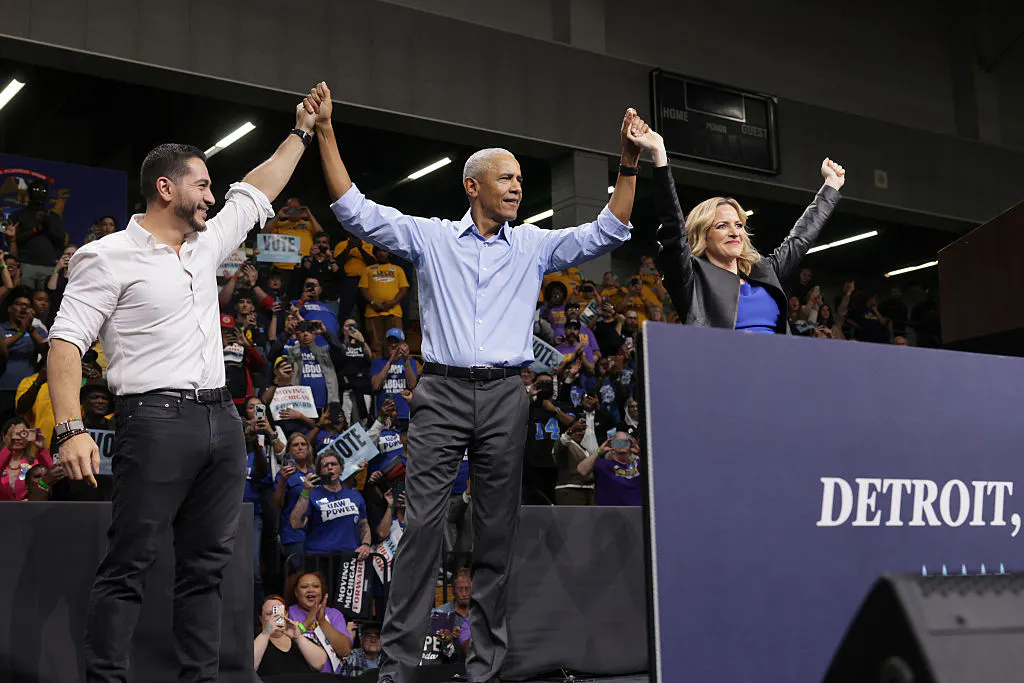
Barack Obama is coming out of the woodwork now to move AI oversight to the center of their agenda. Why? Because Democrats have now found a populist issue. People are very uncomfortable with tech, and because people are uncomfortable with tech, because they don’t understand it, and because half the AI founders are now doom-mongering, an enormous number of Americans, justifiably, are deeply worried about the development of AI.
It’s the technology that will likely save the American economy.
I have not seen beyond vague statements from people who claim to have special knowledge any specific roadmap for how we all die because of AI.
I do see the political motivations behind that. And whenever the government gets involved at the top level to protect us from “the danger,” this usually ends with cartelization, corruption, and stagnation.
I’m not saying that there is no risk to AI. Of course there’s a risk to AI. I’m not saying people can’t misuse AI, but that can happen both inside and outside companies. That’s an argument, as they say, that proves too much.
From a cynical point of view, these closed-source companies are looking for a legal liability shield now, while also looking for regulatory capture, and they are looking for some sort of excuse where, if things go wrong, it’s not their fault while they continue to develop.
What they don’t understand is that if they keep making the case that “AI is so highly dangerous that we’re all going to die from it,” the natural inclination of people on both the Right and the Left will be to ban AI entirely and push back against it.
And if that happens, we lose.
More from this network:
Domains for Sale · GOTPeople.org · TheDSAPlatform · The Truth About Socialism
What's Your Reaction?
 Like
0
Like
0
 Dislike
0
Dislike
0
 Love
0
Love
0
 Funny
0
Funny
0
 Wow
0
Wow
0
 Sad
0
Sad
0
 Angry
0
Angry
0

I am just an average American. My teen years were in the late 70s and I participated in all that that decade offered. Started working young, too young. Then I joined the Army before I graduated High School. I spent 25 years in, mostly in Infantry units. Since then I've worked in information technology positions all at small family owned companies. At this rate I'll never be a tech millionaire. When I was young I rode horses as much as I could. I do believe I should have been a cowboy. I'm getting in the saddle again by taking riding lessons and see where it goes.
Premium domains for sale







Comments (0)