

The New Rules Of American Power Replacing The Left’s Favorite Aid Organization

Premium domains for sale
Freedom Is Back In Style
Shutting down USAID was the biggest shake-up for American diplomacy in a generation. An agency founded in 1961 was folded into the State Department within months.
Freedom Is Back
In Style
Premium domains for sale
It was overdue.
USAID spent $1.5 million to promote diversity, equity, and inclusion in Serbian workplaces and funded EcoHealth Alliance, a group tied to the Wuhan lab. Its own acting administrator placed 56 senior officials on leave for actions “designed to circumvent the President’s Executive Orders.” An agency that stopped answering to the elected government had stopped answering to the American people.
Plenty of Africans agreed. We have spent a combined two decades working with foreign countries across the Arabian Gulf and Africa, and the complaint African ministers most often raised was never that America gave too little. It was that America arrived with workshops while China arrived with cranes. Ghana built a national strategy around the phrase “Ghana Beyond Aid.” Africa’s leaders have been asking for partners, not patrons, for years.
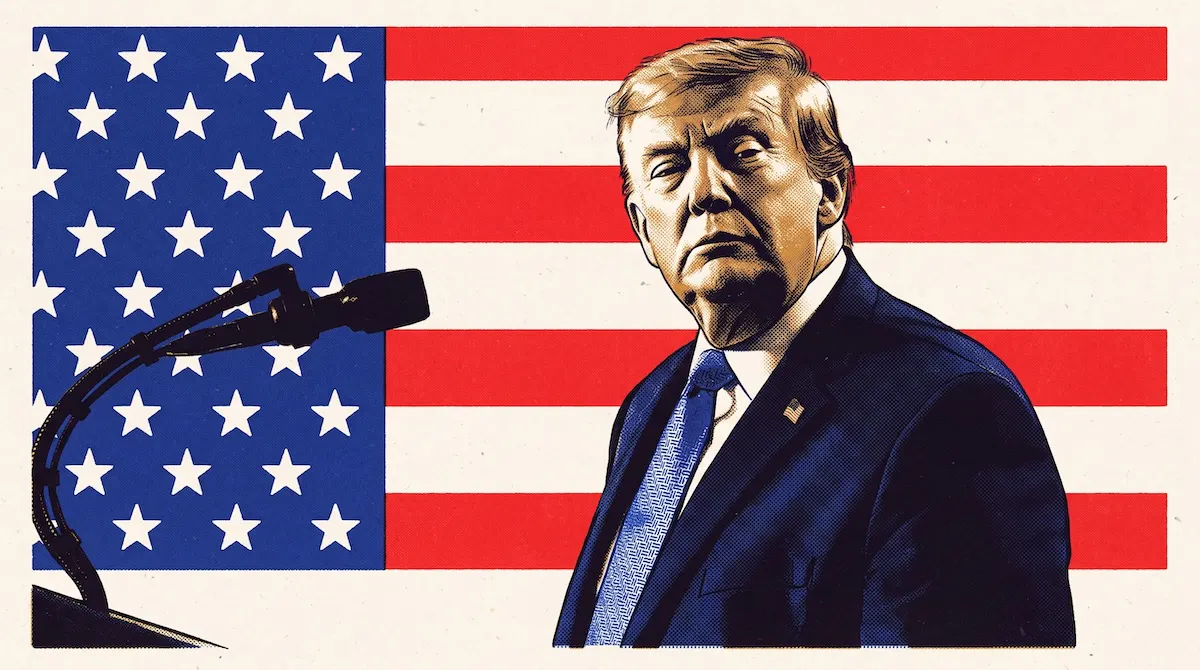
Dissolving USAID was the easy part. Secretary of State Rubio and President Trump have built “trade, not aid” into how Washington operates, starting in Africa. The U.S. International Development Finance Corporation (DFC), America’s development bank, now has a $205 billion ceiling, more than triple its old limit, and expanded power to take equity stakes. The Washington Accords between Congo and Rwanda tie a peace framework to clean, traceable supply chains for cobalt, copper, and coltan with American access built in. The guns in eastern Congo have not gone quiet, but for the first time both capitals have an American economic reason to make peace stick.
Many conservatives recoil at sending money overseas. That is a healthy instinct. The President’s Africa team applies one test that should satisfy it: every dealing, hard or soft power, must benefit the American people.
Start with critical minerals. They are in your phone, your car, and our fighter jets. China controls roughly 70% of global processing capacity and has used that chokehold as leverage over American industry. Africa holds nearly 30% of the world’s reserves. Whoever builds the mines, railways and refineries there sets the terms for everyone else.
Our Gulf partners — the Emiratis, Saudis, and Qataris — are among the continent’s largest investors. Having worked alongside them, we have found they would rather build with Americans than without us. Trade, not aid, gives them an American partner worth building with.
Next, customers. By 2050, more than one in four people on Earth will be African, a young and growing consumer base that wants what America makes. America First means exporting, not just importing. Every market we open is a new order for an American factory and a new paycheck for an American worker.
Every project we fund creates high-paying work for American engineers, geologists, project managers, and operators. The same discipline runs through what remains of foreign assistance. The America First Global Health Strategy moves lifesaving programs into bilateral compacts that ask governments to co-invest, take ownership, and partner with American businesses. That builds partners instead of dependents, and it gives American industry a real stake.
Finally, the math. This is investing, and it pays. The Overseas Private Investment Corporation (OPIC), the agency DFC replaced in 2020, returned a net profit to the Treasury for 40 straight years. DFC had net income of $241 million in FY2024 and $341 million in FY2023.
None of this works without good stewards. The president’s Africa team at the National Security Council, the State Department, and DFC know the difference between a deal that looks good in a press release and one that pays off for Americans. They are the reason this model will not become another USAID.
America First does not mean America alone. The old model sent billions abroad and hoped for gratitude. The new one sends American capital and expertise abroad and brings home minerals, markets, jobs, and returns, alongside African partners who would rather trade with us than owe Beijing. Trade, not aid, is strength at home.
***
Ambassador Michael Patrick Murphy, KM is Director of Africa and the Middle East at Nestpoint Associates. A U.S. Army veteran and graduate of The Citadel, he has spent two decades working with countries and businesses across the Gulf and Africa. In late 2022, he was appointed to be Permanent Representative of the Sovereign Order of Malta to the African Union Commission.
Alex Olson is Deputy Director of Government Affairs at Nestpoint Associates. As the firm’s principal government affairs representative, Alex leads advocacy for trade and critical minerals issues, anchoring Nestpoint’s footprint across Africa.
More from this network:
Domains for Sale · GOTPeople.org · TheDSAPlatform · The Truth About Socialism
What's Your Reaction?
 Like
0
 Dislike
0
 Love
0
 Funny
0
 Wow
0
 Sad
0
 Angry
0

I am just an average American. My teen years were in the late 70s and I participated in all that that decade offered. Started working young, too young. Then I joined the Army before I graduated High School. I spent 25 years in, mostly in Infantry units. Since then I've worked in information technology positions all at small family owned companies. At this rate I'll never be a tech millionaire. When I was young I rode horses as much as I could. I do believe I should have been a cowboy. I'm getting in the saddle again by taking riding lessons and see where it goes.
Premium domains for sale










Comments (0)