

Three Hundred Pills In 13 Days: Welcome To Telepsych
Premium domains for sale
Freedom Is Back In Style
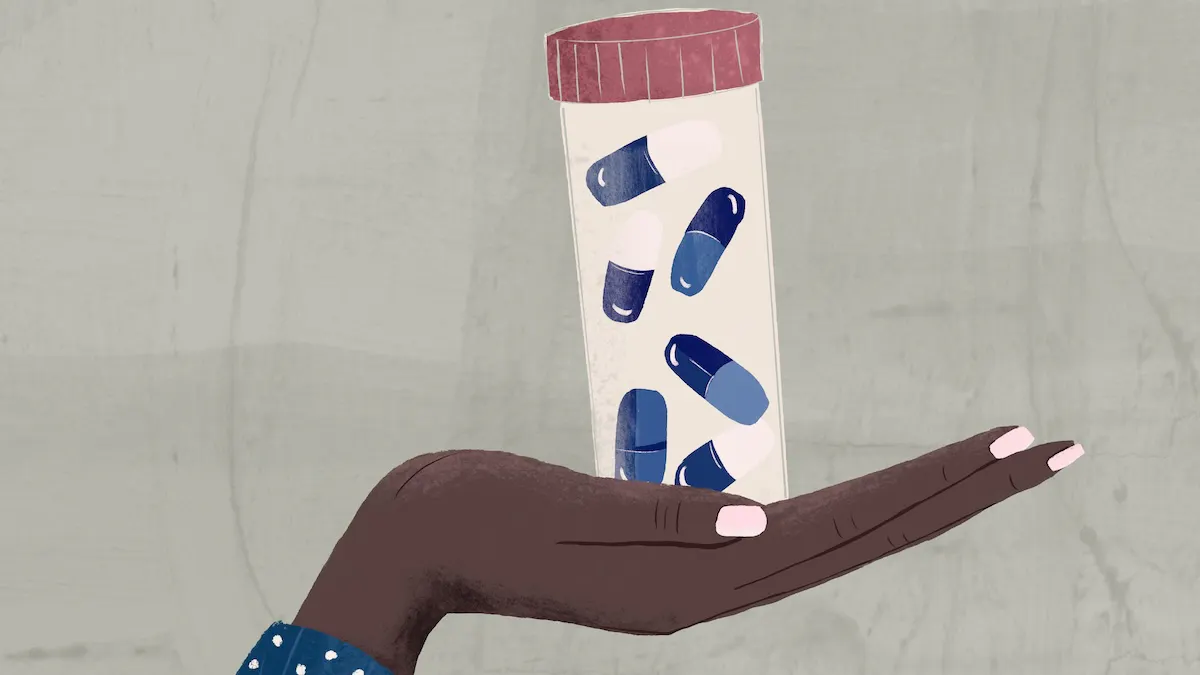
As an experiment to see how easy it is to get prescription drugs in America, I saw nine telehealth psychiatrists in 13 days. The result was 12 prescriptions representing over 300 pills: antidepressants, anxiolytics, alpha-blockers, sedatives, antihistamines, benzodiazepines, and antipsychotics. I never set foot in a doctor’s office. I never identified with a mental illness. I never spent more than 30 minutes with a doctor.
Freedom Is Back
In Style
Premium domains for sale
Like many 22-year-old girls, I sometimes stay up too late and find that I’ve disrupted my sleep schedule and can’t crash when I want to. And like many 22-year-old girls, I have an Instagram feed flooded with advertisements for therapy and psychiatric drugs offering to fix the imperfections in my life. Telehealth apps promise easy download, quick diagnostic quizzes, insurance compatibility, and (most importantly for a post-COVID generation) doing it all from home.
One night I pulled out my phone and searched “insomnia treatment” on Google. I was immediately directed to “Get Ambien Fast Online” from Klarity Health, a telehealth company founded in 2020 to be a “trusted destination for mental health, weight loss and primary care needs.” I booked an appointment for 9 a.m. the next day.
The session lasted 12 minutes. I told the doctor I wasn’t falling asleep as quickly as I would like and he assured me “you will sleep well tonight” after prescribing me 50 mg of Trazodone and 5 mg of Ambien. I had the drugs in hand two hours later. I paid $1.76 at the pharmacy, where I was not asked to show an ID.
The psychiatrist must have asked about my lifestyle, medical history, and objectives for treatment, right? Wrong. The appointment lasted less than 15 minutes and the doctor made $280 off my insurance company. Apparently his schedule doesn’t leave much time for chitchat.
What did he give me, anyway? Ambien is a sedative-hypnotic that works by binding to GABA-A receptors in the central nervous system, enhancing the effects of gamma-aminobutyric acid (GABA), the brain’s main inhibitory neurotransmitter. Ambien rapidly slows down nerve activity in the brain, inducing sedation. It is known to cause dangerous sleepwalking episodes, a side effect that became well-known after a class action lawsuit in 2006. My doctor neglected to mention any side effects.
Trazodone is a serotonin antagonist and reuptake inhibitor (SARI) that works by blocking specific serotonin receptors and stopping nerves from reabsorbing serotonin, thus producing an excess. Serotonergic antidepressants like SARIs and selective serotonin reuptake inhibitors (SSRIs) were popularized after the theory that depression was caused by a dearth of serotonin in the brain was posited in 1967. The theory (which was never supported by empirical evidence) was finally discredited by a British psychiatrist’s comprehensive umbrella review in 2022, but not before a billion dollar drug industry was founded on its guiding premise. Trazodone in particular is known to cause sleepiness, which explains why I was prescribed an antidepressant for insomnia. My subsequent appointments would reveal that doctors don’t need much excuse to throw antidepressants into the mix.
Dealer’s choice
I signed up for eight more appointments over the next two weeks through the telepsych companies that seemed to spawn endlessly on my social media feed: Rula, UpLift, Sondermind, A&M Wellness Resources, Brightside, ZocDoc, Talkiatry, and TalkSpace. The average length of a session was 20 minutes. When asked to describe what brought me into the virtual office, I would say that my sleep is inconsistent, I get anxious when public speaking and in crowded rooms, and I wish I had more energy. One doctor asked me if I was depressed.
“I don’t think so, not anything I wouldn’t say is normal melancholy,” I said with a shrug.
“Melancholy is not normal,” she rebuked. “Have you felt sad in the last two weeks?”
I admitted that I have. She wrote a prescription for Seroquel, an antipsychotic developed to treat schizophrenia. Without ever using the word depression in latter sessions, I was prescribed five different antidepressants.
My total prescription haul includes: Ambien, Atarax (prescribed twice), Buspar, Desyrel, Effexor, Lexapro, Propranolol, Seroquel, Wellbutrin, Zoloft, and Xanax. According to my doctors I have depression, generalized anxiety disorder, panic disorder, insomnia, and — potentially — PTSD. (I was assured I have all the symptoms; I was just short a traumatic event.) I was never sent away from a first session without a prescription. Not one doctor told me how long I would be taking drugs.
While I was offered Ambien and Xanax hastily (the latter in a record-setting four minutes), most of my doctors were wary of prescribing anything associated with a euphoric high and instead opted for medications associated with chronic numbing. Serotonergic antidepressants are known to cause severe sexual dysfunction, blunted emotions, cognitive impairment, and suicidal ideation. My anxiolytics and antipsychotics share most of the same side effect portfolios but add movement disorders, weight gain, amnesia, and more: in sum, the SSRI zombie effect.
If everybody’s sick, nobody is
It may be appropriate in some cases to burden a seriously distressed person with these risks in the pursuit of short-term stabilization. But I was written these prescriptions without expressing any serious distress. My intermittent sadness, fatigue, restlessness, distractibility, or nervousness were enough to warrant mental illness labels and chemical intervention.
The mental illness paradigm has become totalizing, and that is no accident. An estimated 23.4% of Americans carry a mental illness diagnosis, and one in six is currently on an antidepressant. Betterhelp advertises on Instagram that “62% of Americans can’t sleep” and “66% of Americans can’t stop worrying.” The implication? You’re probably one of them and need to see a doctor.
If we are openly suggesting that a majority of Americans may need psychiatric treatment, we have adopted a dysfunctional worldview. Unwanted feelings, thoughts, behaviors, and habits are not signs of a medical disorder. They are part of being human.
Psychiatrists have been discontent with a narrow sphere of influence. Rather than concerning themselves only with neurologically sick individuals with biologically measurable symptoms, they have pushed treatment on the masses.
They did it by convincing us that personal distress is a medical problem with a medical solution. They told us it was their business to discover (and sell) inner peace. My doctors didn’t think twice about writing me prescriptions because they evidently believe that everyone experiencing dissatisfaction needs one of their cures. Never mind the fact that dissatisfaction is a universal human problem. Melancholy is, in fact, normal. Doctors cannot offer salvation from meaninglessness, pain, anxiety, or guilt. That requires more than biohacks.
Today SSRIs are trending. Tomorrow, the new home-order Ketamine nasal spray may take off. Apps such as Joyous and Mindbloom are already advertising Spravato on Instagram for “treatment resistant depression” — functionally defined as anything your SSRIs didn’t cure. This is the entrepreneurial spirit governing our inner lives. Without a limiting principle for medicalization, anyone can have a bed in the virtual psych ward.
***
Gabriella (Ellie) DiPrima has a background in philosophy, economics, and psychology that she applies to political work and freelance writing.
This article is part of Upstream, The Daily Wire’s new home for culture and lifestyle. Real human insight and human stories — from our featured writers to you.
More from this network:
Domains for Sale · GOTPeople.org · TheDSAPlatform · The Truth About Socialism
What's Your Reaction?
 Like
0
Like
0
 Dislike
0
Dislike
0
 Love
0
Love
0
 Funny
0
Funny
0
 Wow
0
Wow
0
 Sad
0
Sad
0
 Angry
0
Angry
0

I am just an average American. My teen years were in the late 70s and I participated in all that that decade offered. Started working young, too young. Then I joined the Army before I graduated High School. I spent 25 years in, mostly in Infantry units. Since then I've worked in information technology positions all at small family owned companies. At this rate I'll never be a tech millionaire. When I was young I rode horses as much as I could. I do believe I should have been a cowboy. I'm getting in the saddle again by taking riding lessons and see where it goes.
Premium domains for sale




















Comments (0)