

TikTok Is The CCP’s Most Potent Weapon Of Psychological Warfare. Will Trump Stop It?
Premium domains for sale
Freedom Is Back In Style
On Thursday, July 16, 2026, President Donald Trump accused the People’s Republic of China of conspiring to undermine his presidency. Appearing before the nation from the White House, Trump shared intelligence indicating that Beijing “engaged in…election-related activities to undermine my first administration and our 2020 campaign.” According to the president, Beijing “fought like hell” to head off a second term and “make him resign or prevent his reelection.”
Freedom Is Back
In Style
Premium domains for sale
The next day, administration officials said, inexplicably, that Trump’s speech about Beijing’s election influence was “not a story about China.” Instead, Peter Navarro claimed, the true villains were domestic “nefarious actors” who wanted to swing the election away from Trump. Later on that day, Press Secretary Karoline Leavitt confirmed that Chairman Xi Jinping’s upcoming trip to the White House remained on track. Apparently the punishment for meddling in American democracy is pageantry and hospitality.
Friday evening, Reuters reported new guidance from the Department of Justice: TikTok was now safe to download on government devices. No matter that the CCP still appears to control the app’s all-important algorithm, or that Beijing leveraged that control last year to turn the American people against Trump’s trade war with China. Or, most alarmingly, that a National Intelligence Council assessment from 2020 identified TikTok as a primary vector of CCP election interference in the United States. With its hand on the app’s algorithm, the CCP can still manipulate TikTok’s content and shape U.S. public opinion.
If President Trump wants to prevent China, Russia, or any foreign adversaries from meddling in U.S. elections, he needs to address these contradictions immediately. As it stands now, his administration is unwittingly doing Beijing’s work for it.
Consider this warning from an NIC assessment on April 7, 2020. China uses a variety of means, including TikTok, “to extend the coercive reach of their ideological enforcement and political control efforts beyond their borders. In some cases, they are impinging on Western democracies’ sovereignty and interests to enhance their domestic stability.” Beijing targets American democracy because its autocracy is weak. The CCP, like most authoritarian regimes, is parasitic. It has no internal source of legitimacy, and can only survive on the strength of others. Xi sought to destabilize Trump not primarily to weaken an American president, but chiefly to make himself strong.
It was bad enough that Navarro misidentified the antagonist in this whole episode. This story is clearly about China. But understanding the CCP’s motive is even more important: it’s less about preferring Trump or Biden, and more about sowing doubt in U.S. elections. Missing that theme will invite further meddling.
These assessments, and China’s own actions, give Trump considerable leverage. Xi clearly has his own political challenges at home, based on the persistent high-profile purges at the party’s highest levels. As much as Trump wants high-level meetings with Xi for trade negotiations, Xi may need these meetings even more for his own domestic standing. By inviting Xi to Washington in September and letting China off without any punishment or deterrent action, Trump will telegraph considerable weakness.
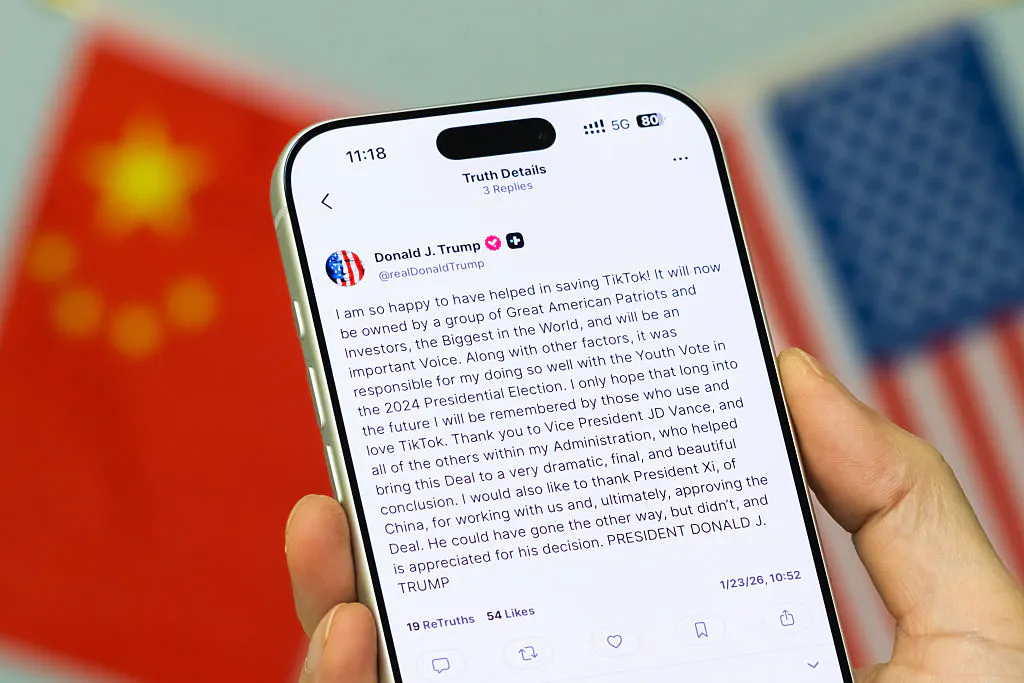
There is one thing that Trump could do immediately to alleviate these concerns, buttress U.S. election integrity, and regain the upper hand against Xi: revisit his TikTok negotiation. The app is the CCP’s most potent weapon of psychological warfare against Americans, and a powerful tool to turn us against each other. Congress moved as quickly as it did in 2024 to separate TikTok from its Chinese parent company ByteDance because of compelling evidence that the app was directly responsible for spikes in antisemitism, just months after Hamas’ barbaric attacks against Israel on October 7th. The powerful algorithm behind that operation still rests under CCP control.
It isn’t weakness to revisit a bad decision. Letting it stand, and leaving Americans vulnerable to threats, is weakness. Should the day come when China leverages TikTok in elections, we will look back on this moment as a lost opportunity. Thankfully, the president has time to fix this problem. He has accused Xi of trying to ruin his presidency. Will he turn around and receive Xi at the White House in September? Will he allow the CCP to retain control of TikTok’s algorithm? More than Trump’s legacy rides on the answer to these questions. The resiliency of America’s democracy depends on them.
***
Michael Sobolik is a senior fellow at the Hudson Institute.
More from this network:
Domains for Sale · GOTPeople.org · TheDSAPlatform · The Truth About Socialism
What's Your Reaction?
 Like
0
Like
0
 Dislike
0
Dislike
0
 Love
0
Love
0
 Funny
0
Funny
0
 Wow
0
Wow
0
 Sad
0
Sad
0
 Angry
0
Angry
0

I am just an average American. My teen years were in the late 70s and I participated in all that that decade offered. Started working young, too young. Then I joined the Army before I graduated High School. I spent 25 years in, mostly in Infantry units. Since then I've worked in information technology positions all at small family owned companies. At this rate I'll never be a tech millionaire. When I was young I rode horses as much as I could. I do believe I should have been a cowboy. I'm getting in the saddle again by taking riding lessons and see where it goes.
Premium domains for sale














Comments (0)