

Time for a Renaissance of American Public Service
Premium domains for sale
Freedom Is Back In Style
America has no shortage of critics. What it increasingly lacks are American citizens willing to step forward and serve.
Freedom Is Back
In Style
Premium domains for sale
A republic cannot survive indefinitely as a spectator sport, with millions of people shouting from the sidelines while expecting someone else to defend the country, administer justice, strengthen the community, and preserve the institutions on which freedom depends.
Self-government requires more than opinions. It requires participation.
Yet the habits of active citizenship remain disturbingly weak. In the 2024 presidential election, just 65.3% of the citizen voting-age population cast a ballot. Only 28.3% of Americans formally volunteered through an organization in 2023. And according to the Defense Department, just 11% of young people ages 16 to 21 say they are likely to serve in the military in the next few years.
Jury duty, meanwhile, is often treated not as a privilege of citizenship but as an inconvenience to be avoided.
This is not because Americans are selfish or unpatriotic. But we have created a culture in which citizenship is treated as something one possesses rather than practices.
We speak endlessly about rights and benefits, but far less about duties and sacrifice. That imbalance erodes the habits a free society depends on.
The Founders understood that no Constitution, however brilliantly designed, could sustain liberty without civic virtue. Institutions matter, but they rely on citizens prepared to place something larger than themselves ahead of comfort and convenience.
As James Madison warned at the Virginia Ratifying Convention on June 20, 1788, “To suppose that any form of government will secure liberty or happiness without any virtue in the people, is a chimerical idea.”
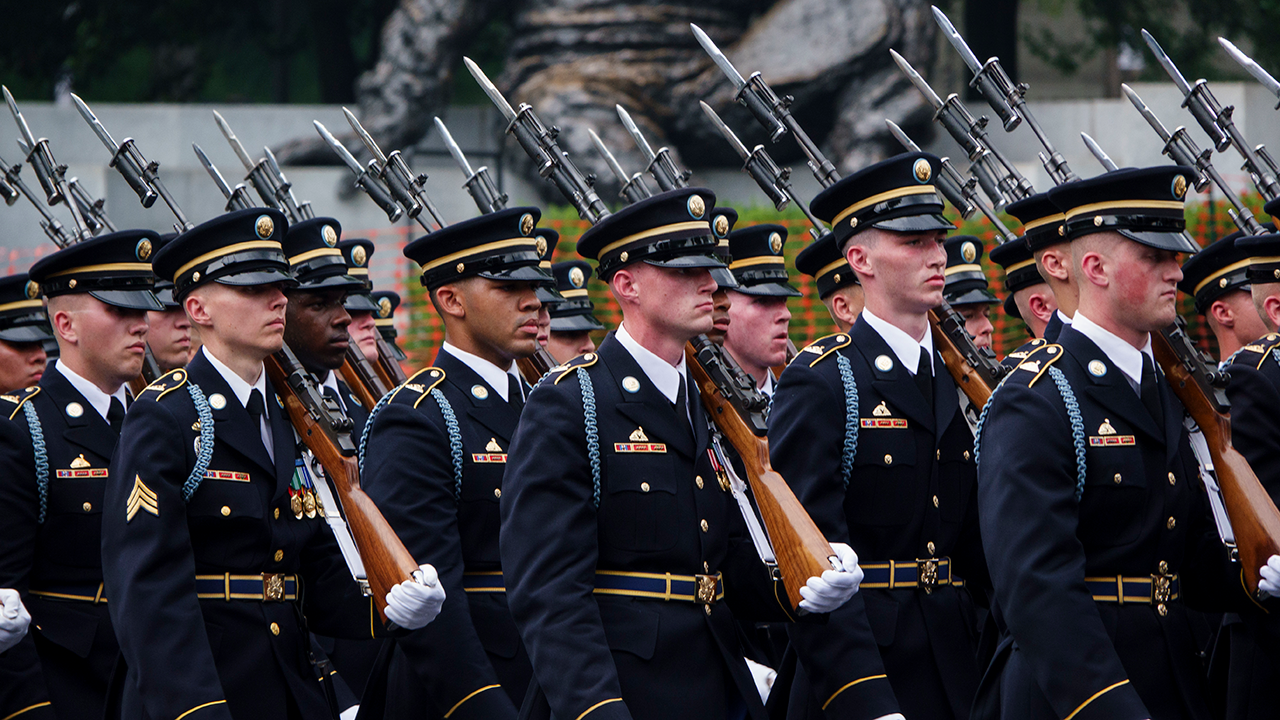
Service is not limited to wearing a uniform, though military service remains one of its noblest forms. It includes volunteering as a firefighter or EMT, mentoring a struggling student, assisting the elderly, serving on a local board, joining a disaster-relief effort, coaching a youth team, or simply showing up when summoned for jury duty.
Together, these acts sustain the bonds on which a nation depends.
They also shape those who perform them.
Service teaches discipline, patience, and responsibility. It forces people to encounter fellow citizens outside their usual social, economic, and ideological circles. A young person who spends a year helping veterans, rebuilding homes, or tutoring children learns that the country is more complicated—and more human—than the caricatures presented on social media.
In an era of deep fragmentation, that experience matters even more.
Americans are increasingly isolated from one another. They shop online, work remotely, consume personalized media, and retreat into political and cultural enclaves. The result is a country in which people are connected to their screens yet increasingly disconnected from one another.
Civic service offers an antidote. It brings people together around a common task and reminds us that citizenship carries obligations as well as rights.
What America needs now is a renaissance of public service, particularly among the young.
This need not take the form of compulsory national service imposed by Washington. A federal mandate would undercut the voluntary spirit that gives such service much of its meaning, while another vast bureaucracy would quickly become wasteful and politicized.
The better approach is to make opportunities to serve easier to find, more rewarding, and more respected.
States should create public-service fellowships that allow young adults to spend six months or a year working with local governments, charities, faith-based organizations, and emergency services. Participants could receive modest stipends and education or vocational-training grants.
High schools should encourage students to undertake serious service projects as part of civic education, not as résumé padding but as instruction in citizenship. Colleges and employers should give meaningful credit to applicants who have demonstrated sustained service. Businesses should be encouraged to offer employees limited paid leave for jury duty, National Guard obligations, and volunteering.
The military must also regain a more visible place in American life. Schools should welcome recruiters, expand JROTC opportunities, and teach students that service in the armed forces is not merely a career option but an honorable calling.
Above all, parents, teachers, clergy, and public officials should speak about service with admiration.
Young people notice what a society chooses to honor. When a society glorifies influencers, celebrities, and instant wealth while barely noticing the volunteer firefighter or the Army recruit, they absorb the message.
That message must change.
The purpose of this effort is not to enlarge government. It is to strengthen citizenship.
A nation of passive consumers will eventually lose the habits necessary to preserve liberty. By contrast, a nation of active citizens, accustomed to responsibility and sacrifice, will be far more resilient.
That is how a republic renews itself, preserves liberty, and passes it on to posterity.
America does not need another argument about what the country owes us. It needs more Americans asking what they owe the country.
We publish a variety of perspectives. Nothing written here is to be construed as representing the views of the Daily Signal.
More from this network:
Domains for Sale · GOTPeople.org · TheDSAPlatform · The Truth About Socialism
What's Your Reaction?
 Like
0
Like
0
 Dislike
0
Dislike
0
 Love
0
Love
0
 Funny
0
Funny
0
 Wow
0
Wow
0
 Sad
0
Sad
0
 Angry
0
Angry
0

I am just an average American. My teen years were in the late 70s and I participated in all that that decade offered. Started working young, too young. Then I joined the Army before I graduated High School. I spent 25 years in, mostly in Infantry units. Since then I've worked in information technology positions all at small family owned companies. At this rate I'll never be a tech millionaire. When I was young I rode horses as much as I could. I do believe I should have been a cowboy. I'm getting in the saddle again by taking riding lessons and see where it goes.
Premium domains for sale

















Comments (0)