

Trump Is Right To Crack Down On Medicaid Fraud. Autism Providers Should Help Him.
Premium domains for sale
Freedom Is Back In Style
I’m a psychologist and board-certified behavior analyst who has worked in the autism services field for 25 years. I know firsthand how much access to quality care can mean to a child and his or her family. I am outraged that a few bad actors have abused or outright defrauded autism benefits under Medicaid in several states, consuming limited resources that are meant to benefit the families I serve. Reforms are needed to protect and continue serving those truly in need.
Freedom Is Back
In Style
Premium domains for sale
Applied behavior analysis, or ABA, is an evidence-based treatment used to help people with autism develop skills involving communication, learning, social interaction, and daily living. Children meet with a behavior technician who coaches them through structured activities. For many children and families, access to ABA can be life-changing.
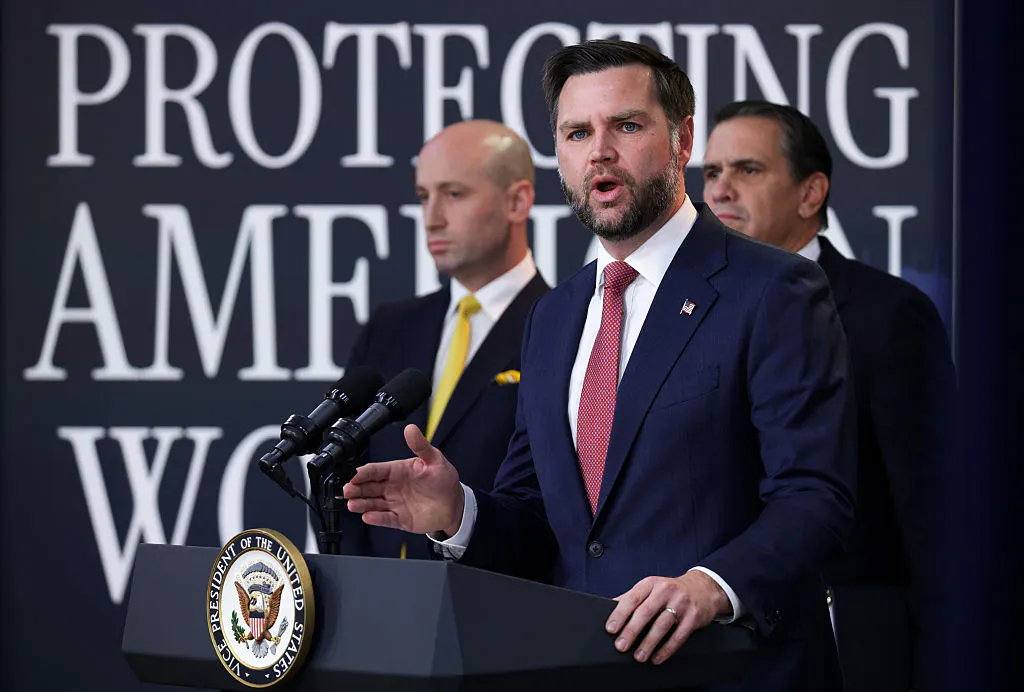
That’s why I welcome the Trump administration’s focus on strengthening Medicaid oversight and combating fraud, waste, and abuse. Vice President JD Vance recently said that “fraud is really a dual victim crime,” and he’s right. Fraudulent providers don’t just cheat the government and the taxpayer. They also take valuable resources away from children who need care and undermine families’ trust. The goal should be simple: Find the bad actors, protect taxpayers, and make sure children who need ABA continue to receive the care they need.
Last week, the Centers for Medicare & Medicaid Services (CMS) released a toolkit to help states strengthen program integrity in Medicaid-funded ABA services. This was an important first step, and there’s more that the administration can do, in partnership with the autism-services community, to help root out fraud.
First, Medicaid should rely on sound clinical judgment, not on arbitrary supervision ratios that add costs without benefiting patients. We need appropriate oversight of ABA treatment, but treatment dosage and the amount of clinical supervision should be individualized based on the needs of the child, family, and clinical team. A universal supervision requirement based on paid claims — such as requiring a fixed percentage of supervision for every child — could lead providers to deliver and bill for services a child doesn’t medically need. This puts taxpayers on the hook for unnecessary care. Quotas like these can also greatly reduce the number of children a provider can serve, restricting access for families. We know that individualized decisions are the cornerstone of effective healthcare, and the same is true for autism treatment.
Medicaid must also maintain strong provider networks and eliminate unnecessary out-of-network spending. Medicaid managed care organizations should build robust networks of qualified providers who provide care at an agreed-upon rate. Medicaid shouldn’t be footing excessive bills for out-of-network providers who circumvent the enrollment and validation process. But to build those networks, reimbursement rates must be competitive. Without stable, fair-market pricing, we risk alienating and losing quality providers. This could mean long travel times to appointments and longer waits for families to receive care.
Finally, state Medicaid programs should expand the use of CMS’ Medically Unlikely Edits, or MUEs, in their Medicaid claims systems. This is one of the simplest and most effective tools for rooting out fraud in any medical scenario, yet many state Medicaid programs lack this basic guardrail. MUEs would flag claims that exceed reasonable parameters and require providers to substantiate them before taxpayers even pay the bill. Each month, millions of Americans scrutinize their credit card statements before issuing payment to ensure they weren’t incorrectly or fraudulently charged. The same principle should apply in Medicaid. Expanding the use of MUEs will help Medicaid find improper payments while allowing legitimate claims to move forward and protecting access to autism services for those who rely on them.
The Trump administration is off to a good start on reforming Medicaid. Autism providers want to keep up the momentum. No one suffers more from fraud in the autism services industry than the patients themselves. The best reforms will protect the taxpayer, expose the bad actors, and make sure the patients most in need don’t pay the price for someone else’s fraud.
***
Rebecca L. Thompson, PhD, BCBA-D, LP, LBA, is a psychologist and board member of the National Coalition for Access to Autism Services.
More from this network:
Domains for Sale · GOTPeople.org · TheDSAPlatform · The Truth About Socialism
What's Your Reaction?
 Like
0
Like
0
 Dislike
0
Dislike
0
 Love
0
Love
0
 Funny
0
Funny
0
 Wow
0
Wow
0
 Sad
0
Sad
0
 Angry
0
Angry
0

I am just an average American. My teen years were in the late 70s and I participated in all that that decade offered. Started working young, too young. Then I joined the Army before I graduated High School. I spent 25 years in, mostly in Infantry units. Since then I've worked in information technology positions all at small family owned companies. At this rate I'll never be a tech millionaire. When I was young I rode horses as much as I could. I do believe I should have been a cowboy. I'm getting in the saddle again by taking riding lessons and see where it goes.
Premium domains for sale























Comments (0)