

Victor Davis Hanson: The Atomic Bombs Dropped in Japan Were Not Satanic
Premium domains for sale
Freedom Is Back In Style
Editor’s note: This is a lightly edited transcript of today’s video from Daily Signal senior contributor Victor Davis Hanson. Subscribe to our YouTube channel to see more of his videos.
Freedom Is Back
In Style
Premium domains for sale
Hello, this is Victor Davis Hanson for the Daily Signal.
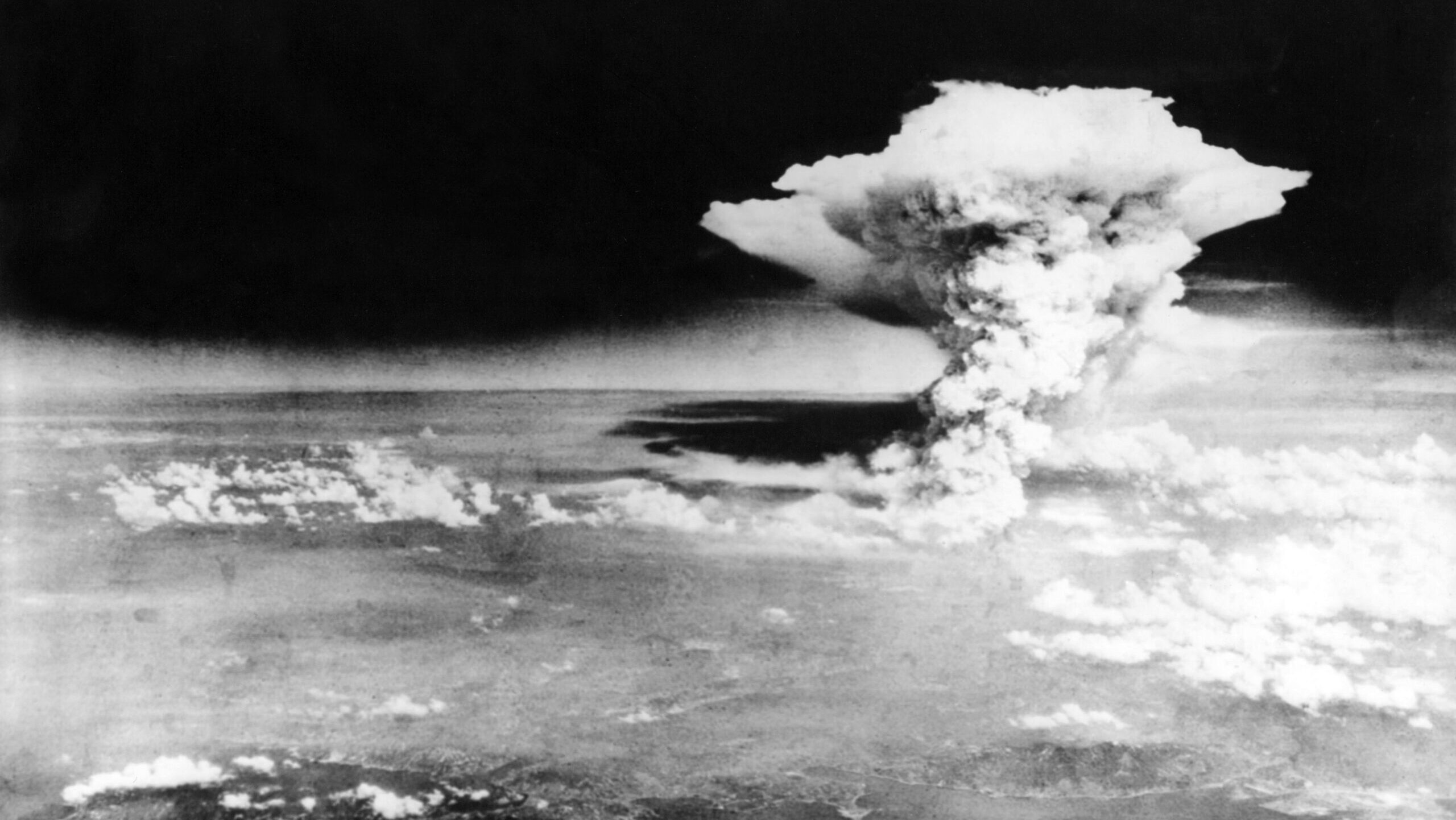
It’s August, so we have the annual debate over the dropping of two atomic bombs, one on Aug. 6, 1945, the uranium bomb called “Little Boy” that was dropped on the dual-use target, military and industrial Japanese city of Hiroshima, and then three days later on Nagasaki with a plutonium bomb, although it was not quite as powerful as the uranium bomb.
Both of them killed somewhere between 100,000 and 130,000 Japanese soldiers and civilians.
So, for the last eight decades, people have said, “We didn’t need to do it. This isn’t indicative of America. This is the only time in the history of nuclear warfare capability that anybody’s actually deployed it in anything other than a test.”
So why did we do it?
Well, one thing was the European theater had been closed with the surrender of Germany on May 9, 1945, and then we thought the war in Japan would quickly end. And, of course, it didn’t. It went on all of May, all of June, all of July, and all of August, four months.
We should remember another thing. 1945 was the year closest to the surrender. Japan formally surrendered on Sept. 2, 1945. But, counterintuitively, it was the worst year of the Pacific War, in which more Americans died in that year than in all the other years combined, 1945.
Why, then, did we drop the bomb?
Well, one of the reasons was that, in that terrible year, we had just landed on Okinawa. We thought Okinawa would be an easy target because it was near the end of the war, and we had learned a lot from near catastrophes by invading Peleliu, Tarawa, and Iwo Jima.
But the opposite happened.
Okinawa was the bloodiest island invasion of the entire war. Fifty thousand Americans were killed, wounded, or missing. Twelve thousand were killed, that we know of. Japan lost probably 120,000 to 130,000 Japanese soldiers, and Okinawa militia, and civilians.
And people said, “If this happened right near what we thought would be the end of the war, can you imagine what the planned invasion of Japan is?”
Japan had 20 times the resources they had on Okinawa in the homeland. We were going to invade, in 1945 and 1946, the two main islands of Japan. And given the resources they had that were 20 times larger than Okinawa, we could expect a million casualties, 20 times the 50,000 who perished or were casualties on Okinawa.
Now, there’s a lot of confusion about that exegesis. People said, “Well, Japan was defeated. Why did we do it?”
Curtis LeMay said: I have burned down 50% of the industrial and civilian urban core of Japan. My B-29s, I have 1,000 of them, and I’ve got 5,000 ordered, and we’re going to put them on Okinawa, and it’s only 900 miles from Tokyo. It’s not 1,500 like the Marianas. And we’ll use both bases, and we’ll burn the whole city structure or urban core of Japan down.
He would have.
In other words, the atomic bomb saved Japanese lives and American lives because, if we wanted to avoid invasion, we would have just kept the incendiary raids.
I should remind everybody, on March 9, 1945, the first firebombing of Tokyo was the most deadly attack in the history of warfare. Over 100,000 people died from B-29 bombings.
I should add another thing. Ernest King, chief of naval operations, said, “We didn’t need to drop the bomb because I wanted to keep going.”
And what “keep going” meant was that he had the biggest fleet in the history of civilization that was larger than all the fleets in the world by 1945, and he had mined the harbors. He had mined the passageways. He had blockaded the exits and entries into Japanese ports.
He said we can starve them out.
Again, more casualties than you could dream of.
So whether we let LeMay burn the country down, or King starve it out, or we invaded, whatever scenario you chose, they were far more egregious in terms of loss of life than the dropping of the atomic bomb.
People said, “Well, we just did it because we didn’t trust [Joseph] Stalin anymore, our ally. He had shown that in all of Eastern Europe, and we just dropped the bomb to deter him.”
Well, that didn’t make much sense because Joseph Stalin, by 1945, had absorbed all of Eastern Europe, ’45, ’46, ’47. And we had the bomb and he didn’t. He wasn’t deterred. He absorbed North Korea. He ensured that China was going to flip in October 1949.
So from that period of Aug. 6, when we had the bomb, 1945, to Aug. 20, when Stalin had the bomb, that four-year monopoly on our part of nuclear weapons didn’t deter him at all.
So we didn’t drop the bomb to deter him because we knew it wouldn’t deter him. He had a huge 12-million-man army, and we knew that spies in the New Mexico Manhattan Project, and in the British government, and German physicists who went to Russia after the war would ensure that he was going to get the bomb very quickly.
So the last thing we wanted to do was show Stalin we might use the bomb on him when we knew he’d get it anyway in three or four years.
Some people said, “Well, it was racist. Why didn’t you drop it on Germany?”
The bomb was intended to drop on Germany. That’s why Einstein wrote the letter to the U.S. government. But nobody thought, A, that Germany would collapse before Japan at that point in the war in ’40, ’41, and ’42, and no one thought that the bomb would take so long to develop.
And by the time it was deployable, Nazi Germany and Italy were out of the war.
Some people said, “Well, we could have dropped it right in Tokyo Bay and shown the emperor and General Tojo this is what’s going to happen to you.”
Sounds like a good idea, but we should remember we let off a plutonium bomb on July 15 of 1945, right after the Okinawa conquest. And that was one bomb. We only had two more bombs. We weren’t going to have any more bombs until October or November.
The Japanese militarists were betting that we didn’t have any more.
So even after we dropped the first bomb on Hiroshima and the second one on Nagasaki, there was an attempted coup on Aug. 15.
Think of that. Just six days after the second bomb was dropped, and the Japanese officers’ argument was, “They don’t have any more bombs.”
And we didn’t have any more bombs.
It was just lucky that the coup was foiled, and the emperor was able to address the country.
Another thing: These bombs don’t come out of the head of Zeus. They’re very hard to produce, they’re very dangerous, and they’re very unstable, and they’re very hard to get from the United States 5,000 to 6,000 miles across the Pacific.
The USS Indianapolis, a heavy U.S. cruiser, delivered “Little Boy,” the uranium bomb, to Tinian Island.
And guess what happened?
It delivered the bomb materials. Four days later, it was sunk.
You remember the reference to it in “Jaws.” The crew was decimated by sharks in the water. Seventy-five percent of the people on the Indianapolis, the crewmen, were killed.
If that Japanese submarine had torpedoed the Indianapolis just five days earlier, it would have destroyed one of the two remaining bombs.
The second thing is we never tested the “Little Boy” uranium bomb. It was very volatile and unstable. We never made another deployable uranium bomb again of that caliber. The trigger mechanism was very dangerous.
In fact, they didn’t even arm the bomb until it was in the air because they were afraid a crash on Tinian would blow up the entire island.
And so, we had one unstable bomb. We didn’t know if it was going to work.
The second thing: We didn’t know what was going on, and it was almost destroyed in transit to Tinian. Second thing, it’s very hard to put a 10,000-pound bomb on a B-29 and fly 1,600 miles over the Japanese mainland and then fly all the way back with a very slim margin of gas.
The second mission to Nagasaki did not have Paul Tibbets, the captain of the B-29 Enola Gay. They had a less qualified officer. The plane was called Bockscar.
Guess what happened?
There was a fuel mishap, and it was not able to transfer fuel from the reserve tanks into the B-29.
It got over Kokura, the primary target. It was cloudy, and they made the decision to circle around, wait for the other observation planes, and see if the weather would break. It didn’t.
And therefore they went to Nagasaki, which was not the intended target.
And guess what?
It was cloudy.
And they were going to turn around with an operable plutonium bomb until they found a window. They missed the target by three or four miles, the exact place on Nagasaki.
And after dropping the bomb, they couldn’t get to Iwo Jima. They couldn’t get home. They had to make an emergency landing on recently conquered Okinawa.
What am I trying to say?
The dropping of the atomic bomb, it was not a satanic enterprise. It was not demonic, as Tucker Carlson recently said.
He said supernatural forces had created nuclear weapons.
Good men made a bad weapon to stop far worse men from killing innocents, and that’s about the story of the atomic bombs of August.
We publish a variety of perspectives. Nothing written here is to be construed as representing the views of the Daily Signal.
More from this network:
Domains for Sale · GOTPeople.org · TheDSAPlatform · The Truth About Socialism
What's Your Reaction?
 Like
0
Like
0
 Dislike
0
Dislike
0
 Love
0
Love
0
 Funny
0
Funny
0
 Wow
0
Wow
0
 Sad
0
Sad
0
 Angry
0
Angry
0

I am just an average American. My teen years were in the late 70s and I participated in all that that decade offered. Started working young, too young. Then I joined the Army before I graduated High School. I spent 25 years in, mostly in Infantry units. Since then I've worked in information technology positions all at small family owned companies. At this rate I'll never be a tech millionaire. When I was young I rode horses as much as I could. I do believe I should have been a cowboy. I'm getting in the saddle again by taking riding lessons and see where it goes.
Premium domains for sale















Comments (0)