

What El-Sayed’s Victory and the DSA’s Rise Could Do to the Economy
Premium domains for sale
Freedom Is Back In Style
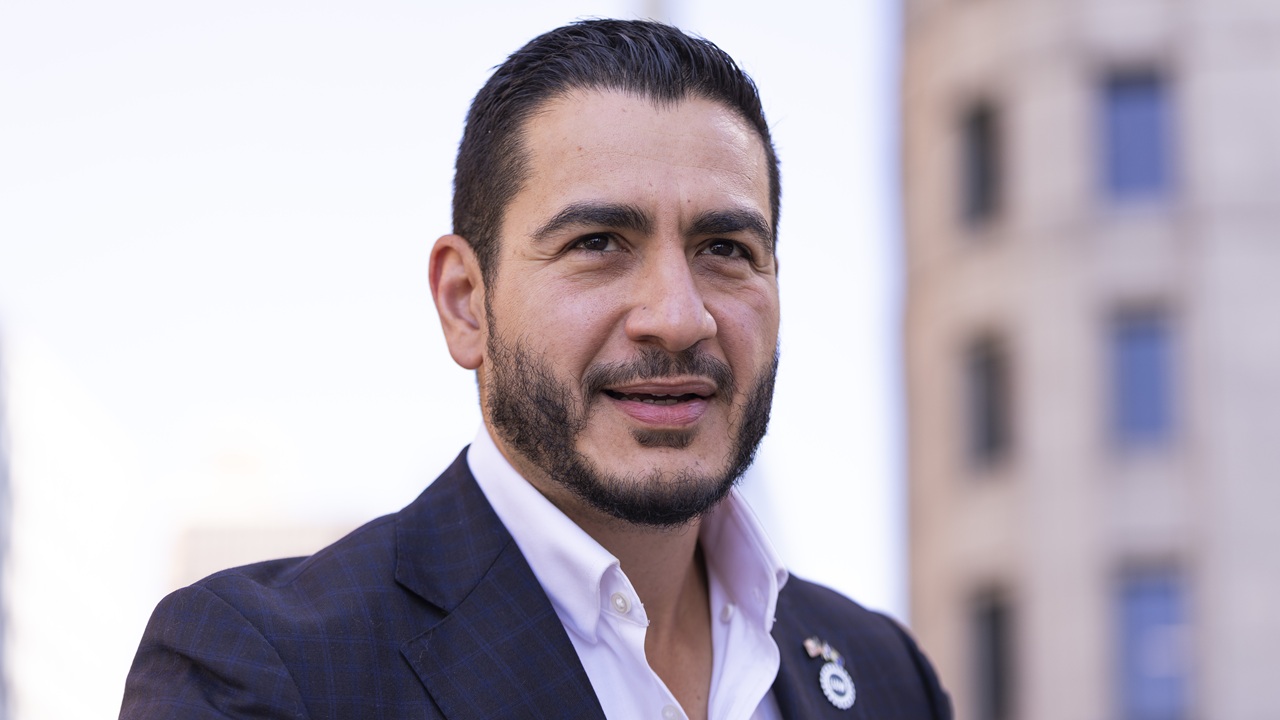
Last week, Democratic Socialist Abdul El-Sayed narrowly defeated Rep. Haley Stevens in Michigan’s Democratic primary for U.S. Senate, securing 48.5% of the vote. El-Sayed will now face former Republican Rep. Mike Rogers in a toss-up November race that could determine control of the Senate.
Freedom Is Back
In Style
Premium domains for sale
This result is not an isolated event. Across the country, socialists and other radical left-wing candidates continue to find electoral success. Many have defeated establishment Democrats in state and local races, expanding the influence of an ideology once confined to deep-blue urban districts. New York City Mayor Zohran Mamdani and Seattle Mayor Katie Wilson are among those elected who have begun advancing economically interventionalist agendas.
For those unaware, the appropriate number of anti-American communists and socialists in the U.S. government is zero.
These ideologies are antithetical to Western values and American exceptionalism. Communism’s radical policies—large-scale expansion of government control in everything from health care and education to industry—are incompatible with the tradition of limited government, free markets, and individual liberties that has historically underpinned American prosperity.
Nations that experiment with central planning experience harmful socioeconomic outcomes like shortages, stifled innovation, poverty, and large-scale human suffering. Yet, these approaches have gained traction on the woke Left and now form core elements of the platforms advanced by many new candidates.
The Democratic Socialists of America (DSA) has drastically expanded its membership and electoral footprint. Rep. Alexandria Ocasio-Cortez, D-N.Y., and Rep. Rashida Tlaib, D-Mich., remain the only two DSA-affiliated politicians in Congress, but dozens of others have infiltrated state and local governments. That number is likely to grow given socialism’s rising popularity among progressive and younger voters.
The national co-chair of the DSA recently reaffirmed several of the organization’s longstanding policy positions including abolishing the Senate, eradicating prisons, eliminating national borders, and pursuing public ownership or heavy regulation of major organizations. Many socialist candidates align closely with that direction: “Medicare for All,” abolishing ICE, free education and childcare, tax hikes, and public ownership of select firms.
These positions move well beyond the conventional progressive goals of higher taxes and expanded social programs; they challenge the core features of the American constitutional system built upon principles of self-government and free markets.
Government ownership or heavy regulation of major industries would weaken competition, discourage investment, and stifle the very innovation that drives economic growth. Expanding government control over healthcare, housing, and education would increase bureaucratic inefficiency, reduce quality, and limit consumer choice.
Massive increases in federal spending and entitlement programs would explode deficits, balloon the national debt, and place greater tax burdens on American families and businesses. The imminent effect of a communist economic approach is not prosperity but concentration of market and institutional power in the hands of the state.
The very ideology the DSA espouses has been responsible for the deaths of over 100 million people through famine, purges, and repression—most notably under Mao Zedong in Communist China. By contrast, free-market capitalism has lifted over 1 billion people out of extreme poverty and has improved living standards across the globe faster than any competing economic system.
New socialist policymakers insist their vision operates through democracy rather than tyranny, but their policy toolkit—government ownership, price controls, and dismantling American institutions—carries the same risks of expanded state authority, inefficiency, and human casualties that were documented under 20th-century communist experiments.
Younger Americans, a key constituency of socialist or communist candidates, are rightfully dissatisfied with the state of the economy. High college tuition and student loan costs, a tight labor market, and unaffordable housing make the American Dream feel out of reach. These problems deserve serious solutions, but socialist systems that rely on government intervention are not the answer.
Centralized policy prescriptions have repeatedly lowered the standard of living for millions of people across the globe. A government that promises “free groceries” and controls the food supply has the power to starve you; one in charge of housing has the power to move you into an assigned low-quality unit or onto the street; state-owned energy can leave you freezing or in the dark; and a government that nationalizes healthcare decides whose life is worth saving.
Despite its imperfections, capitalism—rooted in private property rights, free-market competition, and limited government—offers the most reliable and sustainable path to broad-based prosperity.
With communism on the rise, how the country navigates this moment will shape living standards, individual liberty, and the durability of the United States for decades to come. The choice is freedom versus control, prosperity versus poverty, and capitalism versus communism.
For Americans, that choice is simple: Renew the principles and promises of our great nation’s founding 250 years later and watch the economy flourish.
More from this network:
Domains for Sale · GOTPeople.org · TheDSAPlatform · The Truth About Socialism
What's Your Reaction?
 Like
0
Like
0
 Dislike
0
Dislike
0
 Love
0
Love
0
 Funny
0
Funny
0
 Wow
0
Wow
0
 Sad
0
Sad
0
 Angry
0
Angry
0

I am just an average American. My teen years were in the late 70s and I participated in all that that decade offered. Started working young, too young. Then I joined the Army before I graduated High School. I spent 25 years in, mostly in Infantry units. Since then I've worked in information technology positions all at small family owned companies. At this rate I'll never be a tech millionaire. When I was young I rode horses as much as I could. I do believe I should have been a cowboy. I'm getting in the saddle again by taking riding lessons and see where it goes.
Premium domains for sale





















Comments (0)