

What Is A Woman? The WNBA Needs A Man To Help Define League Eligibility
Premium domains for sale
Freedom Is Back In Style
The WNBA has a problem it never thought it would have to solve: How to define the first letter of its acronym, the one that explicitly distinguishes it from its brother league, the NBA.
Freedom Is Back
In Style
Premium domains for sale
For years, the WNBA has served as sports’ loudest megaphone for wokeness. In 2021, the league identified “LGBTQ+ advocacy with a focus on trans rights” as one of its Justice Movement priorities and conducted education sessions on trans inclusivity. Its members have recently criticized anyone who questioned whether biological sex should determine participation in women’s sports.
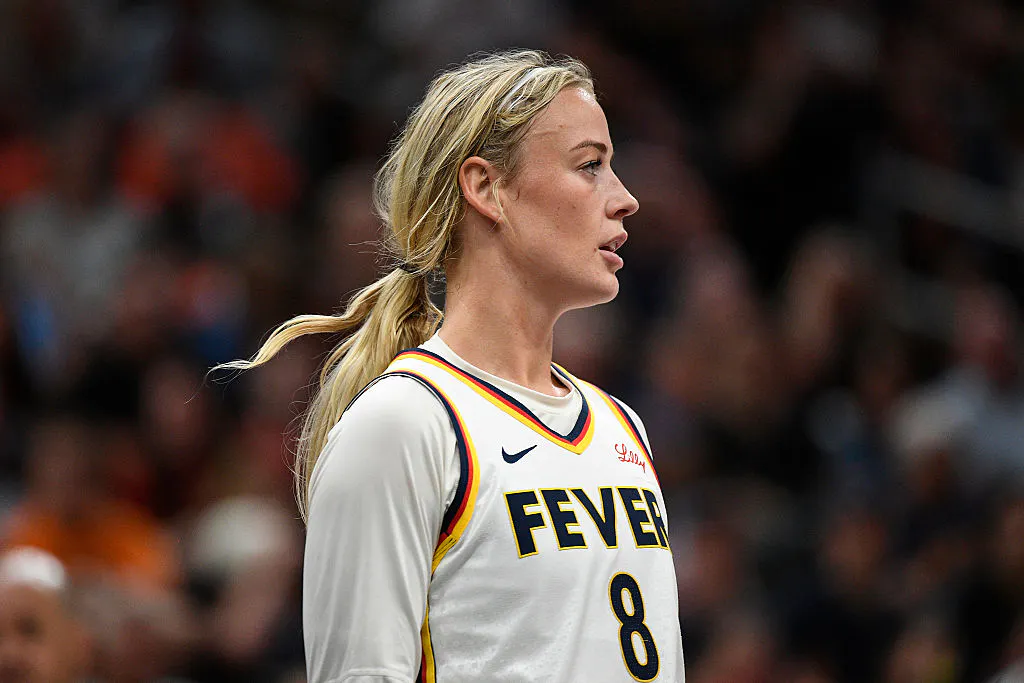
Last week, the coaches got in on the game. Minnesota Lynx coach Cheryl Reeve wore a “Trans Kids Belong” t-shirt while coaching a game. Golden State Valkyries coach Natalie Nakase spoke out strongly in favor of inclusivity and the inclusion of trans women. And when Indiana Fever coach Stephanie White was pressed about a biological male playing in the WNBA, she responded that she didn’t believe “exclusion is an answer.”
But its own rulebook presents a debate. The league says its players must be women. But it has never clearly defined what makes someone a woman for eligibility purposes. It is an exercise that would have seemed preposterous at the league’s founding 30 years ago, so I’ll offer them sympathy there, but I immediately rescind it for the self-inflicted mess they currently find themselves in.
And my popcorn is in the microwave for the show that is about to unfold as two former NBA players — Enes Kanter Freedom and Royce White — are declaring eligibility for the 2027 WNBA draft. This approach is already being tested in France, where transgender basketball player Julie Tetart is dominating the women’s pro league, averaging 21 points and 20 rebounds per game, and winning the Player of the Year recognition. She said she, too, is open to playing in the WNBA.
Regardless of how one feels about the seriousness of Kanter or White, they are not the WNBA’s problem. They are the stress test. When an institution makes identity a central organizing principle, it eventually must answer the practical question: What happens when identity collides with the rules of the game? That is what has happened here.
Enter Sophie Cunningham — one of the league’s most marketable stars — who said she wanted to protect girls from having to compete against biological males and stood by her decision. Then came the backlash: criticism from other players, Seattle Storm owner Celeste Keaton verbally abusing two young girls supporting Cunningham before a game, and the physical assault Cunningham has taken on the court since, which certainly makes one wonder.
The league decided to have a very public ideological debate over whether biological sex should matter, and so along comes Kanter and White in one of culture’s ultimate “gotcha!” moments to essentially say, “Let’s see whether you actually believe what you are saying.”
Kanter, an 11-year NBA veteran, has read the league’s rulebook and reviewed its eligibility criteria, and believes its vagueness allows him to simply declare himself eligible. Perhaps more creatively, White is identifying as transgender for the purposes of competing in women’s basketball.
If the league believes identity is sufficient, then the devastating question becomes, “What objective test distinguishes a sincere transgender applicant from someone exploiting an undefined rule?”
The Women’s National Basketball Association must now answer: What is a woman? And thus, it is presented with a brutal catch-22. If the league says, “Women’s basketball is for biological females,” it contradicts years of its own messaging around trans inclusion. They would be selling out and turning their back on a community they have championed louder than most for years. But if they say, “If you identify as a woman, you’re eligible.” Now what? Can they turn away Kanter and White? Two players who would essentially guarantee a championship to any team they join?
The ultimate question for the WNBA is, “If biological sex doesn’t matter, why should an NBA player’s biological sex suddenly matter when he enters the WNBA? That’s the question the league is forced to answer, and every option is an airball.
Most likely, the WNBA will dismiss Kanter and White as a publicity stunt, but the damage is done. Eventually someone will come along who isn’t a stunt. Imagine someone who transitioned a decade ago, lives full-time as a woman, has undergone hormone treatment, plays professional basketball, genuinely wants to play in the WNBA, and meets whatever current criteria the league establishes. Some would call this scenario a slam dunk.
The WNBA is proving on a very public scale the fallacies that permeate woke culture. Conviction looks great on a t-shirt, until it’s tested in real-world circumstances. For years, the league told us that gender identity deserved recognition. Now gender is asking for a roster spot, and finding room on the bench will prove difficult. Expect to see the slogans fade on players’ attire and their social media pages quiet down once they face stronger competition for their job.
Biological sex is either relevant to women’s professional basketball or it isn’t. The league’s decision moving forward will determine whether the WNBA endures or if it accidentally turns itself into the LGBTQNBA.
***
Gates Garcia is the host of the YouTube show and podcast “We The People.” Follow him on Instagram and X @GatesGarciaFL.
More from this network:
Domains for Sale · GOTPeople.org · TheDSAPlatform · The Truth About Socialism
What's Your Reaction?
 Like
0
Like
0
 Dislike
0
Dislike
0
 Love
0
Love
0
 Funny
0
Funny
0
 Wow
0
Wow
0
 Sad
0
Sad
0
 Angry
0
Angry
0

I am just an average American. My teen years were in the late 70s and I participated in all that that decade offered. Started working young, too young. Then I joined the Army before I graduated High School. I spent 25 years in, mostly in Infantry units. Since then I've worked in information technology positions all at small family owned companies. At this rate I'll never be a tech millionaire. When I was young I rode horses as much as I could. I do believe I should have been a cowboy. I'm getting in the saddle again by taking riding lessons and see where it goes.
Premium domains for sale










Comments (0)